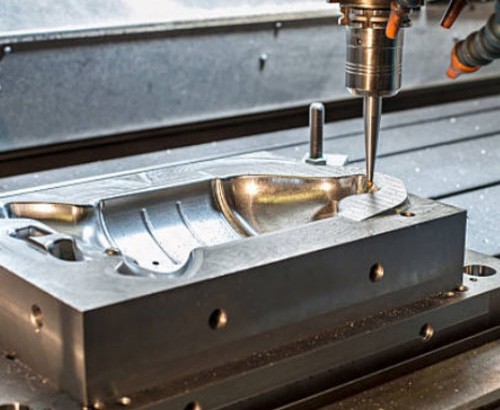
Mold is widely used, and most parts need mold forming. The service life of the mold depends on its ability to resist wear and mechanical damage. Once it is worn excessively or damaged mechanically, it is difficult to repair the damaged part of the shape, then it can only buy or customize a new mold. The mold manufacturing process is complex, the production cycle is long, and the processing cost is high. Therefore, it is undoubtedly of significant economic benefit to repair and reuse the failed molds.
There are many ways to repair the mold, such as electric spark, argon arc welding, laser surfacing, brush plating and so on. Laser cladding technology for mold repair has its unique advantages. Powder materials are flexible and adjustable, meeting different service performance requirements, and can prepare different kinds of wear-resistant, high-temperature resistant and erosion resistant coatings, even gradient coatings. Coating materials can be cobalt based, nickel based and ceramic composite materials.
Compared with the traditional arc repair welding technology, laser cladding has less heat input, less heat effect on the substrate, and less residual stress in the repair area; And it has high precision, which can realize the precise repair of small defects of high-grade molds.