


1. The overall water-cooling and module structure are completely closed, which can solve the dust pollution of optical lenses with a dust-proof grade of IP65
2. Coaxial air supply mode, and...
Components / Accessories
Your Professional Laser Equipment Accessories Manufacturer in China!
Guosheng Laser always attaches great importance to innovation and research and development. The engineers team covers the research and development, design, development, testing, analysis, pre-sales and after-sales services of laser cladding equipment and other projects. With huge technical resources, strong R&D strength, advanced production technology, fast delivery cycle, and flexible technical services, we provide customers with cost-effective products and considerate services.
Why Choose Us
High-Quality Service
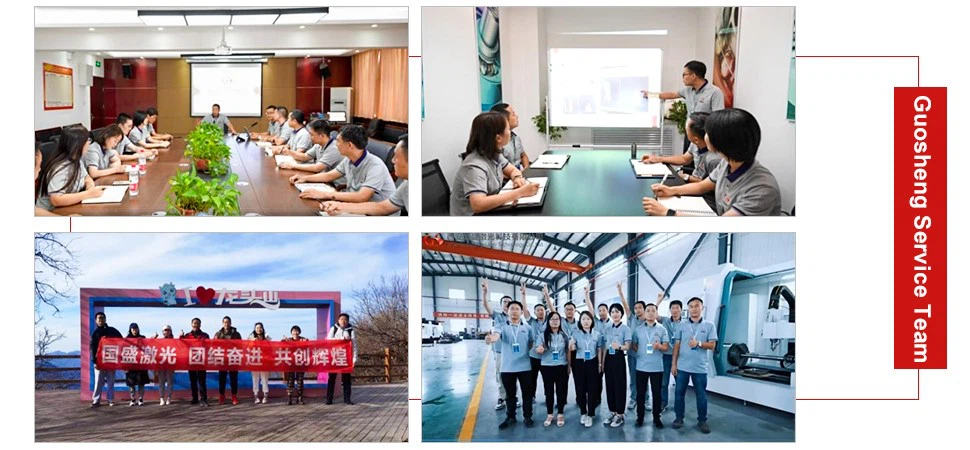
We have a professional service team. If you have any questions, you can contact our staff at any time and we will provide you with professional advice.
Certification
Guosheng Laser obtained the certification of ISO9001:2015, ISO14001:2015, ISO45001:2018.
Wide Range of Products
Xi'an Guosheng Laser Technology Co., Ltd. is a high-tech enterprise specializing in R&D, manufacturing and sales of automatic laser cladding machine, high-speed laser cladding machine, laser hardening machine, laser welding machine, laser cleaning machine and laser 3D printer.
Rich Experience
Our company has been engaged in this industry for more than 10 years and has been deeply involved in this industry. We have been committed to improving professional technology and equipment, continuously improving the service system, and providing better service to customers.
-
![Laser Cladding Head]()
-
![Powder Feeder]() Powder Feeder1. Allows refilling the powder without shutting downread more
Powder Feeder1. Allows refilling the powder without shutting downread more
2. Controlled by an intelligent touchscreen
3. Easy transmission for powder with large particles
4. Poor fluidity for... -
![Laser Hardening Head]() Laser Hardening Head1. High-precision focusing lens for accurate and uniform heatingread more
Laser Hardening Head1. High-precision focusing lens for accurate and uniform heatingread more
2. Compatible with a variety of laser machines
3. Compact and sturdy design for easy integration into a production... -
![Laser Water Chiller]() Laser Water ChillerThis laser water chiller keeps the laser tube cool and is essential for repeatable professional cut and engraving quality. Highly recommended for non-temperature controlled environments (non...read more
Laser Water ChillerThis laser water chiller keeps the laser tube cool and is essential for repeatable professional cut and engraving quality. Highly recommended for non-temperature controlled environments (non...read more -
![Laser Water Chiller]() Laser Water Chiller1. Independent temperature control for laser and optics cooling circuitsread more
Laser Water Chiller1. Independent temperature control for laser and optics cooling circuitsread more
2. Automatic heating function for low-temperature operation
3. ±2°C temperature stability for consistent... -
![Stabilized Power Supply]() Stabilized Power Supply1. Composed of several sets of auxiliary equipmentread more
Stabilized Power Supply1. Composed of several sets of auxiliary equipmentread more
2. Over-voltage
3. Under-voltage
4. Short circuit protection -
![Cradle Type Positioner]() Cradle Type Positioner1. Rotation mechanism: The positioner has a motorized rotation mechanism that allows the workpiece to be rotated at different anglesread more
Cradle Type Positioner1. Rotation mechanism: The positioner has a motorized rotation mechanism that allows the workpiece to be rotated at different anglesread more
2. Control system: The rotation speed and direction of... -
![Fiber Laser Machine]() Fiber Laser Machine1.Vertical Continuous Fiber Laser:6000W/12000Wread more
Fiber Laser Machine1.Vertical Continuous Fiber Laser:6000W/12000Wread more
2.Flat-Top Beam Homogenization Design
3.Multi-Scenario Adaptable (eg. Laser Cladding/Quenching)
4.Long-Term Power Stability... -
![Integrated Human-machine Interface]() Integrated Human-machine Interface1. High-resolution touchscreen display for easy operation and monitoringread more
Integrated Human-machine Interface1. High-resolution touchscreen display for easy operation and monitoringread more
2. Real-time machine performance monitoring and fault diagnosis
3. User-friendly interface for intuitive... -
![Cantilever Positioner]() Cantilever Positioner1. High precision and accuracyread more
Cantilever Positioner1. High precision and accuracyread more
2. Easy to adjust and manipulate
3. Can be customized to fit specific applications
4. Durable and long-lasting
5. Compatible with a... -
![Laser Cladding Nozzle]() Laser Cladding Nozzle1. High precision and accuracyread more
Laser Cladding Nozzle1. High precision and accuracyread more
2. Good flow control and material distribution
3. Durable and long-lasting
4. Compatible with various types of laser cladding machines
5.... -
![Internal Laser Cladding Head]() Internal Laser Cladding Head1. High integration and stabilityread more
Internal Laser Cladding Head1. High integration and stabilityread more
2. Multi-function fast switching
3. Applicable to a variety of materials
4. Process online monitoring
5. High precision and...


Here Are Two Types of Laser Equipment Accessories
Laser Water Chiller
A laser water chiller is really little more than your typical heat-exchanging device. Fiber lasers can get hot, and that extra heat can hinder your machine's performance. With a water chiller, you can remove excess heat so that your fiber laser operates near its optimal temperature. Laser water chillers play a crucial role in maximizing the performance and efficiency of laser systems. These powerful cooling devices ensure optimal chilling, which directly impacts the overall system performance.
Integrated Human-Machine Interface
An integrated human-machine interface is defined as a feature or component of a certain device or software application that enables humans to engage and interact with machines. Some examples of common Human Machine Interface devices that we encounter in our daily lives include touchscreens and keyboards. Integrated human-machine interfaces utilized in the industrial context are mostly screens or touchscreens that connect users to machines, systems or devices. Factory operators use integrated human-machine interfaces to control and automate machinery, as well as their production lines. Integrated human-machine interfaces can be simple screen displays mounted on machines in the factory, advanced touchscreens, multi-touch-enabled control panels, push buttons, computers with keyboards, mobile devices or a tablet.
Types of Laser Water Chiller
Water Pump Systems
At minimum, a CO2 laser tube will require room temperature water to run through the laser tube when the laser is firing. Water pumps certainly achieve this bar with a simple flow system. Typical issues with this system include the need to replace the water often (it is typically not a closed system) and keeping the water at minimum, room temperature. Temperature issues can especially be a problem in hot regions where outside temperatures rise above 90 degrees. If your water being circulated through the laser tube is warmer than room temperature, you may be reducing the longevity of your laser tube.
Chillers
Chillers are closed water cooling systems that offer many benefits over water pump systems. Typically, chillers monitor the water temperature and warn the operator if the water becomes too warm. Many chillers, as the name implies, can cool the water to temperatures below room temperature, which is ideal. Finally, chillers use less water and don't need to replace the water as often, due to the entire cooling system being enclosed in a single, water-tight unit.
Radiator Chillers
Radiator chillers offer a temperature alarm (if the water becomes too warm) and a circulation alarm (if the water stops flowing through the laser tube). They don't cool the water but do give operators a constant, current temperature indicator. These units are great upgrades for hobby laser cutters, as they keep the water temperature monitored automatically and are more compact and neat than a water pump and bucket system.
Refrigerated Chillers
Refrigerated chillers take the extra step to keep the water below room temperature using a thermostat and constant temperature control. They offer all the whistles and bells (indicator alarms, closed system) of radiator chillers with the added benefit of cooler water. In all cases, cooler water means longer life for your laser tube.
Industrial Chillers
Very large laser cutters are going to require industrial chillers. Water pump systems and small chillers are not going to be able to handle 150w + laser tubes. As these tubes can be expensive, it is economically in user's best interest to make their life as long as possible with an industrial cooling system.
Troubleshooting Common Laser Water Chiller Issues
Insufficient Cooling
If your chiller is not providing adequate cooling, check the coolant levels and ensure that the laser water chiller is receiving sufficient power supply. If the issue persists, contact a qualified technician for further diagnosis.
Noisy Operation
Excessive noise from your laser water chiller could indicate loose components or an issue with the compressor. Check for loose screws or bolts and tighten them if necessary. If the noise continues, consult a professional for assistance.
Leaks
If you notice any leaks from your laser water chiller, immediately shut off the power supply and inspect hoses, fittings, and seals for damage or improper connections. Replace any faulty parts and test for leaks before restarting the system.
What Should be Considered When Choose Laser Water Chiller
Consider the Cooling Capacity of the Chiller
As the name implies, it refers to the actual cooling capacity of the laser water chiller. The heat absorbed by the cooling equipment per unit time when the laser water chiller is working is an index to measure the cooling capacity of the chiller. It is also an indicator for the selection of laser chillers.
Determine the Chilled Water Volume of the Laser Water Chiller
Many customers generally pay attention to the cooling capacity, but often ignore the chilled water volume. The cooling capacity represents the cooling capacity provided by the compressor, while the chilled water capacity represents the ability of the chiller to remove heat.
Thermal Efficiency and Water Tank Capacity
the above two concepts lead to the concepts of chiller thermal efficiency and water tank capacity, that is, the two indicators of the throttling control method of the compressor and the size of the water tank. Generally, the bigger the water tank, the better, but different compressor control methods will have great differences in design (capillary or thermal expansion valve). This is the same compressor cooling capacity and water tank capacity, and the operation control mode with PID feedback function will greatly increase the cooling capacity of the entire system.
Temperature Control Accuracy
This indicator comes from the requirements of the laser. For semiconductor lasers, the temperature control accuracy should be ±0.1°C. This requires the compressor to be able to predict temperature changes and adapt to load changes. Generally use cold water with integrated temperature control module. No machine can do this. Of course, for CO2 lasers, the temperature requirement is ±2°C to ±5°C, which can be achieved by most of the dedicated chillers on the market.
Water Quality Requirements, Water Filtration and Water Circulation System Materials
This comprehensive index is often ignored, but it is very important and directly affects the life of the laser chiller. Therefore, in the process of installing the laser chiller, water treatment operations can be performed on the water quality, or filters can be installed to prevent various impurities from entering the pipeline and affecting the operation of the chiller.
How to Maintain Laser Water Chiller
Regular Cleaning and Inspection
Frequent cleaning of the laser water chiller's components is vital. Remove any debris, sediment, or algae that may accumulate in the reservoir or on the cooling coils. Regularly inspect hoses, connections, and the water pump for signs of wear or leaks.
Water Quality Management
The quality of water used in your chiller plays a significant role in its performance. Use distilled or deionized water to prevent mineral deposits and scale buildup, which can affect the laser water chiller's efficiency. Regularly check and adjust the water pH to maintain optimal conditions.
Temperature Control
Maintain the recommended operating temperature for your laser water chiller. Extreme temperatures can lead to inefficiencies or even damage the unit. Utilize the laser water chiller's control panel to monitor and adjust the water temperature as needed.
Lubrication of Moving Parts
If your laser water chiller has any moving parts, ensure they are adequately lubricated. This prevents unnecessary friction, reducing wear and tear on components. Refer to the manufacturer's guidelines for recommended lubrication intervals and suitable lubricants.
Inspection of Refrigerant Levels
For laser water chillers equipped with refrigeration systems, regular inspection of refrigerant levels is crucial. Low refrigerant levels can lead to inefficient cooling. If you notice a drop in performance, consult the manufacturer's guidelines for checking and replenishing refrigerant.
Airflow Maintenance
Ensure that the laser water chiller's condenser coils have proper airflow. Clean the coils regularly and remove any obstructions that may hinder efficient heat dissipation. Adequate airflow is essential for the laser water chiller's cooling efficiency.
Professional Servicing
Schedule periodic professional servicing to keep your laser water chiller in top condition. Trained technicians can identify potential issues, perform thorough cleanings, and address any concerns that may arise during operation.
Benefits of Integrated Human-machine Interface


Intuitive Interfaces for Agile Decision-Making
Integrated human-machine interfaces revolutionize the operator experience by offering intuitive interfaces that align with human cognitive patterns, allowing for swift navigation and rapid assimilation of critical information. Through streamlined menu structures, contextualized data displays, and straightforward controls, operators can swiftly access vital insights and execute decisions with remarkable agility.
Customizable Dashboards and Real-Time Data Visualization
A core facet of integrated human-machine interface design lies in its customizable dashboards and real-time data visualization capabilities. This feature equips operators with the ability to configure displays tailored to their specific requirements, ensuring that the most pertinent metrics and operational parameters are readily accessible. Real-time data visualization further amplifies this advantage by presenting actionable insights at a glance, fostering informed decision-making and proactive responses to dynamic production scenarios.
Improved Operational Visibility
Integrated human-machine interfaces serve as the front line of operational visibility, offering comprehensive insights into machine performance, production metrics, and process status. This heightened visibility becomes a catalyst for proactive decision-making and heightened operational efficiency.
Comprehensive Insights and Performance Metrics
Integrated human-machine interfaces act as gateways to a wealth of operational data, providing real-time access to critical performance metrics, including production output, machine utilization, energy consumption, and quality indicators. By aggregating and presenting this information in a coherent manner, integrated human-machine interfaces empower operators and management alike with a holistic understanding of operational dynamics, fostering informed decision-making and strategic planning.
Real-Time Monitoring for Proactive Maintenance
The hallmark of integrated human-machine interface prowess lies in its capability for real-time monitoring, enabling operators to oversee machinery performance and process parameters. This real-time insight not only facilitates prompt identification of anomalies or inefficiencies but also underpins proactive maintenance initiatives. By preemptively addressing potential issues and deterring unexpected downtime, integrated human-machine interfaces play a pivotal role in fortifying operational continuity and optimizing asset utilization.
Streamlined Process Control
In industrial automation, the role of integrated human-machine interfaces in enabling centralized control of complex systems cannot be overstated. By coordinating disparate elements into a cohesive operational framework, integrated human-machine interfaces pave the way for streamlined operations and optimized resource utilization, propelling productivity.
Touch-Screen Interfaces and Interactive Controls
At the heart of the integrated human-machine interface lies its touch-screen interfaces and interactive controls, which revolutionize the landscape of process adjustments and configuration changes. By offering intuitive touch-based interactions and responsive controls, the integrated human-machine interface fine-tunes operational parameters, rendering them accessible to operators across diverse skill levels. This user-centric approach not only expedites process adjustments but also mitigates the likelihood of errors, enhancing operational reliability and adaptability.
Empowering Data-Driven Decision-Making
Integrated human-machine interfaces equipped with IoT integration capabilities serve as conduits for harnessing the flood of data originating from interconnected devices across the industrial ecosystem. By coordinating this diverse array of data streams, integrated human-machine interfaces enable operators and stakeholders to glean actionable insights and make informed decisions rooted in data and analytics. This data-driven approach allows proactive responsiveness and strategic foresight.
Flexibility In Diverse Industrial Environments
Integrated human-machine interfaces stand as prototypes of adaptability, seamlessly integrating into diverse industrial environments and accommodating customized workflows with finesse. This inherent flexibility not only underpins agile manufacturing processes but also positions industrial enterprises to swiftly respond to evolving business requirements, thus epitomizing operational agility and resilience.
Key Components of Integrated Human-machine Interface
1
Hardware
Hardware components of an integrated human-machine interface include input/output devices, display units, and processing units. Input devices like touchscreens, keyboards, mice, and buttons allow users to interact with the system by providing commands or making selections. Output devices such as monitors, LED displays, and speakers provide visual or auditory feedback to the user. This output reflects the current status of the machine or system. The processing unit, which can be an embedded computer or a standalone PC, is responsible for processing user inputs, executing software applications, and managing communication with the machine or system.
2
Software
Integrated human-machine interface software is the backbone of any integrated human-machine interface. It defines the user interface, manages data communication, and enables the creation and execution of various control functions. The software includes graphical design tools that allow you to create custom interfaces. You can incorporate elements such as buttons, sliders, charts, and diagrams in these interfaces. Additionally, the software enables data logging, reporting, and analysis, helping users monitor and optimize system performance. Modern integrated human-machine interface software platforms are highly customizable and support a wide range of programming languages. Hence, they enable the development of complex and sophisticated HMI applications.
3
Communication
Communication is a critical component of integrated human-machine interface, as it facilitates the exchange of information between the human operator and the machine or system. The integrated human-machine interface typically uses standard communication protocols such as Ethernet, RS-232, RS-485, and Field bus to transmit data between the integrated human-machine interface hardware and the machine controller or PLC (Programmable Logic Controller). These communication protocols ensure reliable and efficient data transmission, enabling real-time monitoring and control of the underlying system. In addition to wired communication, wireless technologies like Wi-Fi and Bluetooth are becoming increasingly popular in integrated human-machine interface, providing greater flexibility and mobility for users.
Our Factory
Xi'an Guosheng Laser Technology Co., Ltd. was founded in 2015. The company processes a workshop area of 2,000 m2, the quantity of employees is 30, including 5 senior research staff and engineers, which is capable of providing a complete set of solutions for laser additive manufacturing technology with integrated structure and function.



Our Certification
We have passed many international certifications, such as ISO9001:2015, ISO14001:2015, ISO45001:2018.


Ultimate FAQ Guide to Laser Equipment Accessories
Q: What Are the Key Components of a Laser Water Chiller?
A: A typical laser water chiller consists of several key components working together to achieve efficient cooling. These include a compressor, condenser, evaporator, expansion valve, and pump. The compressor pressurizes the refrigerant gas, while the condenser releases heat from the compressed gas to the surrounding environment. The cooled refrigerant then flows through the evaporator, where it absorbs heat from the laser system before returning to the compressor via the expansion valve.
Q: How to Proper Installation Procedures for Laser Water Chillers?
A: When installing laser water chillers, it is crucial to follow proper procedures to ensure optimal performance and longevity. Begin by selecting a suitable location that provides adequate ventilation and access for maintenance. Position the chiller on a stable surface to prevent vibrations that could affect laser system operation. Connect the chiller to the laser system using compatible hoses or pipes, ensuring proper alignment and secure connections. It is also important to check for any leaks before starting the system. To avoid potential damage, it is recommended to use a power conditioner or surge protector to protect the chiller from electrical surges or fluctuations. Additionally, ensure that the power supply meets the required voltage specifications of the chiller.
Q: Why does laser equipment need a chiller?
A: Heat energy stays inside the laser and welding/cutting/cleaning head, which can affect the processing effect at least, or damage the internal components at worst. Everyone knows that the cost of lasers and welding/cutting/cleaning heads is high, and the repair and replacement after damage are also very expensive. Therefore, the use of water cooling can reduce the loss rate of equipment and reduce maintenance costs.
Q: What does a water chiller do for a laser?
A: Water chillers for laser cutters are designed to handle high-temperature waste heat through the use of a closed-loop, recirculating system that constantly removes excess heat from targeting optics and conducts this heat into an external source such as a standard refrigerator or another chiller device.
Q: What temperature should a laser water chiller be?
A: While there is no precise way to estimate the perfect operating temperatures for gas lasers, most CO2 lasers will function optimally with chiller units that keep thermal conditions between 60 to 70°F.
Q: Can I use integrated human-machine interface without PLC?
A: However, in certain scenarios, an integrated human-machine interface can be used independently of a PLC, as it has been designed to do certain tasks even without the support of a PLC.
Q: What are the integrated human-machine interface requirements?
A: Integrated human-machine interface requirements such as memory, connections and software will be determined by the amount and detail of graphs and data needed, the amount of data to be stored, ease of moving data around and in food and beverage manufacturing, the number of recipes.
Q: Does integrate human-machine interface have an operating system?
A: The integrated human-machine interface displays the Windows Embedded version in the lower-left corner of the screen at boot time.
Q: Can integrate human-machine interface store data?
A: Data logging and reporting are essential functions of integrate human-machine interface programming, as they allow you to collect, store, and analyze information from your devices and processes.
Q: What are the capabilities of integrate human-machine interface?
A: Integrate human-machine interface allows for a flexible customization of your interface. Integrate human-machine interface can track, monitor and support some of the most complex systems in simple steps, which means you have the opportunity to run multiple screens at once.
As one of the most professional laser equipment accessories manufacturers and suppliers in China, we're featured by quality products and competitive price. If you're going to buy hot sell laser equipment accessories for sale, welcome to get quotation from our factory. Also, customized service is available.
laser fiber connectors, laser solid state laser accessories, laser thg crystals