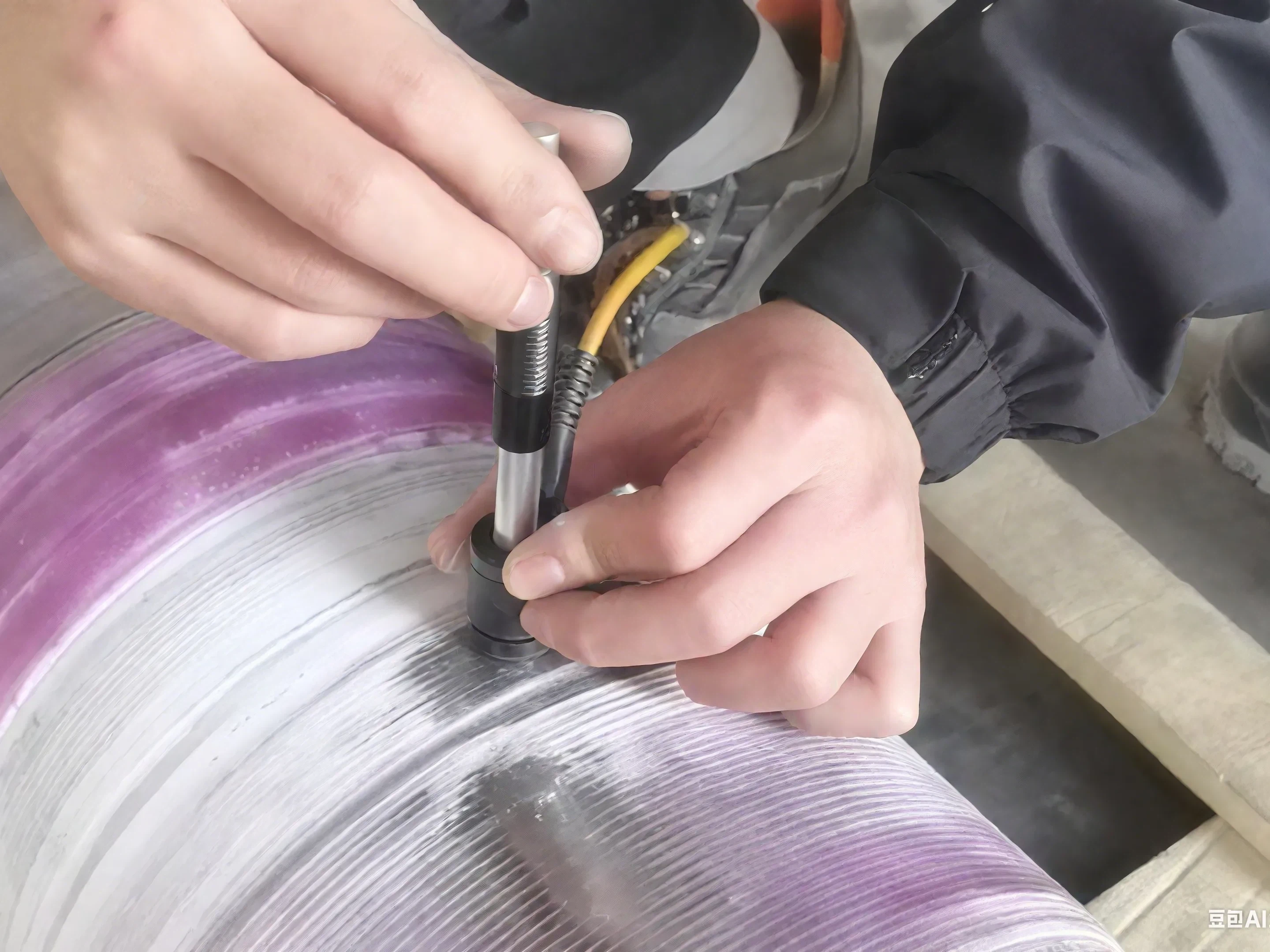
Following machining of the workpiece, a Leeb hardness test was conducted to verify its surface hardness against design specifications. The Leeb hardness testing method, selected for its portability and suitability for on-site measurements of large workpieces, determines hardness by measuring the rebound velocity of an impactor after it strikes the workpiece surface. The converted hardness reading of approximately HRC61 confirmed compliance with design requirements.
How to check surface defects of workpieces
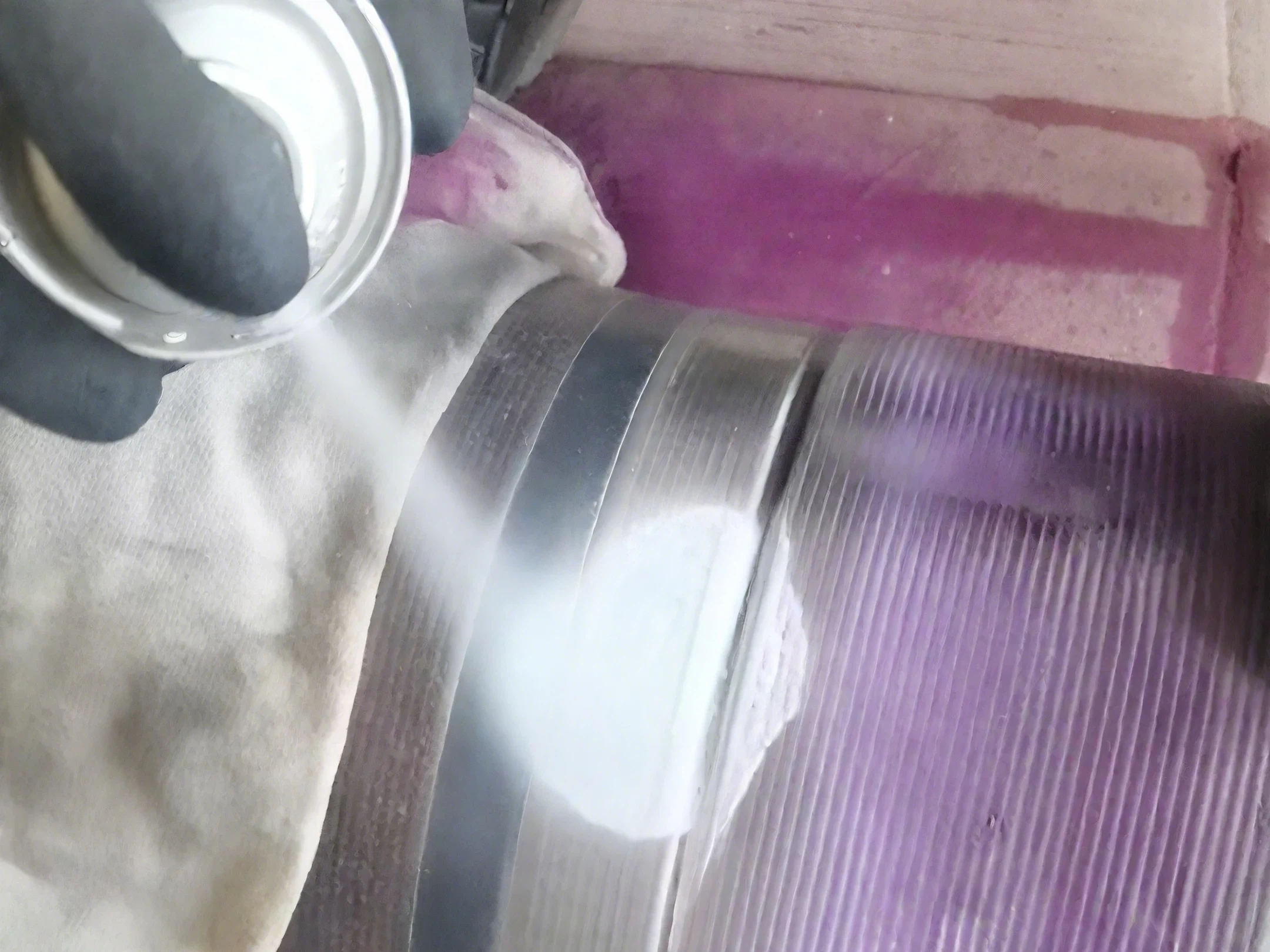
What you are seeing now is a workpiece after cladding. To more intuitively display the surface condition of the workpiece, we have used a penetrant-specifically a red dye penetrant commonly used in non-destructive testing. As you can see, under its action, some tiny cracks and pores on the workpiece surface are clearly visible. If these defects are not treated in time, they may cause the workpiece to fracture or leak during use, leading to serious consequences.
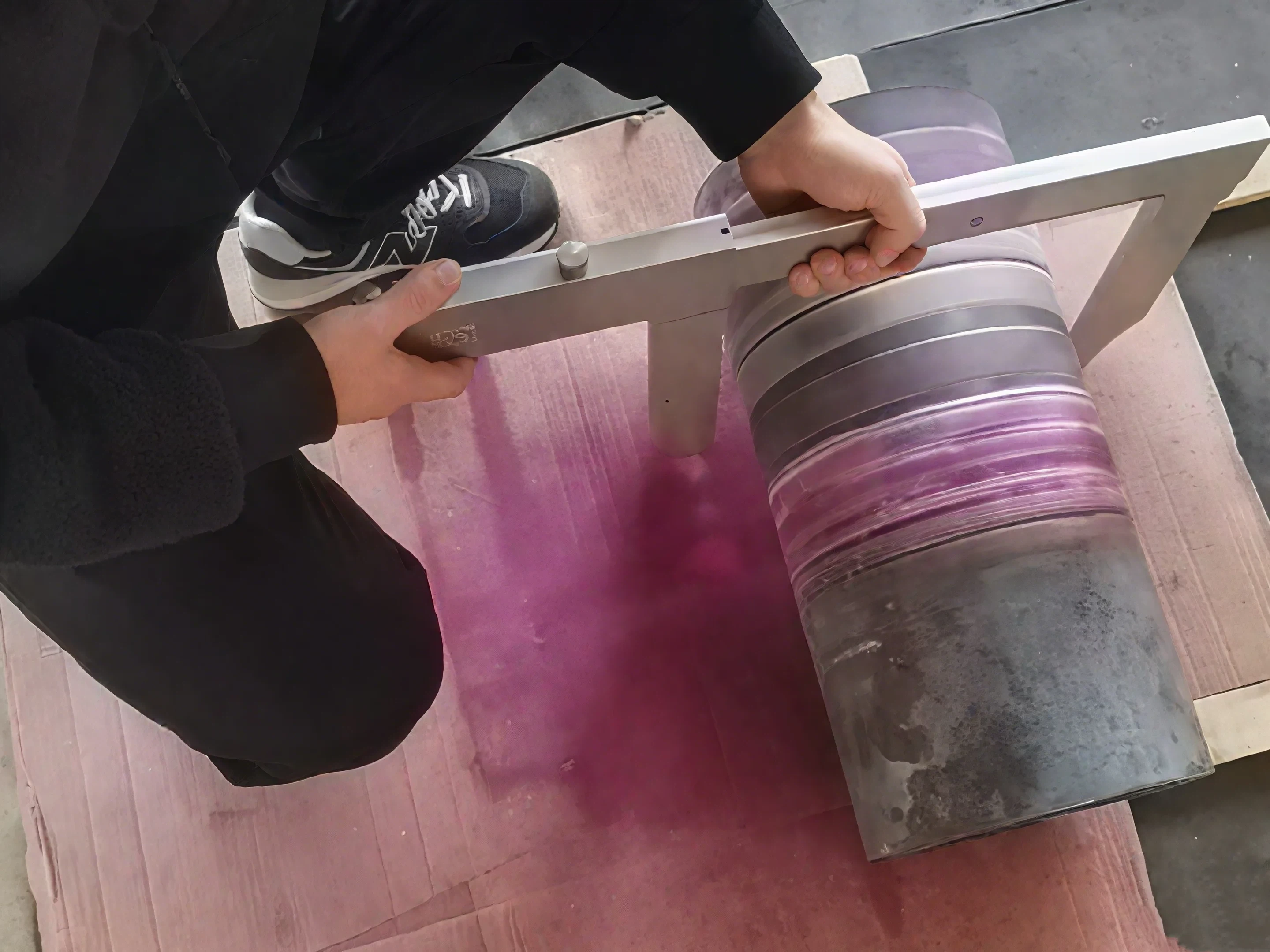
To measure the thickness of the cladding layer, we used a caliper with an accuracy of 0.02 mm: first, two measuring points were identified on the test workpiece both before and after processing, and the respective thicknesses were recorded; the thickness of the cladding layer at each measuring position was then determined by calculating the difference between the post-cladding and pre-cladding thicknesses. Conducted at room temperature, this measurement showed that the workpiece had a thickness of 241 mm before cladding and 246 mm after cladding, with the 5 mm difference representing the cladding layer thickness.