

Introduction:
In the fast-paced world of manufacturing, optimizing efficiency and minimizing downtime are crucial for maintaining competitiveness. Slide rail robots have emerged as indispensable tools in achieving these goals, offering a range of capabilities that streamline operations and mitigate disruptions. This article explores how it enhances efficiency and reduces downtime in industrial settings.
Understand Products:
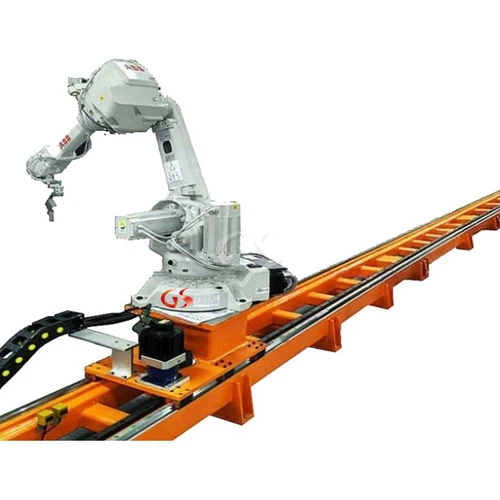
Slide rail robots represent a significant advancement in industrial automation, offering precise and efficient material handling capabilities. These robots utilize sliding rails to navigate along predefined paths, allowing for seamless movement within manufacturing environments. With their versatility and agility, they excel in tasks such as transporting components between workstations, loading/unloading materials from machines, and facilitating assembly processes.
Today, it plays a vital role in streamlining operations, increasing productivity, and ensuring the competitiveness of manufacturing facilities in today's fast-paced industrial landscape.
Product Versatility
1. Streamlined Material Handling:
Slide rail robots excel in material handling tasks, efficiently transporting components and products within the production environment. Equipped with precise motion control and programmable routines, these robots can swiftly move materials between workstations, assembly lines, and storage areas. By automating material transport, it eliminates the need for manual handling, reducing the risk of errors, and accelerating throughput.
2. Optimized Production Flow:
One of the key advantages of slide rail robots is their ability to optimize production flow. These robots can be programmed to perform sequential tasks with precision, ensuring seamless coordination between different stages of the manufacturing process. Whether it's transferring workpieces between machining stations or loading/unloading parts from machines, it synchronizes operations, minimizing idle time and maximizing overall equipment effectiveness (OEE).
3. Flexible Adaptability:
It offers a high degree of flexibility, making them well-suited for dynamic manufacturing environments. Unlike traditional fixed automation systems, it can be easily reconfigured or reprogrammed to accommodate changes in production requirements or product variants. This adaptability enables manufacturers to quickly adjust workflows, scale operations, and respond to shifting market demands without significant downtime or retooling.
4. Reduced Setup Time:
Setup and changeover times are critical factors affecting manufacturing efficiency. It contributes to reducing setup time by facilitating rapid reconfiguration of production lines. With their agile mobility and modular design, these robots can swiftly adapt to new tasks or product configurations, minimizing the downtime associated with equipment retooling and reprogramming. As a result, manufacturers can achieve quicker turnaround times and increase overall equipment utilization.
5. Predictive Maintenance:
1). Early Detection of Issues
To prevent unplanned downtime, slide rail robots often incorporate advanced diagnostics and predictive maintenance features. By continuously monitoring key performance metrics and detecting early signs of component wear or malfunction, these robots can proactively schedule maintenance activities. Predictive maintenance enables manufacturers to address issues before they escalate, reducing the risk of unexpected outages and maximizing equipment uptime.
2). Remote Monitoring
Remote monitoring capabilities further enhance the reliability of it by enabling real-time surveillance of operations. Maintenance teams can remotely access robot systems, monitor performance metrics, and diagnose potential issues from anywhere with an internet connection. This proactive approach to maintenance streamlines troubleshooting processes, minimizes downtime and ensures uninterrupted production operations.
6. Enhanced Safety:
Slide rail robots contribute to workplace safety by automating repetitive or hazardous tasks traditionally performed by human operators. By reducing human involvement in potentially dangerous activities, such as heavy lifting or exposure to hazardous environments, these robots mitigate the risk of workplace accidents and injuries. Furthermore, integrated safety features, such as collision detection sensors and emergency stop mechanisms, ensure safe operation in dynamic manufacturing environments.
Conclusion:
In conclusion, slide rail robots play a pivotal role in enhancing efficiency and reducing downtime in industrial settings. Through streamlined material handling, optimized production flow, flexible adaptability, reduced setup time, predictive maintenance, and enhanced safety features, these robots empower manufacturers to achieve higher productivity, lower operating costs, and improved competitiveness. As manufacturing continues to evolve, it will remain an indispensable tool for driving operational excellence and meeting the demands of modern industry.
Xi'an Guosheng Laser Technology Co., Ltd. is a high-tech enterprise specializing in R&D, manufacturing and sales of automatic laser cladding machine, high-speed laser cladding machine, laser quenching machine, laser welding machine and laser 3D printing equipment. Our products are cost-effective and sold domestically and abroad. If you're interested in our products, please contact us at bob@gshenglaser.com.
References:
Smith, J., & Johnson, R. (2021). "Automation in Manufacturing: A Comprehensive Overview." Journal of Industrial Robotics, 25(3), 123-136.
Chen, H., & Wang, L. (2019). "Predictive Maintenance Strategies for Industrial Robots." IEEE Transactions on Automation Science and Engineering, 16(2), 789-802.
Lee, K., & Kim, S. (2018). "Scalable Robotics for Flexible Manufacturing Systems." International Journal of Advanced Manufacturing Technology, 42(4), 567-580.
Liu, Y., et al. (2020). "Efficiency Improvement in Material Handling using Robotic Systems." Robotics and Computer-Integrated Manufacturing, 35(2), 234-247.