

Introducing the Superior Coating Technology
In the evolving landscape of industrial surface engineering, Ultra High Speed Laser Cladding has emerged as a transformative, environmentally sustainable technology poised to replace traditional methods like hard chrome plating and thermal spraying. This advanced additive manufacturing process utilizes a high-power laser beam to fuse premium alloy powders-such as cobalt-based, nickel-based, or iron-based alloys-onto a substrate, creating a dense, metallurgically bonded coating. For manufacturers of hydraulic cylinders, pump shafts, marine components, and valve parts, this technology offers unparalleled benefits. It delivers pore-free, defect-free cladding layers with exceptional bond strength and wear resistance, all while operating as a clean, chemical-free process that eliminates toxic wastewater and hexavalent chromium emissions, aligning with stringent global environmental regulations.

Why Replace Hard Chrome Plating
Hard chrome plating, once the industry standard for wear and corrosion protection, faces significant challenges. The electroplating process is energy-intensive, generates hazardous waste containing carcinogenic hexavalent chromium, and produces coatings with inherent micro-cracks and poor adhesion, often leading to premature peeling. Regulatory pressures from the EU, US, and China are increasingly restricting its use. In contrast, Ultra High Speed Laser Cladding equipment provides a superior alternative. The coating is applied in a single, dry process with negligible waste. The resulting layer forms a perfect metallurgical bond with the base material, such as carbon steel or stainless steel shafts, eliminating delamination risks. This shift not only future-proofs production but also reduces long-term lifecycle costs associated with rework and environmental compliance.
Technical Superiority Over Thermal Spray Coatings
While thermal spray offers a high deposition rate, its limitations are critical for demanding applications. Typical thermal spray coatings exhibit 1-2% porosity, allowing corrosive agents to penetrate and attack the substrate. Their mechanical bond strength is often below 150 MPa, which can fail under heavy loads. Ultra High Speed Laser Cladding overcomes these flaws entirely. The process creates a fully dense, non-porous microstructure. The metallurgical integration with the substrate ensures bond strength significantly exceeding that of sprayed coatings, often matching the base metal's properties. Furthermore, advanced powder feeding systems achieve a powder utilization rate over 90%, compared to roughly 50% for thermal spray, dramatically reducing material waste and operational cost for coating services.


Precision and Efficiency in Cladding Parameters
Ultra High Speed Laser Cladding fills a critical gap in the coating thickness spectrum, efficiently producing layers from 50 to 500 microns-a range poorly served by other technologies. The process boasts a cladding speed of 100-500 mm/s, covering 0.5 to 1 square meters per hour, making it highly efficient for large components like industrial rolls or machinery parts. Precision CNC control allows for exact control over the melt pool and layer thickness from 0.2mm to over 1mm. The as-clad surface roughness is dramatically smoother-approximately 10% that of conventional laser cladding-minimizing post-process machining. This combination of speed, precision, and excellent surface finish makes it ideal for high-volume repair and OEM manufacturing of precision components.
Key Applications Across Heavy Industries
This technology is revolutionizing component longevity and performance in sectors where wear, corrosion, and high loads are constants. Key applications include refurbishing and protecting hydraulic piston rods, extruder screws, turbine shafts, and offshore drilling components. It is exceptionally suited for applying Inconel alloys for high-temperature resistance or tungsten carbide composites for extreme abrasion resistance. The ability to apply a thin, tough, and perfectly bonded coating makes it perfect for dimensionally sensitive parts where adding significant material is not an option. By extending service life, reducing downtime for maintenance, and eliminating the need for hazardous plating baths, Ultra High Speed Laser Cladding delivers a compelling return on investment for industrial operations.

Laser equipment components

Fiber Laser Machine

Laser Cladding Head
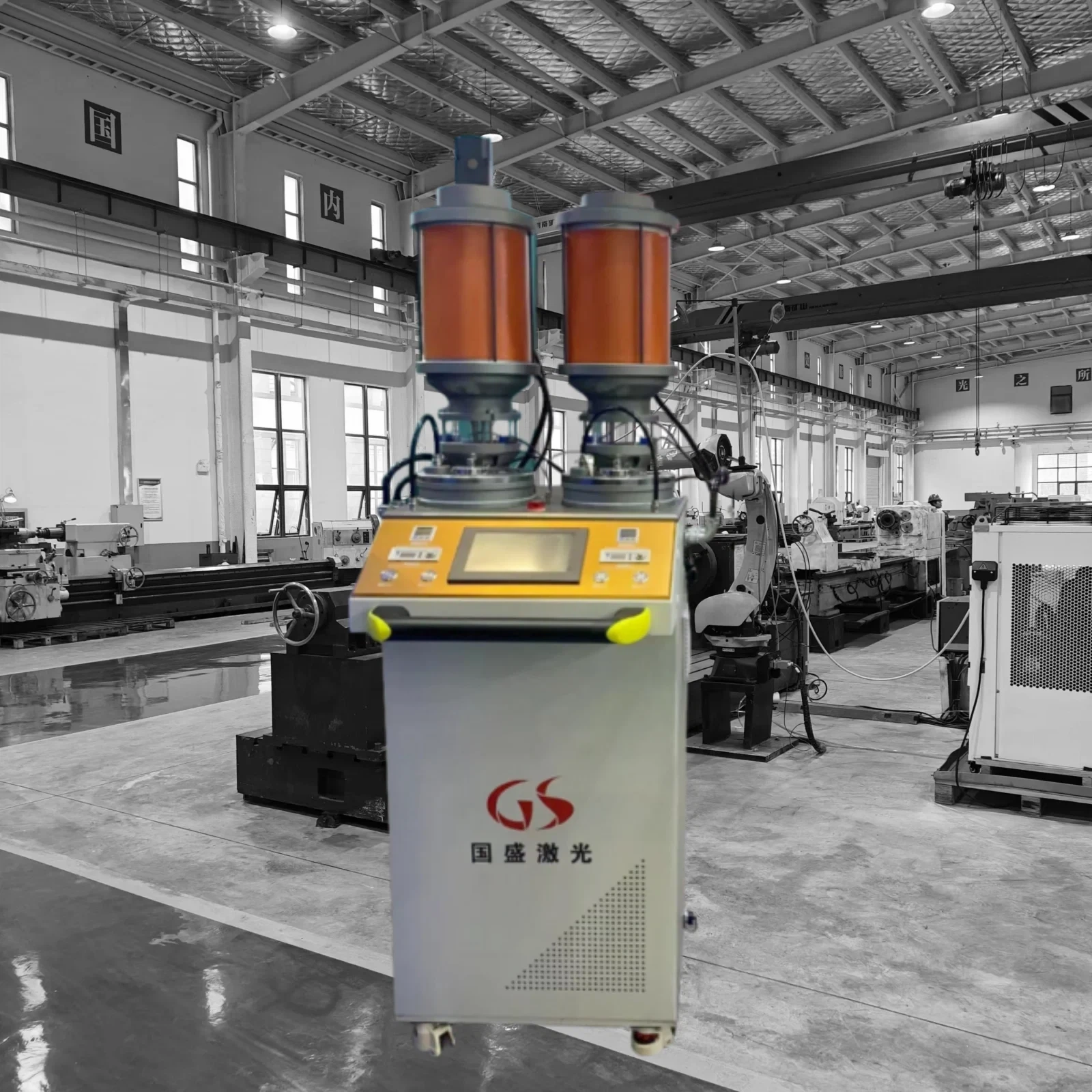
Powder Feeder

Laser Hardening Head
The Future of Sustainable Surface Engineering
Ultra High Speed Laser Cladding represents more than just an equipment upgrade; it signifies a strategic shift towards sustainable, high-performance manufacturing. It successfully bridges the gap between the thin, porous coatings of thermal spray and the high-heat-input of weld overlays, offering a perfect balance of quality, efficiency, and environmental responsibility. As global regulations tighten and the demand for durable, reliable components grows, adopting this laser additive manufacturing technology becomes imperative. It provides manufacturers with a future-ready solution to enhance product life, reduce environmental impact, and maintain a competitive edge in the market for precision coatings and advanced component repair.
FAQ
Q: What makes laser cladding better than hard chrome plating?
A: Ultra High Speed Laser Cladding creates a metallurgically bonded, pore-free coating with superior adhesion and no micro-cracks, unlike electroplated chrome. It is a clean, dry process that uses no toxic chemicals, eliminating hazardous waste and helping manufacturers comply with strict environmental regulations for industrial coating.
Q: How does the coating quality of laser cladding compare to thermal spray?
A: Laser cladding produces a fully dense coating with zero porosity, preventing substrate corrosion. It forms a metallurgical bond with strengths far exceeding the mechanical bond of thermal spray coatings, ensuring exceptional durability under heavy load for parts like shafts and cylinders.
Q: What thickness can be achieved with ultra high-speed laser cladding?
A: This process excels at producing precise coating layers in the 50 to 500-micron range, filling a critical gap in coating technology. It allows for single-layer deposition from 0.2mm to over 1mm with excellent surface finish, making it ideal for precision wear protection and dimensional restoration.