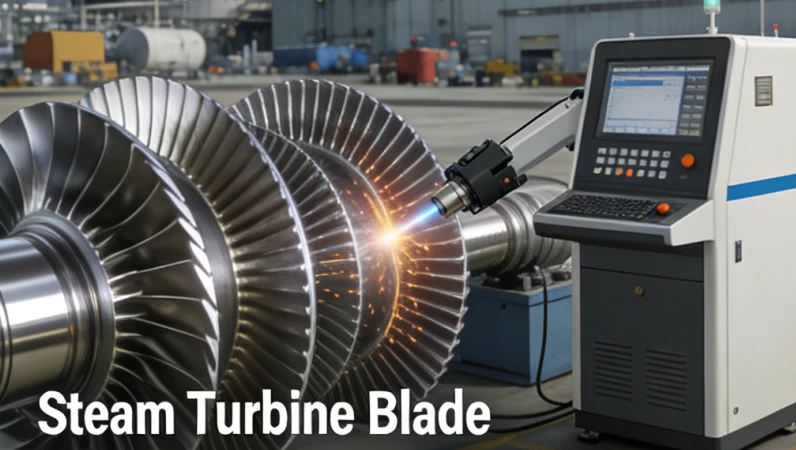
The aerospace industry demands the absolute highest levels of precision, reliability, and material performance. Components operating in aircraft engines, landing gears, and structural assemblies are continuously subjected to extreme thermal stress, mechanical fatigue, and aggressive atmospheric corrosion.
To meet these stringent requirements, **aerospace laser cladding applications** have transitioned from experimental laboratory processes to flight-certified manufacturing and MRO (Maintenance, Repair, and Overhaul) standards.
By utilizing a high-energy laser beam to fuse high-performance alloys onto critical substrates, laser cladding enables aerospace engineers to build lighter, stronger, and more resilient aircraft components.
Key Strategic Applications of Laser Cladding in Aerospace
Laser cladding provides dual benefits to the aerospace sector: it allows for the additive manufacturing of localized, high-performance features on new parts, and it offers a flawless method for restoring high-value components that would otherwise be scrapped.
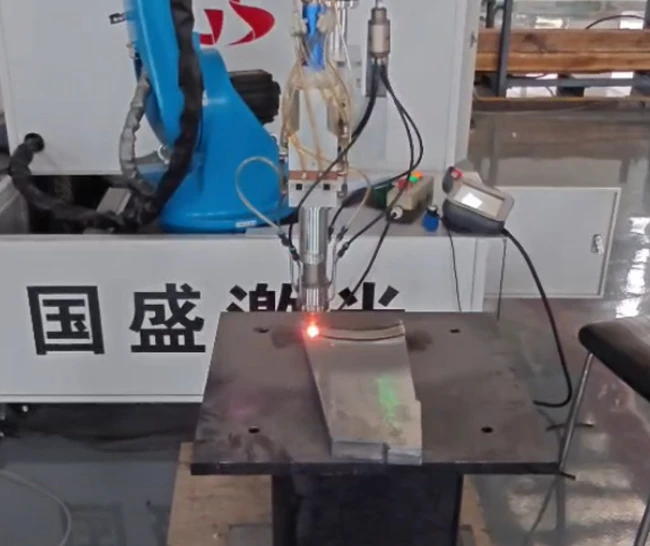
1. Aircraft Landing Gear Reconditioning
Landing gear components endure severe impact loads and abrasive wear during takeoff and landing cycles.
Replacing Hard Chrome: Traditionally, hydraulic actuators and cylinders were electroplated with hexavalent chromium. Due to environmental regulations and the risk of hydrogen embrittlement, aerospace manufacturers are rapidly adopting landing gear laser cladding with eco-friendly stainless steel or nickel-based superalloys.
Corrosion Mitigation:Cladding crucial pivot pins and shafts ensures zero porosity and superior resistance to saltwater and atmospheric corrosion.
2. Aero-Engine Gas Path Components
The hot section of a jet engine experiences temperatures exceeding the melting point of standard metals.
Seal Segment and Casing Repair: Engine casings and stator segments suffer from erosion caused by high-velocity gas streams. Industrial aerospace laser cladding is used to rebuild these complex geometries with minimal heat input, ensuring no distortion to the engine's tight dimensional tolerances.
Shaft and Bearing Journal Restoration: High-speed main shafts can be precision-clad to restore sub-millimeter wear, saving millions in replacement costs.
3. Structural and Airframe Components
Titanium Component Hardfacing:Titanium is beloved for its strength-to-weight ratio but suffers from poor wear resistance (galling). Localized titanium laser cladding allows designers to apply a hard wear-resistant tracks exactly where moving parts contact the airframe.
4.Certified Aerospace Materials for Laser Surfacing
Aerospace quality controls (such as AS9100) require precise material traceability. The most common alloys deployed in aerospace surface modification include:
Nickel-Based Superalloys (Inconel 718 / Inconel 625):Exceptional mechanical strength and oxidation resistance at elevated temperatures, critical for exhaust and turbine structures.
Cobalt Alloys (Stellite 6 / Stellite 31): Used extensively for anti-galling and high-temperature wear surfaces in valve guides and engine actuators.
Titanium Alloys (Ti-6Al-4V):Deployed for structural matching and weight-optimized wear tracking.
4.Technical Advantages: Why Aerospace Trusts Laser Cladding&Conclusion: Future-Proofing Aerospace Manufacturing
Compared to conventional arc welding (TIG) or plasma spraying, laser cladding offers unmatched technical superiority:
Ultra-Low Heat Affected Zone (HAZ):Prevents metallurgical degradation, micro-cracking, and warping of thin-walled aerospace structures.
100% Dense Metallurgical Bond: Eliminates the risk of coating delamination under extreme aerodynamic or mechanical shear stress.
High Automation & Repeatability: Integrates seamlessly with multi-axis robotic laser cladding systems to meet strict digital manufacturing standards.
As the aerospace sector pushes toward higher fuel efficiency and lower emissions, engines must run hotter, and parts must last longer. Investing in aerospace grade laser cladding equipment or partnering with a certified service provider is no longer optional-it is the baseline for modern aviation engineering.
Whether you are optimizing an MRO facility or developing next-generation aerospace components, laser cladding delivers the metallurgical perfection required to keep aircraft flying safely.