

Core of Laser Hardening and Surface Pretreatment for Metal Materials
In the field of industrial manufacturing, the hardness and strength of metal materials directly determine the durability and safety of products. Laser hardening technology, with its advantages of high efficiency and precision, has become a key means to improve the performance of metal materials. As a core pre-process for laser hardening, surface pretreatment directly affects the absorption efficiency of laser energy and the final hardening quality. This article will break down the core technical points around the principle of laser hardening for metal materials, the necessity of surface pretreatment, mainstream pretreatment methods, and industry development trends, providing a reference for relevant practitioners.
Core Operating Principle of Laser Hardening for Metal Materials
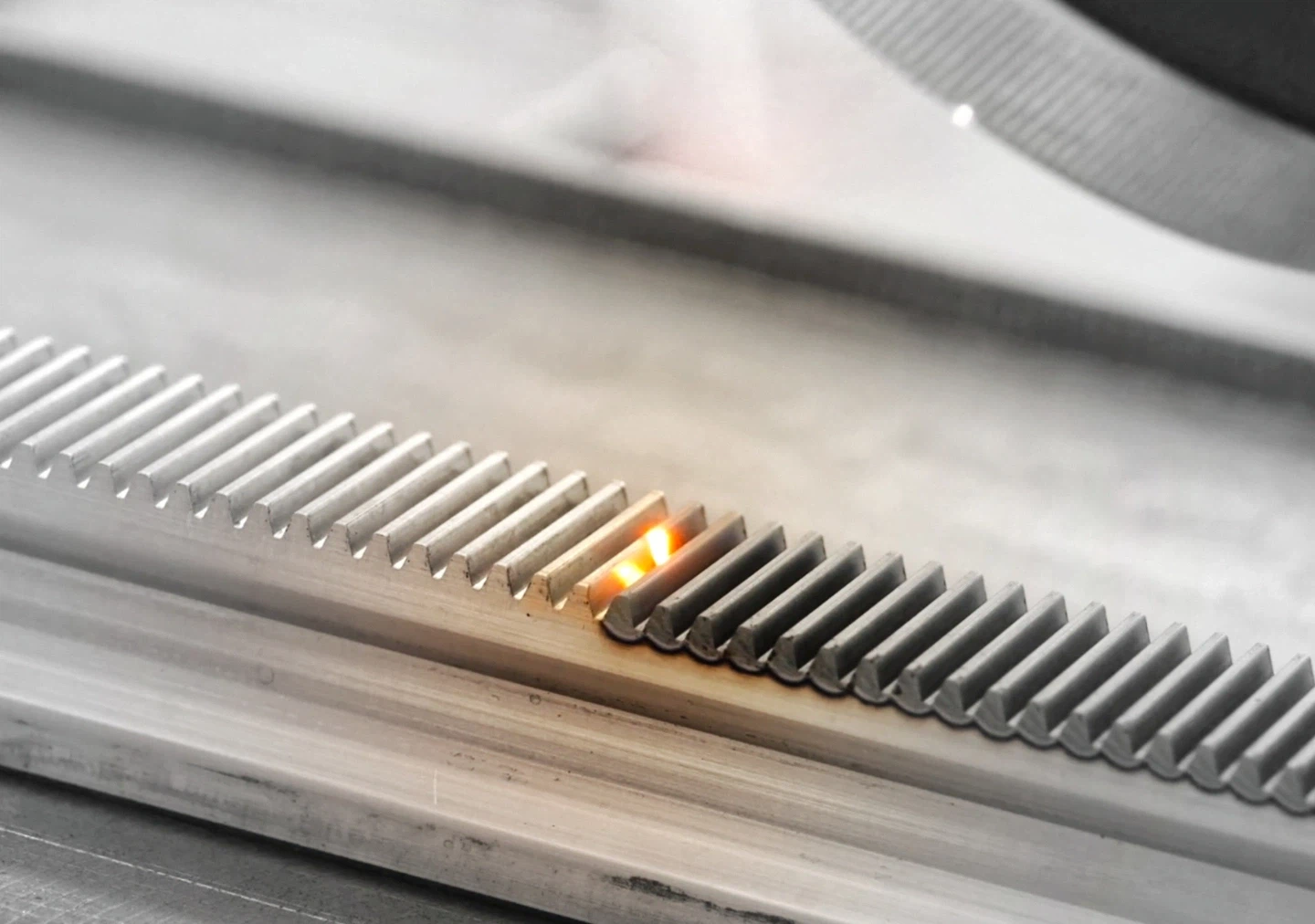
The core logic of laser hardening for metal materials lies in improving performance through the absorption of laser beams by the metal surface: The laser itself does not directly participate in the thermal stress and strain of the workpiece's surface layer. Instead, it relies on high-energy-density laser beams to make the metal surface layer quickly absorb energy, thereby generating thermal stress and strain, and ultimately achieving a significant increase in hardness and strength. Since the laser does not directly intervene in surface layer stress changes, surface pretreatment before laser hardening becomes an indispensable link to ensure that laser energy can act on the metal surface efficiently, which is also the basic prerequisite for guaranteeing the hardening effect.
Key Necessity of Surface Pretreatment Before Laser Hardening
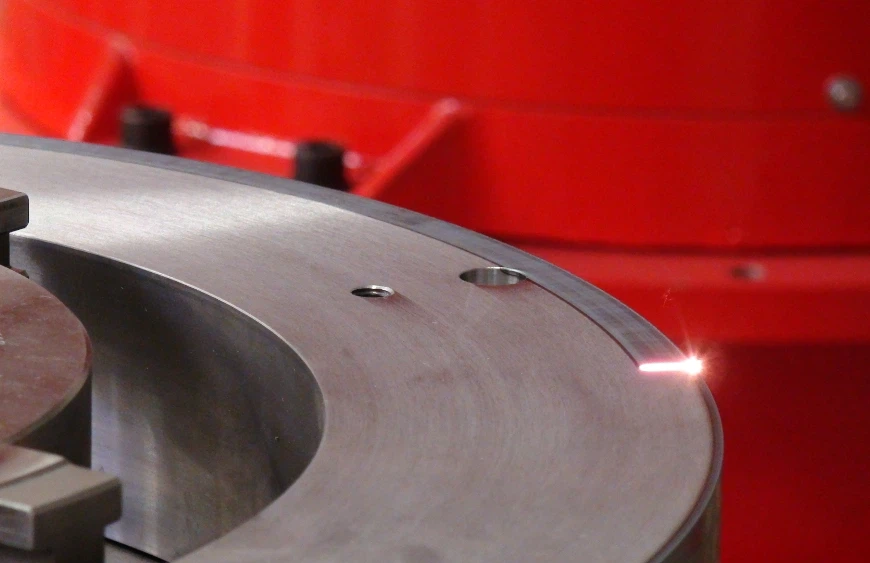
After mechanical processing, the surface of most metal materials has low roughness, a characteristic that leads to a reflectivity as high as 80-90% for lasers. A large amount of laser energy is lost due to reflection, which directly affects the absorption efficiency of light energy by the metal surface layer. This further results in poor laser hardening effects and even problems of uneven local hardening. Therefore, the core purpose of surface pretreatment is clear: to reduce the reflectivity of the metal surface through targeted processes and improve the absorption efficiency of lasers on the metal surface, laying the foundation for the uniformity and effectiveness of subsequent laser hardening.

Mainstream Surface Pretreatment Methods and Operational Key Points for Laser Hardening
The mainstream surface pretreatment methods in industry are the paint spraying method and the phosphating method, both of which can efficiently improve laser absorption efficiency and are suitable for different scenarios:
•Paint Spraying Method: It features a simple and fast process, requiring no preheating or additional heat treatment of the workpiece. It can be used for mass production and also for manual brushing (suitable for occasional processing/experiments), without the need to add complete sets of equipment. Operation steps: After cleaning the metal workpiece with water, place it in jet air or plasma for heating and heat preservation; then spray the surface coating and dry it to form a dense coating. The coating thickness should be controlled at 50-100 microns (excessive thickness may cause "burn-through"). Most coatings can increase the laser absorption rate to over 80-98%, meeting the requirements of laser quenching.
•Phosphating Method: It is often the final process in mechanical part processing and can be directly connected to laser hardening. According to temperature, it is divided into high-temperature phosphating (90-98°C), medium-temperature phosphating (55-70°C), and room-temperature phosphating (around 25°C). High-temperature and medium-temperature phosphating are optimal (the phosphating film has a higher absorption rate). The thickness of the phosphating film should be less than 20 microns to avoid "burn-through" affecting subsequent quality. In addition, surface roughening and oxidation methods are also commonly used, among which the oxidation method and spraying method have mature technologies and can be selected as needed.
Industry Development Trends of Laser Hardening and Pretreatment for Metal Materials
With the upgrading of industrial materials, new materials such as nano-scale oxides, cermets, and metal coatings are constantly emerging. These materials put forward higher requirements for the adaptability of traditional oxidation technologies and spraying technologies - processes need to be optimized to improve pretreatment effects and ensure that new materials can absorb laser energy efficiently. At the same time, the technological maturity of domestic laser quenching equipment continues to improve, with breakthroughs in equipment precision and automation level, providing more solid hardware support for the large-scale application of laser hardening technology.

Core Summary of Laser Hardening and Surface Pretreatment for Metal Materials
In summary, the core of laser hardening for metal materials is to improve performance through laser beam absorption, while surface pretreatment is the key to solving the high reflectivity of metal surfaces and ensuring the hardening effect. As mainstream pretreatment methods, the paint spraying method and phosphating method require strict control of parameters such as coating/phosphating film thickness and temperature to ensure that the laser absorption rate meets standards. In the future, with the application of new materials and the upgrading of equipment, laser hardening and pretreatment technologies will better adapt to diverse industrial needs and become an important force in promoting quality improvement and efficiency enhancement in the metal processing industry.