

Have you noticed?
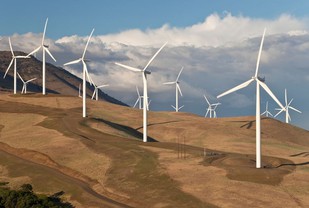
Wind power is one of the fastest-growing renewable energy sectors, but its long-term profitability is heavily challenged by severe wear, corrosion, fatigue, and high-cost replacement of core components. Parts such as main shafts, gearbox bearings, planet carriers, flanges, and hydraulic cylinders operate under heavy loads, alternating stress, salt spray, and variable speed conditions, leading to frequent downtime and expensive maintenance. In recent years, laser cladding technology has become the most cost-effective and reliable solution for wind farm repair and surface strengthening.
1. What Is Laser Cladding & Why Wind Power Needs It?
Laser cladding uses a high-power laser beam to melt metal powder and fuse it metallurgically onto the workpiece surface, forming a dense, low-dilution, high-hardness coating with strong bonding strength (≥550 MPa). Unlike traditional welding or thermal spraying, laser cladding features low heat input, small heat-affected zone, minimal deformation, precise thickness control (0.5–3 mm per layer), and high powder utilization (≥90%).
In wind power, traditional repair methods often cause shaft bending, cracking, or softening of the base material, while replacement costs for a single main shaft can exceed $50,000–$100,000 with lead times of 8–12 weeks. Laser cladding reduces repair costs to 30–50% of new parts and shortens delivery to 7–10 days, making it ideal for wind farm O&M.

2. Core Machine Parameters & Their Meaning
To achieve stable, high-quality cladding for wind components, you must understand and optimize these key parameters:
Laser Power (3–6 kW for wind industry)Determines melting ability and deposition efficiency. For 42CrMo main shafts, 5,000–6,000 W is typical; too low causes poor fusion, too high leads to overheating and deformation.
Spot Diameter (2–8 mm)Controls power density. Small spots (2–4 mm) for precision areas (bearing seats); large spots (6–8 mm) for large surfaces (flanges, housings).
Scanning Speed (10–20 mm/s)Balances heat input and layer thickness. Wind shafts usually run at 10–15 mm/s to avoid cracking and ensure bonding.
Powder Feeding Rate (15–30 g/min)Matches laser power. Ni-based powder for main shafts: 15–20 g/min; higher rates risk un-melted powder.
Overlap Rate (60–80%)Affects surface smoothness. Higher overlap reduces roughness; wind parts typically use 70%.
Shielding Gas (Argon, 15–25 L/min)Prevents oxidation. Argon is preferred over nitrogen for Ni/Co-based powders.
3. Wind Power Application Scenarios & Recommendations
Different components require tailored cladding solutions:
Main Shafts (42CrMo/34CrNiMo6)Problem: journal wear, corrosion, micro-cracks.Recommendation: 5–6 kW laser, Ni-based powder (Ni60/NiCrMo), 0.5–1 mm per layer, 10–15 mm/s speed. Restores diameter tolerance to ±0.02 mm.
Gearbox Bearings & RacesProblem: pitting, fretting, wear.Recommendation: 3–4 kW laser, Stellite 6 or NiCrW powder, small spot (2–3 mm), 70–80% overlap. Hardness reaches HRC 58–62.
Planet Carriers & Housings (QT700/ cast steel)Problem: high torque wear, deformation.Recommendation: 4–5 kW laser, Ni-based alloy, large spot (6–8 mm), 15–20 mm/s. Prioritize low dilution (<3%).
Hydraulic Cylinders & Piston RodsProblem: corrosion, scoring, leakage.Recommendation: 3–4 kW laser, Inconel 625 or stainless steel powder, mirror finish after cladding. Extends service life by 3–5 times.

4. Common Misconceptions in Wind Power Laser Cladding
Myth 1: Higher laser power = better qualityFact: Excess power causes powder vaporization, porosity, and deformation. Many wind farms damaged 42CrMo shafts by using 8 kW lasers; 3–6 kW is optimal for most wind components.
Myth 2: Any nickel powder works for shaftsFact: Ordinary Ni powder has poor fatigue resistance. Wind shafts require NiCrMo or Ni60 with Cr/Mo/W elements to resist alternating stress.
Myth 3: Cladding can fix deep cracks without pre-treatmentFact: Cracks deeper than 2 mm need grinding + ultrasonic inspection + pre-heating (150–200°C) before cladding; otherwise, cracks will propagate.
Myth 4: Cladded parts do not need post-processingFact: Wind components require CNC turning/grinding (±0.02 mm tolerance) + low-temperature tempering (200–300°C) + UT/PT inspection to meet OEM standards.
5. Summary & Practical Recommendations
Laser cladding is the most reliable and cost-efficient technology for wind power component repair and strengthening. To maximize ROI:
①.Match power to component size: 3–4 kW for small parts, 5–6 kW for main shafts and large housings.
②.Use wind-grade powders: NiCrMo for shafts, Stellite 6 for bearings, Inconel 625 for cylinders.
③.Follow strict pre- and post-treatment: surface cleaning, pre-heating, stress relief, and non-destructive testing.
④.Avoid over-power and over-speed: prioritize low dilution (<3%) and minimal deformation.
As wind turbines grow larger and service life extends, laser cladding will become standard equipment for wind farm maintenance, helping operators reduce costs, increase uptime, and achieve sustainable green energy goals.