1. Common Wear Problems in Ball Valve Sealing Surfaces
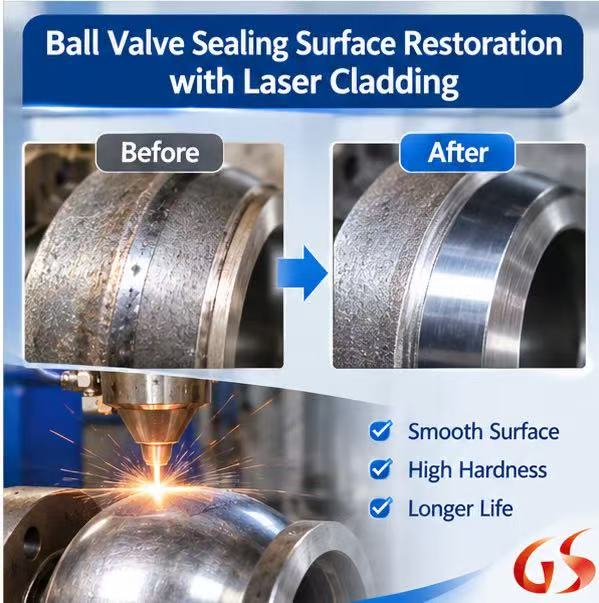
Ball valves are widely used in oil and gas, chemical processing, power generation, and industrial pipeline systems. Over time, ball valve sealing surfaces can suffer from wear, corrosion, erosion, scratches, and surface damage caused by frequent operation and harsh working conditions. These problems may lead to valve leakage, reduced sealing performance, and higher maintenance costs. Traditional valve repair methods often require extensive material removal or replacement of damaged components. Laser cladding for ball valve repair provides an efficient surface restoration solution, helping manufacturers and maintenance companies restore worn valve sealing surfaces and extend component service life.
2. How Laser Cladding Restores Worn Ball Valve Surfaces
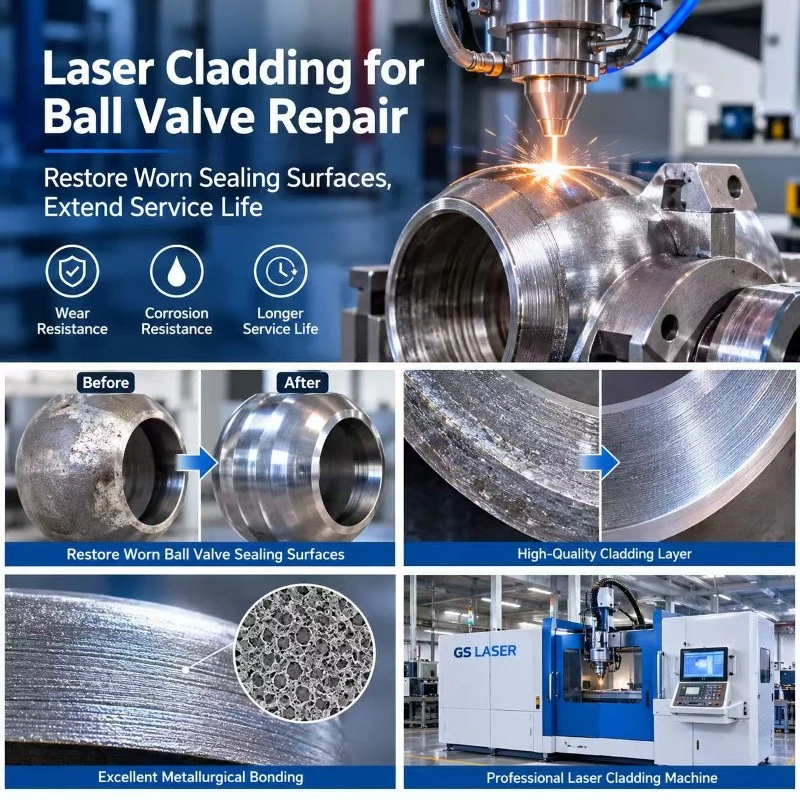
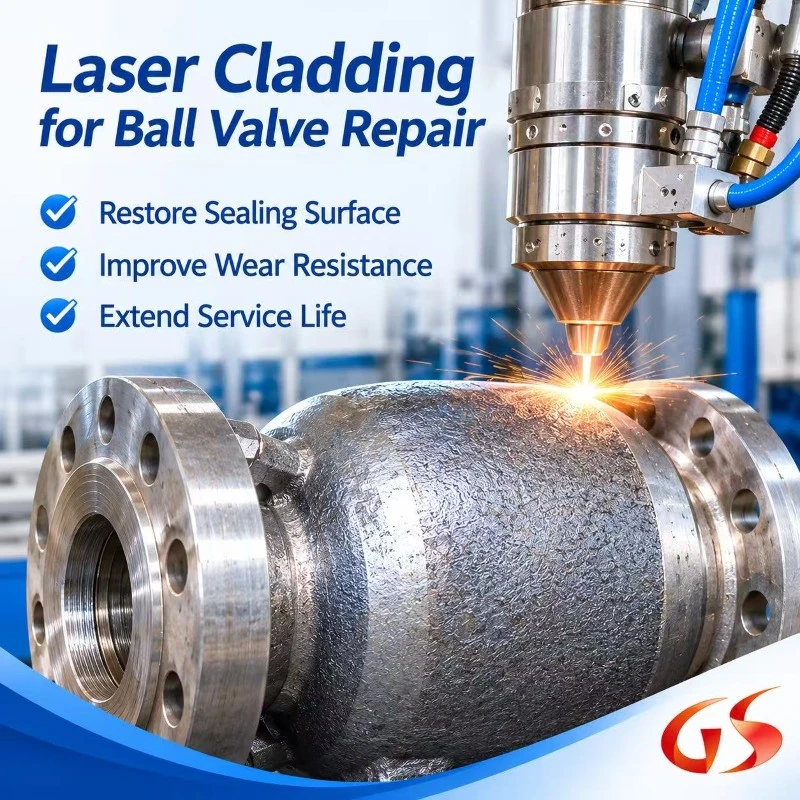
Laser cladding is an advanced surface repair technology that uses a high-energy laser beam to melt metal powder and form a metallurgically bonded coating on the valve surface. During the ball valve laser cladding process, alloy powders such as Stellite 6, nickel-based alloys, or other wear-resistant materials can be selected according to the working environment and performance requirements. The process produces a dense coating with controlled heat input and relatively low dilution when properly optimized. Compared with traditional hardfacing and PTA welding, laser cladding can offer better control of heat input and coating quality, making it suitable for valve seat repair, ball valve sealing surface restoration, and wear-resistant valve coatings.
3. Key Benefits of Laser Cladding for Industrial Ball Valve Repair
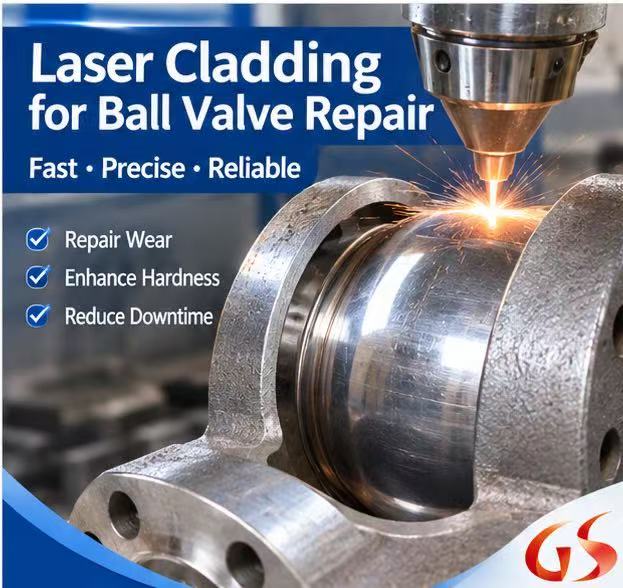
Using a laser cladding machine for valve repair can help manufacturers improve the durability and performance of critical valve components. Laser-clad coatings can provide excellent wear resistance, corrosion resistance, and metallurgical bonding when suitable materials and processing parameters are selected. The technology is applicable to ball valve seats, sealing rings, valve bodies, and other industrial valve components. It also supports localized surface repair, reducing the need to replace entire expensive components. For oil and gas valves, high-pressure valves, and chemical industry valves, laser cladding offers a practical solution for surface strengthening, component remanufacturing, and maintenance cost reduction. Proper post-processing, including precision machining and grinding, is essential to achieve the required sealing dimensions and surface finish.
4. How to Choose the Right Laser Cladding Machine for Ball Valve Repair
Selecting the right laser cladding equipment for ball valve manufacturing and repair is important for achieving consistent coating quality and production efficiency. Key factors include laser power, cladding head configuration, powder feeding system, CNC motion system, workpiece dimensions, and the required coating materials. For complex ball valve components, a suitable CNC or robotic laser cladding system can provide flexible processing paths and stable positioning. Guosheng Laser provides industrial laser cladding machine solutions for valve repair, surface restoration, and metal component remanufacturing. If you are looking for a ball valve laser cladding machine or customized valve seat cladding equipment, contact us with your workpiece drawings, material, dimensions, and wear conditions. Our team can help recommend a suitable laser cladding solution for your application.