

Aero engine components operate under extreme conditions of ultra-high temperature, intense pressure, strong airflow erosion, and cyclic mechanical fatigue. Most critical engine parts are manufactured from high-performance superalloys to guarantee aviation safety and stable operation. However, long-term service inevitably causes various degrees of surface damage, which used to lead to expensive component replacement or unreliable traditional repairs. Today, Laser Cladding equipment has become the ideal remanufacturing solution for aero engine and superalloy component repair, offering high precision, strong bonding performance, and zero compromise on aviation-grade reliability.

Common Wear & Damage Types of Aero Engine Superalloy Parts
Superalloy components in aero engines face extremely harsh working environments, resulting in typical and recurring damage forms. The most common failures include surface abrasion, high-temperature oxidation, thermal corrosion, micro-cracks, and edge material loss caused by long-term high-speed airflow impact. Turbine blades, guide vanes, and combustion chamber parts often suffer from local material peeling and fatigue damage after repeated thermal cycling. Unlike ordinary industrial parts, superalloy engine components cannot tolerate excessive deformation, residual stress, or surface defects. Even tiny microcracks or uneven wear may expand during flight operation, posing severe safety risks. These unique damage characteristics make traditional repair processes difficult to meet aviation maintenance standards, creating a strong demand for high-precision laser cladding restoration.
Why Laser Cladding Outperforms Traditional Repair for High-Temp Alloys
Traditional repair methods such as argon arc welding, thermal spraying, and manual surfacing have obvious limitations when applied to superalloy repair. These processes feature large heat input, wide heat-affected zones, and uncontrollable thermal stress, which easily cause superalloy substrates to deform, crack, or lose original mechanical properties. In addition, traditional coating layers often suffer from poor bonding strength, low density, and short service life, failing to adapt to high-temperature and high-load aviation working conditions.
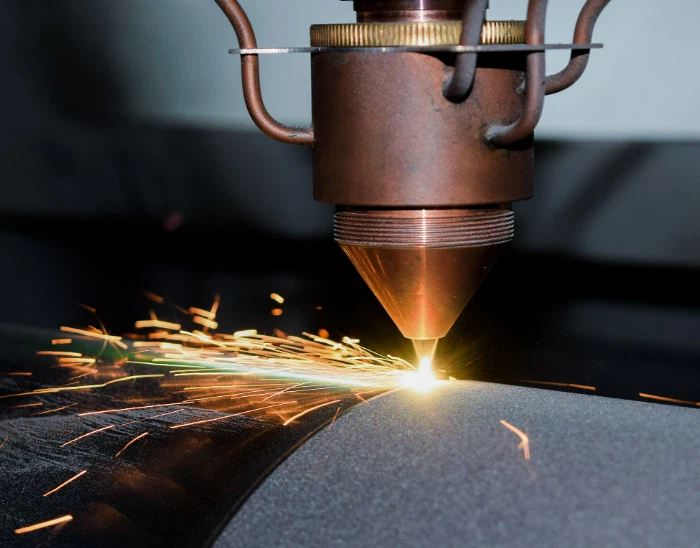
In contrast, Laser Cladding equipment provides low and concentrated heat input with precise energy control. It avoids overall thermal damage to superalloy substrates while achieving rapid melting and solidification of high-temperature alloy powders. The entire process produces minimal residual stress, no secondary deformation, and extremely low crack risk. For high-temperature superalloy materials, laser cladding perfectly retains the base material's original toughness and high-temperature resistance, making it far more reliable than conventional repair technologies.
Precise Restoration for Combustion Chambers, Blades and Vane Components
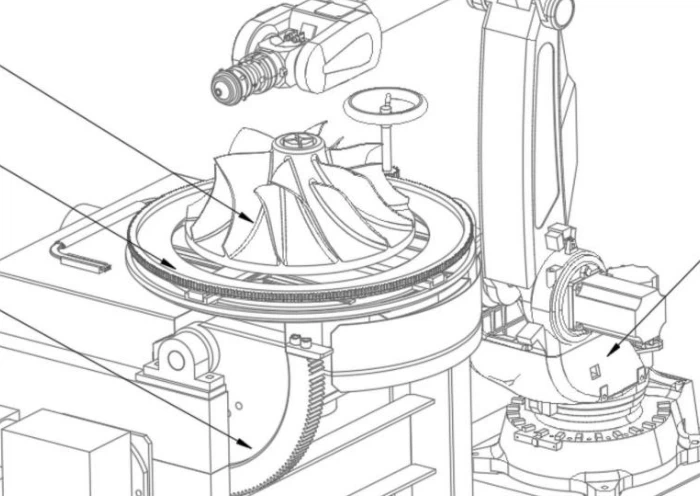
Aero engine core parts including combustion chambers, turbine blades, and guide vanes feature complex curved surfaces, strict dimensional tolerances, and ultra-high surface smoothness requirements. Any inaccurate repair will affect airflow balance, engine thrust, and overall fuel efficiency. Equipped with intelligent robotic systems and high-precision laser control modules, modern Laser Cladding equipment can achieve targeted and localized material deposition according to component damage characteristics.
Whether repairing tiny edge defects on vanes, restoring worn blade tips, or repairing oxidized areas of combustion chambers, laser cladding achieves accurate material filling and contour restoration. The cladding thickness is controllable within micron-level precision, which fully restores the original design size and aerodynamic profile of aviation components. After simple post-processing, the repaired parts can completely meet aviation assembly and operation standards.
Metallurgical Bonding Technology Ensures Long-Term Operational Safety
The biggest advantage of laser cladding in aviation superalloy repair is the formation of high-quality metallurgical bonding between the cladding layer and the substrate. Different from the physical bonding of thermal spraying, metallurgical integration means no peeling, no delamination, and no falling off under extreme high-temperature and high-load conditions.
The dense and uniform cladding layer shares consistent thermal expansion and mechanical properties with the superalloy base material. It effectively resists high-temperature oxidation, airflow scouring, and mechanical fatigue during long-term engine operation. This stable bonding performance ensures that repaired aero engine components maintain consistent safety and durability equivalent to new parts. For aviation MRO factories and engine maintenance enterprises,Laser Cladding technology greatly improves repair qualification rates and guarantees long-term operational safety of aircraft engines.
Final Conclusion
Aero engine superalloy component repair has always been one of the most challenging fields in industrial remanufacturing. With low thermal damage, high dimensional accuracy, and reliable metallurgical bonding, Laser Cladding equipment completely solves the pain points of traditional repair processes. It provides precise, safe, and cost-effective restoration solutions for engine blades, vanes, and combustion chamber components, gradually becoming the standard process for modern aviation engine maintenance and superalloy remanufacturing.
