

The high-speed laser cladding technology can effectively reduce the emission of toxic particles
High-speed laser cladding technology not only has cost advantages, but also can achieve mass production, and is expected to become a new standard for manufacturing brake discs. Even very low concentrations of particulate matter can be hazardous to human health. About half of the particulate matter on the road comes from brake, tire, clutch and road wear, and about half of this comes from brake dust. Brake discs made of high-speed laser cladding expel much fewer particles than conventional brake discs.
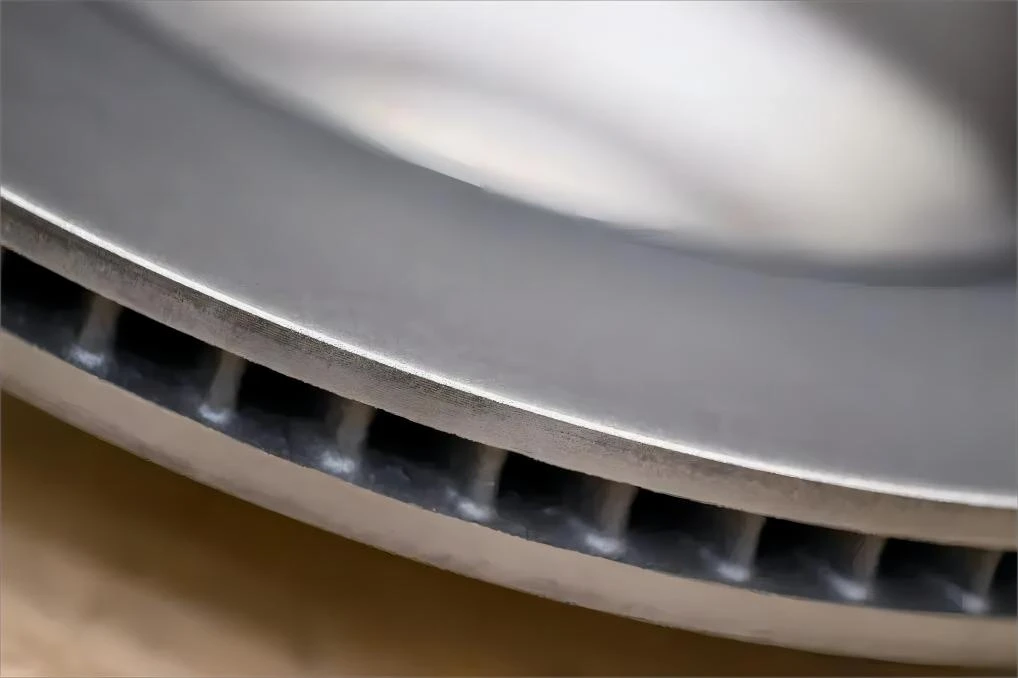
High-speed cladding technology not only reduces the emission of dust particles but also provides a long service life of the brake disc. According to statistics, the domestic automobile production in 2022 is 27 million, and the national automobile ownership in 2022 is 319 million, and the potential of the brake disc market is very huge. Usually, after the vehicle travels more than 50,000 kilometers, the owner has to replace the brake disc, and the specific replacement time also depends on the style of driving and the degree of wear. In the future, thanks to high-speed laser cladding technology, the service life of the brake disc is longer, and the number of brake disc replacements will be greatly reduced.
New energy vehicles in particular benefit from this new process
High-speed laser cladding can also provide anti-corrosion protection, especially for the brake disc of new energy electric vehicles. The unique energy recovery mode of electric vehicles enables the brake disc to recover energy as well as friction, which makes the brake disc more prone to rust, resulting in performance degradation, and may even lead to premature replacement of the brake disc.

At present, many electric vehicle manufacturers have used laser equipment for the production of lithium batteries, drive motors or high-performance electronics. Manufacturing brake discs through high-speed laser cladding technology brings a new way for the future of automotive manufacturing, and laser technology plays a pivotal role in achieving large-scale production of electric vehicles.
The principle of laser cladding is realized through the interaction between laser and metal powder, which can form a film without holes and cracks. The technical difficulty is the input of powder and energy. The metal powder in high-speed laser cladding is already melted by the laser beam before it reaches the workpiece, instead of spraying the metal powder into a molten pool on the workpiece as in traditional laser cladding, where it is melted by the laser beam. This ensures that the brake disc manufacturer coatings faster, allowing a protective layer to quickly form on the surface of the workpiece.
The high-speed laser cladding speed of Xi 'an Guosheng laser can be up to 100 meters/minute, which is 50 times that of traditional laser cladding. The processing efficiency has made a qualitative leap. The powder utilization rate of high-speed laser cladding is 90-95%, which is an amazing increase of 35% compared with traditional laser cladding, and the advantages of high material utilization rate of additive manufacturing are fully played.
References:
MFC Metal Forming Journal.