

The Core Technology for Solving Cylinder Barrel Inner Wall Repair Problems
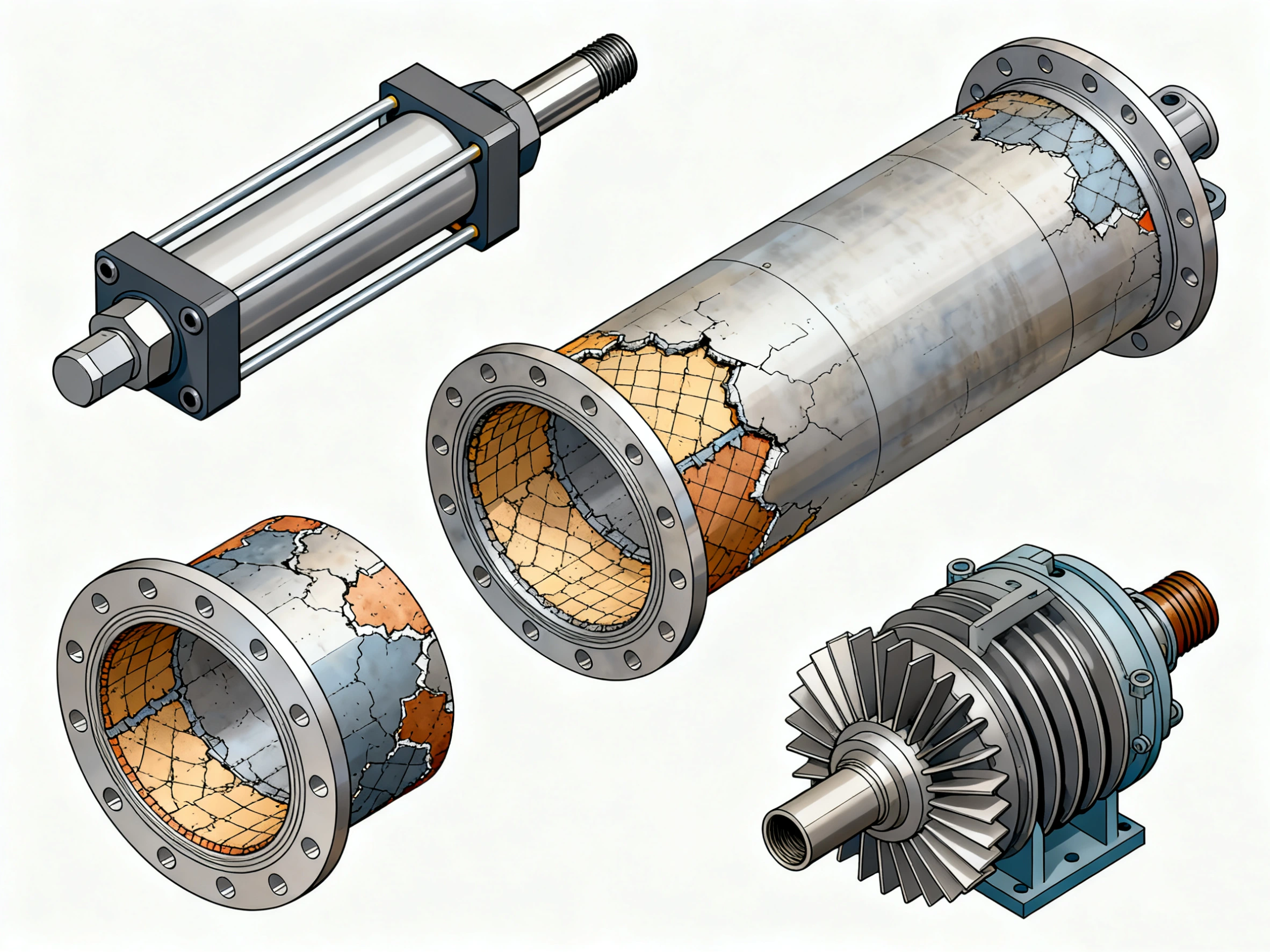
In hydraulic, pneumatic systems and construction machinery, the cylinder barrel, as a core pressure-bearing component, its inner wall performance directly determines the operation accuracy and service life of the equipment. Common damages such as wear, corrosion, and cracks often lead to cylinder barrel seal failure, pressure drop, and equipment shutdown. Laser cladding technology, with its outstanding advantages of precise repair and performance enhancement, has become a key solution for solving cylinder barrel inner wall damages. This article will analyze the core role of laser cladding in cylinder barrel repair from the perspectives of technical principle, process characteristics, and application value, providing references for cylinder barrel maintenance in industrial production.

Technical Core: Repair Logic and Principle of Laser Cladding
The core logic of laser cladding for repairing cylinder barrel inner walls is to achieve metallurgical bonding between the coating and the substrate through high-energy laser, rather than simple adhesion. This technology uses a high-energy laser beam as the heat source to simultaneously melt the alloy powder (such as nickel-based and iron-based alloys) with a specific formula and the surface layer of the cylinder barrel inner wall substrate, forming a dense cladding layer. During the process, the laser energy is concentrated, and the heat-affected zone is only 0.1-0.5mm, avoiding cylinder barrel deformation or new cracks. The bonding strength between the cladding layer and the substrate reaches more than 300MPa, which is equivalent to the performance of the original material. It fundamentally solves the pain point of "infirm bonding and easy peeling" in traditional repair processes, and this is the core competitiveness of laser cladding technology.
Process Advantages: Four Characteristics Adapting to Industrial Repair Needs
Laser cladding shows significant advantages in cylinder barrel inner wall repair, perfectly adapting to the dual requirements of industrial production for efficiency and quality. Firstly, performance customization: the alloy powder formula can be adjusted according to the cylinder barrel working conditions (such as chemical anti-corrosion and mining wear resistance), and the hardness of the cladding layer can reach up to HRC 65, with corrosion resistance improved by 3-5 times. Secondly, repair accuracy: it can operate on local damaged areas, with material utilization rate exceeding 95%, avoiding resource waste caused by overall replacement. Thirdly, high efficiency: the repair cycle of a single cylinder barrel is only 4-8 hours, which is 1/3 of the traditional surfacing process. Fourthly, environmental protection: no dust pollution, in line with the green production standards of modern industry. These advantages make laser cladding a mainstream repair option.

Scenario Adaptation: Covering Cylinder Barrel Repair Needs in Multiple Industries
The flexibility of laser cladding technology enables its wide application in cylinder barrel repair across multiple industries. In the construction machinery field, the hydraulic cylinders of excavators and loaders, which are worn by sand and gravel, have their service life extended to twice the original after laser cladding repair. In the chemical industry, after adopting the corrosion-resistant alloy cladding layer, the cylinder barrel of the reactor, which is corroded by acid and alkali, can withstand the medium environment with pH value of 1-13. The turbine cylinder in the power industry can operate stably at temperatures above 600℃ after being repaired by high-temperature alloy cladding. In addition, in high-end fields such as aerospace and shipbuilding, laser cladding is also used for the repair and enhancement of precision cylinder barrels, adapting to the personalized needs of different industries.
Quality Control: Key Link to Ensure Repair Effect
The quality of laser cladding for repairing cylinder barrel inner walls depends on strict whole-process control. In the pre-treatment stage, ultrasonic cleaning and mechanical grinding are required to remove the oxide scale and fatigue layer, ensuring the substrate is clean. During the cladding process, an infrared temperature measurement and laser tracking system is used to control the temperature fluctuation within ±5℃, avoiding pores and inclusions. In the post-treatment stage, precision grinding, polishing and magnetic particle inspection are carried out to ensure the inner wall roughness Ra ≤ 0.8μm and no microcracks. At the same time, mechanical performance testing must be carried out in accordance with the "Technical Specification for Laser Cladding Repair" to ensure that the repaired cylinder barrel meets the technical requirements of the original equipment. Quality control is an important guarantee for technology implementation.

Laser equipment components

Fiber Laser Machine

Laser Cladding Head
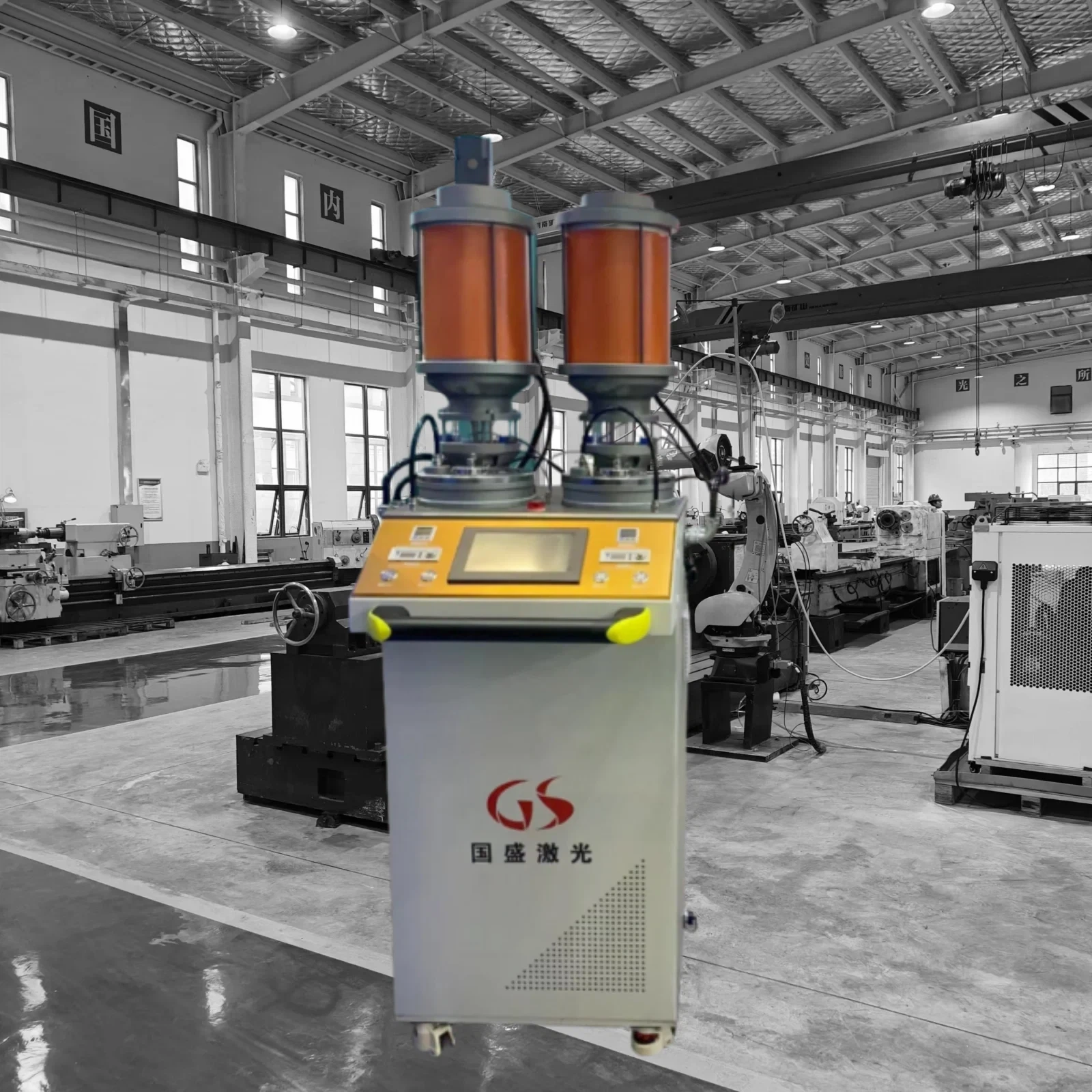
Powder Feeder

Laser Hardening Head
Laser Cladding Leads the New Direction of Cylinder Barrel Repair
With its stable metallurgical bonding, flexible performance customization and efficient and environmentally friendly process characteristics, laser cladding technology effectively solves the repair problems such as wear and corrosion of cylinder barrel inner walls, and shows significant advantages compared with traditional surfacing and electroplating processes. From construction machinery to aerospace, this technology has become the core support for extending the service life of cylinder barrels and reducing equipment maintenance costs. With the continuous upgrading of laser equipment and alloy materials, laser cladding will develop in the direction of intelligence and precision, further expanding its application boundaries in cylinder barrel repair and industrial parts enhancement, and providing technical impetus for the high-quality development of the manufacturing industry.