

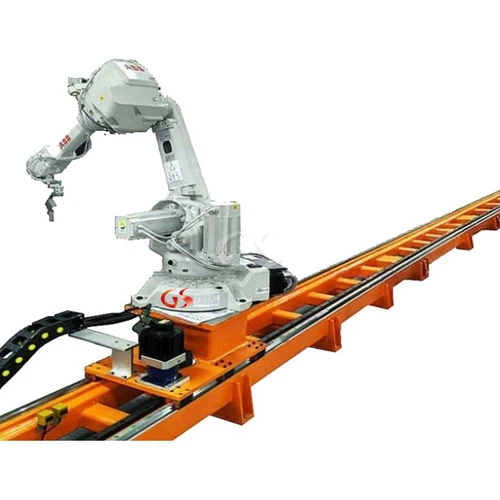
In recent years, slide rail robots have emerged as a cornerstone of modern manufacturing, revolutionizing production processes across various industries. With their precision, versatility, and efficiency, these robotic systems have significantly impacted not only manufacturing but also other sectors, ranging from healthcare to logistics. In this article, we will explore the transformative influence of rail robots and their applications beyond the realm of traditional manufacturing.
1. Enhanced Precision and Accuracy:
It is renowned for its ability to execute tasks with unparalleled precision and accuracy. Equipped with linear motion systems, such as linear guides and ball screws, these robots can achieve smooth and precise movements along multiple axes. In manufacturing, this level of precision is essential for tasks such as assembly, pick-and-place operations, and quality inspection. By minimizing errors and variability, slide rail robots contribute to higher product quality and consistency, ultimately leading to improved customer satisfaction and reduced waste.
2. Increased Productivity and Efficiency:
The introduction of it has revolutionized the efficiency of manufacturing processes. These robots can perform repetitive tasks with speed and consistency, significantly increasing production throughput. Moreover, their ability to operate continuously without fatigue or breaks ensures uninterrupted workflow, optimizing overall productivity. By automating labor-intensive processes, it frees up human workers to focus on more complex and value-added tasks, further enhancing efficiency across the manufacturing floor.
3. Flexible Adaptability to Diverse Applications:
One of its key strengths is its flexibility and adaptability to diverse manufacturing applications. Unlike traditional fixed automation systems, slide rail robots can be easily reconfigured and reprogrammed to accommodate changing production needs and product variations. Whether it's switching between different assembly tasks, handling various product sizes and shapes, or integrating with different machinery and equipment, these robots offer unmatched versatility, enabling manufacturers to quickly adapt to evolving market demands and production requirements.
4. Improved Workplace Safety:
The integration of slide rail robots into manufacturing environments has also led to improvements in workplace safety. By automating hazardous or ergonomically challenging tasks, such as heavy lifting or repetitive motion, these robots help reduce the risk of work-related injuries and musculoskeletal disorders among human workers. Furthermore, their precise motion control and built-in safety features, such as collision detection and emergency stop systems, minimize the likelihood of accidents and ensure a safe working environment for all personnel.
5. Expansion into Non-Traditional Industries:
Beyond manufacturing, it is finding applications in a wide range of non-traditional industries, including healthcare, agriculture, and logistics. In healthcare settings, these robots are used for tasks such as medication dispensing, patient assistance, and laboratory automation, enhancing operational efficiency and patient care. In agriculture, it is employed for tasks such as crop harvesting, precision spraying, and soil analysis, improving crop yields and sustainability. In logistics and warehousing, these robots facilitate automated material handling, inventory management, and order fulfillment, streamlining supply chain operations and reducing costs.
6. Enabler of Industry 4.0 and Smart Manufacturing:
Slide rail robots play a pivotal role in the realization of Industry 4.0 and smart manufacturing initiatives. By integrating with advanced technologies such as IoT (Internet of Things), AI (Artificial Intelligence), and cloud computing, these robots enable real-time data exchange, predictive maintenance, and autonomous decision-making, driving efficiency and agility in manufacturing operations. Moreover, their compatibility with digital twins and virtual simulation tools allows for virtual commissioning and optimization of production processes, reducing time-to-market and enhancing competitiveness in the global marketplace.
Applications of Slide Rail Robots Across Industries
1. Manufacturing:
Assembly: Slide rail robots streamline assembly processes by precisely positioning and assembling components in automotive, electronics, and consumer goods manufacturing.
Pick-and-Place: These robots excel in picking and placing items onto conveyor belts or packaging containers in food and beverage, pharmaceutical, and logistics industries.
Quality Inspection: It facilitates high-speed and accurate inspection of manufactured parts for defects or deviations in dimensions, ensuring product quality in various manufacturing sectors.
2. Healthcare:
Surgical Robotics: It assists surgeons in minimally invasive procedures, enhancing precision and reducing patient trauma in surgeries such as laparoscopy and orthopedics.
Rehabilitation: These robots aid in physical therapy by providing precise and adjustable assistance to patients during exercises and rehabilitation sessions, improving mobility and recovery outcomes.
3. Logistics and Warehousing:
Material Handling: It automates tasks such as palletizing, depalletizing, and sorting of goods in warehouses and distribution centers, enhancing efficiency and throughput in logistics operations.
Order Fulfillment: These robots assist in picking and packing orders for shipping, reducing fulfillment times and improving accuracy in e-commerce and retail logistics.
4. Construction:
Prefabrication: Slide rail robots fabricate prefabricated building components with high precision and consistency, accelerating construction timelines and reducing labor costs in modular construction projects.
3D Printing: These robots are utilized in large-scale 3D printing of construction materials, such as concrete or polymer composites, for building structures with complex geometries and customized designs.
5. Research and Development:
Laboratory Automation: It automates repetitive tasks in laboratories, such as sample handling, liquid dispensing, and assay preparation, improving throughput and reproducibility in scientific research and drug discovery.
Conclusion:
In conclusion, slide rail robots have become indispensable assets in modern manufacturing, offering unparalleled precision, efficiency, and adaptability. Their impact extends beyond traditional manufacturing sectors, influencing various industries and driving advancements in automation and robotics. As technology continues to evolve, the role of it is poised to expand further, shaping the future of manufacturing and beyond.
Xi'an Guosheng Laser Technology Co., Ltd. is a high-tech enterprise specializing in R&D, manufacturing and sales of automatic laser cladding machine, high-speed laser cladding machine, laser quenching machine, laser welding machine and laser 3D printing equipment. Our products are cost-effective and sold domestically and abroad. If you're interested in our products, please contact us at bob@gshenglaser.com.