

The Critical Need for Durable Turbine Components
Turbine blades in jet engines and massive power generation facilities operate under unforgiving circumstances, constantly facing intense thermal cycling, corrosive gases, and immense mechanical stress. Ensuring the longevity of these critical components is paramount for maintaining operational efficiency and safety while minimizing expensive downtime. High-speed laser cladding has emerged as a transformative laser additive manufacturing technology specifically designed to address these severe challenges. Unlike traditional repair methods, modern laser cladding equipment delivers precise, high-velocity surface modification, creating strong metallurgically bonded layers that significantly enhance performance. This advanced industrial surface modification technique is crucial for extending operational life and reducing costly maintenance intervals in aerospace and energy sectors. By leveraging high-power laser beams to rapidly deposit specialized metal powder cladding materials, manufacturers can now effectively fortify turbine blades against the most severe operational demands, securing a competitive edge in high-stakes industries.

Understanding the High-Speed Laser Cladding Process
High-speed laser cladding is a sophisticated branch of laser metal deposition (LMD) utilized for superior coating applications. The process begins with critical surface preparation to ensure optimal adhesion onto the turbine blade substrate. Subsequently, high-precision laser additive manufacturing equipment directs a high-power laser beam onto the component's surface, simultaneously feeding a cladding material, typically a specialized metal powder or wire. This intense energy instantly melts both the substrate surface and the feedstock, which then rapidly solidifies due to the high cooling rates inherent in the process. This rapid solidification forms a dense, robust protective layer with minimal dilution. The defining characteristic of this "high-speed" variant is its ability to cover large areas quickly while maintaining precise control over coating thickness and composition, making it ideal for complex geometries found in advanced jet engine components and gas turbines requiring customized surface properties.
Primary Advantages for Turbine Blade Performance
The primary advantage of deploying high-speed laser cladding lies in the dramatic improvement of blade resilience against degradation factors. Turbine blades are subjected to extreme aerodynamic and mechanical forces leading to erosion; cladding creates a hard barrier that significantly enhances wear resistance. Furthermore, particularly in gas turbine applications exposed to sulfurous fuels, the process incorporates corrosion-resistant alloys to withstand aggressive chemical environments. Beyond surface protection, the technology offers superior thermal protection, assisting blades in enduring higher operating temperatures and reducing the risk of thermal fatigue. The process also improves overall fatigue resistance by providing a uniform surface layer that minimizes stress concentrations under fluctuating loads. This combination of benefits translates directly into extended service intervals and reliable performance under high-stress conditions, making it an indispensable solution for modern turbine maintenance strategies (MRO).


Proven Results in Aerospace and Energy Sectors
Empirical data from industrial applications underscores the effectiveness of high-speed laser cladding in extending component lifespan. In the energy sector, studies on gas turbine parts treated with this technology demonstrated a remarkable 30% increase in resistance to thermal fatigue compared to untreated counterparts, thriving in high-temperature environments. Similarly, steam turbine blades exposed to aggressive, wet steam conditions exhibited a 50% reduction in corrosion rates and a 35% increase in overall component life, yielding substantial maintenance cost savings. In the aerospace domain, research involving jet engine turbine blades subject to simulated flight conditions revealed a 40% improvement in erosion resistance against high-velocity particulates. These case studies validate laser cladding as a robust, industrially proven method for significantly enhancing the durability of critical rotating machinery across multiple demanding sectors.
Critical Factors for Successful Implementation
Achieving optimal results with high-speed laser cladding requires precise control over several process variables and material selections. The choice of cladding material must be carefully tailored to be compatible with the turbine blade substrate while resisting specific operational threats. Operators utilizing advanced laser cladding equipment must meticulously optimize processing parameters, such as laser power, scanning speed, and beam focus, to ensure a uniform coating without overheating the base metal. Furthermore, rigorous quality control is non-negotiable in aerospace and energy applications. Techniques like X-ray diffraction and scanning electron microscopy are employed to verify the integrity, hardness, and microstructural quality of the deposited layer. Successful implementation therefore hinges on a synergistic approach combining cutting-edge additive manufacturing machinery with expert process knowledge and stringent post-process validation protocols.

Laser equipment components

Fiber Laser Machine

Laser Cladding Head
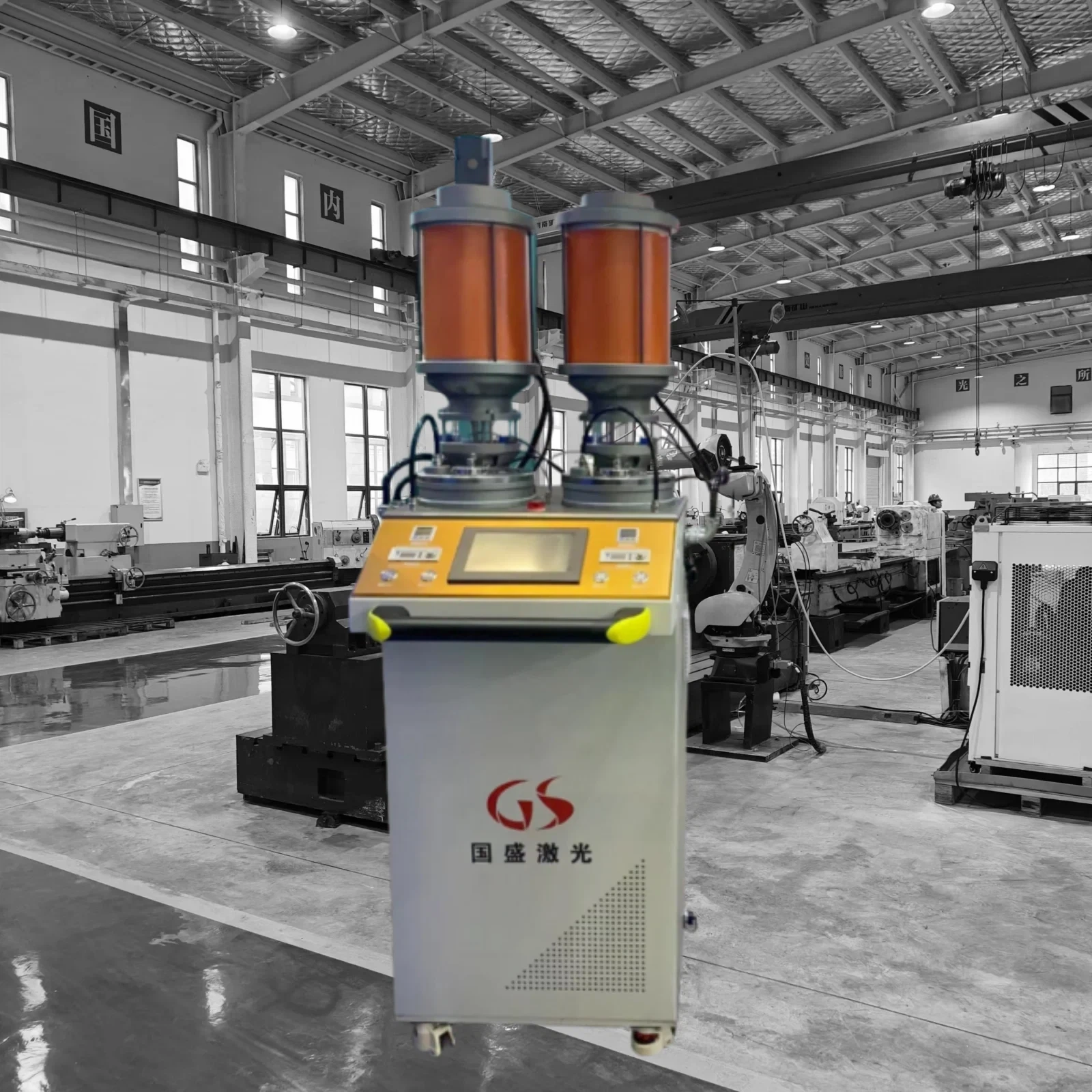
Powder Feeder

Laser Hardening Head
The Future of Turbine Maintenance and Manufacturing
High-speed laser cladding represents a pivotal advancement in materials engineering, offering a comprehensive solution to the durability challenges faced by high-performance turbine blades. By significantly improving resistance to wear, corrosion, and thermal fatigue, this laser additive manufacturing technology is redefining maintenance standards in the energy and aerospace sectors. Looking ahead, the integration of advanced materials with higher thermal stability, alongside the adoption of smart technologies and automation within laser cladding equipment, will further enhance precision and efficiency. As the industry moves toward hybrid manufacturing approaches, combining cladding with other techniques, this technology is poised to solidify its role as essential for optimizing critical components, ensuring greater reliability, and driving continued cost savings in demanding industrial operations worldwide.
FAQ
Q: What is high-speed laser cladding used for in industrial applications?
A: High-speed laser cladding is an advanced laser additive manufacturing technique used to enhance surface properties of components like turbine blades. It utilizes high-power laser cladding equipment to melt metal powder or wire onto a substrate, creating a durable, metallurgically bonded layer that improves wear resistance and corrosion protection in extreme environments.
Q: How does laser cladding improve turbine blade durability?
A: Laser cladding significantly extends turbine blade life by depositing specialized corrosion-resistant alloys and hard-facing materials. This process increases resistance to thermal fatigue in high-temperature environments, reduces erosion from high-velocity particles in jet engines, and mitigates corrosion in steam turbines, leading to reduced maintenance downtime.
Q: What materials are commonly used in high-speed laser cladding?
A: The process typically uses specialized metal powder cladding materials tailored to the specific application. Common materials include nickel-based superalloys for high-temperature strength in gas turbine parts, cobalt-based alloys for wear resistance, and stainless steels for general corrosion protection, all applied using precision industrial surface modification equipment.