

Introduction to a Coating Revolution
Ultra-high speed laser cladding (UHLC) is redefining surface engineering in the laser additive manufacturing industry. This advanced process deposits premium coating materials onto critical industrial components with unprecedented speed and efficiency, overcoming the throughput limitations of conventional methods. At its core, UHLC focuses on developing and applying specialized coating alloys that provide exceptional protection against wear, corrosion, and high-temperature degradation. The performance of the final coated part is directly tied to the properties of these materials. While traditional powder systems are in use, the ongoing research and development of novel alloys-such as iron-based amorphous and high-entropy compositions-are unlocking new levels of durability for parts like shafts, valves, and molds. This article explores the cutting-edge coating materials that make UHLC a transformative solution for extending component life and reducing maintenance costs.

Traditional Alloy Systems: Proven Performance
The foundation of laser cladding coatings lies in well-established iron, cobalt, and nickel-based alloys. Iron-based alloy coatings, including stainless steels and alloy steels, are cost-effective solutions for large-scale protection of steel components. The UHLC process significantly refines their microstructure, reducing segregation and enhancing corrosion resistance, which is vital for parts in harsh environments. Cobalt-based alloy coatings are renowned for their outstanding high-temperature performance and wear resistance, making them ideal for demanding applications like turbine blades and extrusion screws, despite their higher cost. Nickel-based alloy coatings, such as Inconel 625, offer a superb combination of formability, corrosion resistance, and high-temperature strength, serving as a reliable barrier in extreme conditions. These traditional materials form a robust toolkit for most industrial surface protection challenges.
Next-Generation Coating Materials: The Frontier of Durability
Beyond traditional alloys, UHLC is pioneering the use of advanced materials that push the boundaries of component protection. Iron-based amorphous coatings, prepared via UHLC, exhibit remarkably low dilution and crack formation, showcasing superior wear and corrosion resistance compared to their crystalline counterparts. Similarly, high-entropy alloy coatings leverage their unique multi-principal element design to achieve exceptional mechanical properties and stability, with UHLC effectively mitigating crack issues common in other processes. Furthermore, composite coatings, particularly ceramic particle-reinforced metal matrix composites, synergize metal toughness with ceramic hardness. The rapid solidification of UHLC minimizes thermal damage to reinforcing phases like carbides or carbon nanotubes (CNTs), resulting in coatings with dramatically improved abrasion resistance and lower friction coefficients for severe wear applications.


The UHLC Advantage: Quality, Efficiency, and Microstructure
The superiority of ultra-high speed laser cladding equipment is not just in speed but in the qualitative leap it enables for coating properties. The extreme process parameters-notably, very high powder feed rate and scanning speed-fundamentally change the deposition dynamics. This leads to significantly lower heat input and dilution rates compared to conventional laser cladding. The result is a finer, more uniform coating microstructure with minimal porosity and a stronger metallurgical bond to the substrate. For operators, this translates to coatings that are near-net shape, reducing post-processing, and exhibit enhanced performance right from the first layer. The technology enables the practical application of advanced material systems that were previously prone to cracking, making superior protection more accessible and reliable.
Overcoming Challenges and Future Directions
Despite its advantages, the field of UHLC faces two primary challenges that guide its future. First, there is a pressing need to develop a dedicated UHLC powder material system and an associated process-property database. Currently reliant on thermal spray powders, the industry requires tailored materials designed for UHLC's unique solidification conditions, considering factors like thermal expansion coefficient compatibility. Second, hybrid manufacturing techniques present a major opportunity. Combining UHLC with auxiliary fields-such as ultrasonic vibration or induction heating-or with post-treatment processes like surface mechanical rolling, can further refine microstructure, relieve stresses, and eliminate defects. Addressing these areas will solidify UHLC's position as the go-to technology for high-performance, industrial-grade protective coatings.

Laser equipment components

Fiber Laser Machine

Laser Cladding Head
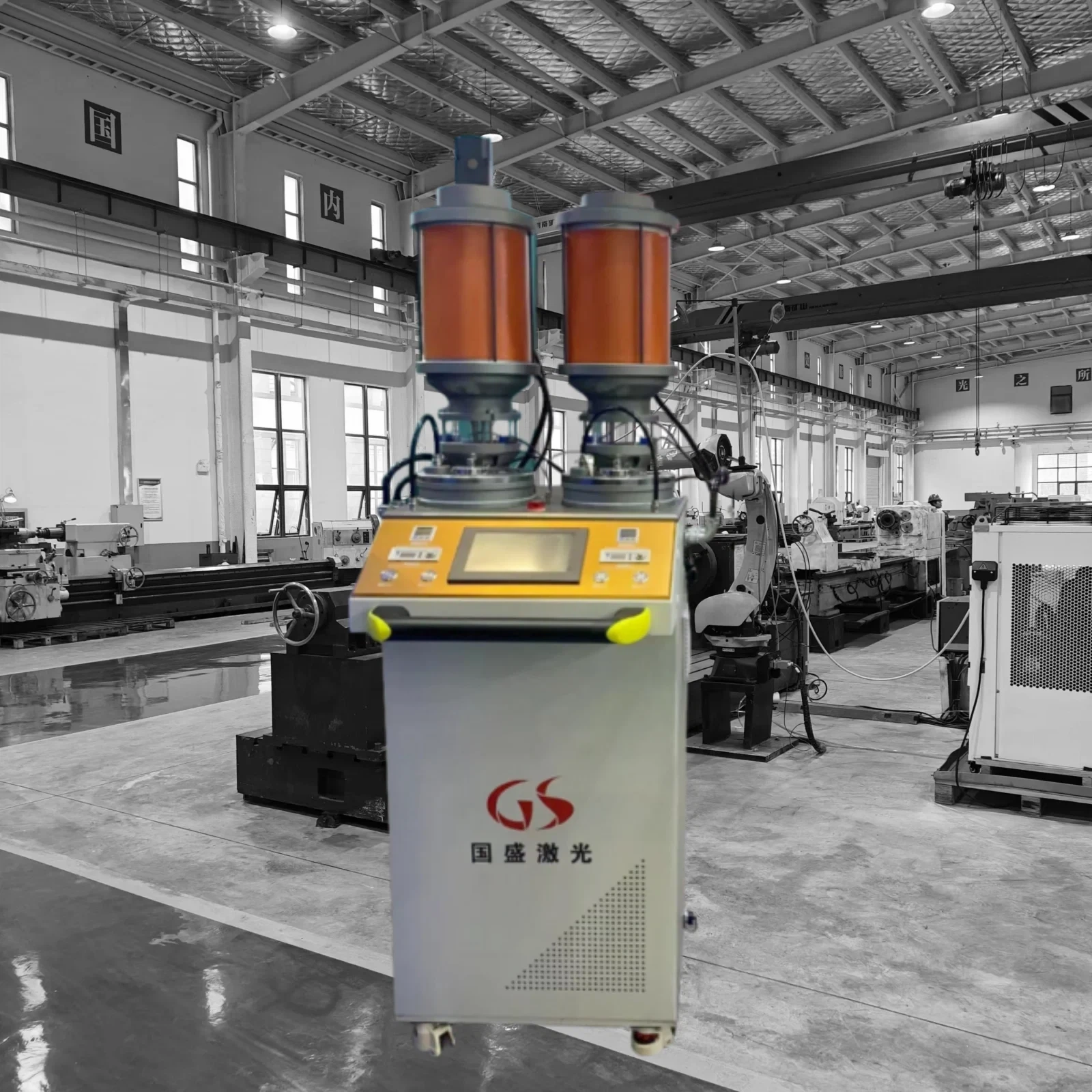
Powder Feeder

Laser Hardening Head
Transforming Surface Engineering
In conclusion, ultra-high speed laser cladding represents a paradigm shift in surface protection for industrial components. By enabling the efficient and high-quality application of both traditional and next-generation coating materials, it directly addresses the critical needs of wear and corrosion resistance. The technology's ability to produce dense, well-bonded coatings with superior microstructures offers tangible benefits: extended component service life, reduced downtime, and lower total operating costs. As the development of specialized cladding materials and hybrid processes continues, UHLC is poised to become an indispensable solution across manufacturing, energy, and heavy industry, setting a new standard for durable and sustainable component repair and enhancement.
FAQ
Q: What is ultra high speed laser cladding used for?
A: Ultra high speed laser cladding is primarily used to apply ultra-wear-resistant and anti-corrosion coatings to industrial components like shafts, rolls, and valves, significantly extending their service life in demanding conditions.
Q: What are the best coating materials for laser cladding equipment?
A: The best materials include traditional nickel-based or cobalt-based alloys for high-temperature performance, and advanced options like iron-based amorphous or ceramic-reinforced composite coatings for supreme wear resistance, applied via modern laser cladding systems.
Q: What is the future of laser cladding technology?
A: The future focuses on developing specialized cladding powder materials and combining UHLC with hybrid processes like ultrasonic assistance to create even higher-quality, defect-free coatings for critical industrial applications.