

Solid-state lasers represent a class of lasers that utilize solid materials as the active gain medium. These lasers have played a pivotal role in diverse fields, from industrial applications to scientific research and medical procedures. This article aims to provide a comprehensive understanding of solid-state lasers, exploring their construction, working principles, applications, and recent advancements.
Understanding the Basics
Product Construction
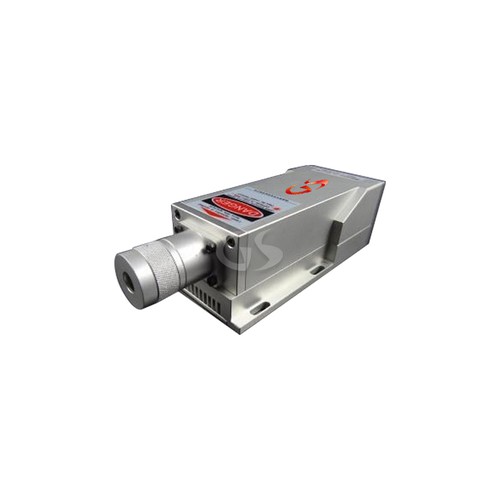
It consists of a solid gain medium, commonly a crystal or glass, which is doped with ions of a certain element. The dopant introduces energy levels within the material that enable the amplification of light. The gain medium is typically placed between two mirrors, forming an optical cavity.
Working Principles
The operation of it is based on the principle of stimulated emission of photons. When the gain medium is optically pumped or electrically excited, it undergoes a process called population inversion. This condition allows for the amplification of light as photons are emitted, producing a coherent and collimated laser beam.
Key Components
Gain Medium
The choice of gain medium is critical in solid-state lasers. Common materials include neodymium-doped yttrium aluminum garnet (Nd:YAG), erbium-doped yttrium aluminum garnet (Er:YAG), and ruby. The specific dopant determines the wavelength of the laser emission.
Optical Cavity
The optical cavity, formed by two mirrors, allows for the amplification of light through multiple passes of the photons through the gain medium. One mirror is highly reflective, while the other is partially transparent, allowing the emitted laser light to exit the cavity.
Pumping Source
It requires an external energy source to achieve population inversion in the gain medium. This can be achieved through optical pumping using flash lamps, diode lasers, or other means depending on the specific laser design.
Product Applications
Materials Processing and Manufacturing
It finds extensive use in materials processing applications such as cutting, welding, and engraving. Their precise and focused beams make them invaluable tools for achieving intricate and high-quality results in various industrial processes.
Medical Applications
In the medical field, solid-state lasers are employed in laser surgery, dermatology, and dentistry. Nd:YAG lasers, for instance, are used for procedures like skin resurfacing and tattoo removal.
Research and Scientific Applications
It plays a crucial role in scientific research, facilitating experiments in physics, chemistry, and biology. They are utilized in spectroscopy, optical trapping, and the generation of ultrafast pulses for studying rapid processes.
Defense and Military Technologies
The precision and power of it make them suitable for defense applications. They are used in laser range finding, target designation, and as directed energy weapons in certain military systems.
Recent Advancements and Trends
Femtosecond and Picosecond Lasers
Recent advancements in solid-state lasers have led to the development of ultrafast lasers capable of emitting pulses in the femtosecond and picosecond range. These lasers have applications in fields such as microscopy, material science, and attosecond physics.
High-Power and High-Energy Lasers
Ongoing research focuses on enhancing the power and energy output of solid-state lasers. This is crucial for applications that demand intense laser beams, including laser fusion research and certain industrial processes.
Challenges and Future Prospects
Thermal Management
It can generate heat during operation, posing challenges in terms of thermal management. Researchers are exploring novel cooling techniques and materials to address this issue and improve the overall efficiency of solid-state lasers.
Miniaturization and Integration
Efforts are underway to miniaturize solid-state laser systems and integrate them into compact devices. This trend is driven by the demand for portable laser systems in various applications, including medical diagnostics and defense technologies.
What are the advantages of solid-state lasers?
Solid-state lasers offer a range of advantages across various applications, contributing to their widespread adoption and dominance in numerous fields. Here are some key advantages of this lasers:
Compact Size:
It is inherently more compact compared to some other types of lasers, such as gas lasers. The solid-state design allows for integration into smaller and more portable devices, making them suitable for applications where space is a critical factor.
High Beam Quality:
It typically produce high-quality laser beams with excellent coherence and beam characteristics. This high beam quality is crucial for applications requiring precision and focus, such as materials processing and medical procedures.
Wide Range of Wavelengths:
The choice of dopant in the gain medium allows it to emit light across a wide range of wavelengths. This versatility makes them suitable for diverse applications, from infrared to ultraviolet, depending on the specific materials used.
Efficiency:
It can be highly efficient in converting input energy into laser light. The directivity and stability of the output contribute to their overall efficiency, making them economically viable for various industrial processes and applications.
Diverse Applications:
It finds applications across a broad spectrum of industries, including materials processing, medical procedures, telecommunications, defense technologies, and scientific research. Their versatility makes them adaptable to a wide range of tasks and processes.
Easily Q-Switched and Mode-Locked:
It can be efficiently Q-switched and mode-locked, allowing for the generation of high-intensity pulses with controlled durations. This feature is particularly advantageous in applications such as laser marking, engraving, and time-resolved spectroscopy.
High Power Output:
Solid-state lasers are capable of producing high power outputs, making them suitable for applications that demand significant energy levels. This characteristic is beneficial in tasks like laser cutting, welding, and certain military technologies.
Conclusion
Solid-state lasers have evolved into indispensable tools across a spectrum of applications, showcasing their versatility, precision, and power. As research continues to push the boundaries of laser technology, it is poised to remain at the forefront of innovation, contributing to advancements in science, industry, and healthcare. Their ability to generate controlled and coherent light has not only transformed the way we manufacture and process materials but has also opened up new frontiers in scientific exploration and medical interventions.
Xi'an Guosheng Laser Technology Co., Ltd. is a high-tech enterprise specializing in R&D, manufacturing and sales of automatic laser cladding machine, high-speed laser cladding machine, laser quenching machine, laser welding machine and laser 3D printing equipment. Our products are cost-effective and sold domestically and abroad. If you're interested in our products, please contact us at bob@gshenglaser.com.