

Introduction to Green Wavelength Synergy in Additive Manufacturing
The evolution of green diode laser technology has revolutionized the landscape of industrial production, particularly within the specialized field of laser additive manufacturing. As global industries shift toward more complex geometries and sustainable production, the demand for precision heating sources has skyrocketed. Green diode lasers, typically operating at a wavelength of 515nm to 532nm, address the historical limitations of traditional infrared systems. By leveraging the unique physical properties of the green spectrum, these systems provide unparalleled stability when processing highly reflective materials. This article explores how modern 3D printing equipment integrates green laser sources to enhance the fabrication of mission-critical components. From semiconductor material breakthroughs to advanced frequency-doubling crystals like Potassium Titanyl Phosphate (KTP), the technological architecture of these lasers ensures high-density energy delivery. Understanding the mechanics behind these systems is essential for manufacturers looking to optimize their metal powder bed fusion (PBF) or directed energy deposition (DED) processes for next-generation industrial applications.

Core Architecture and Semiconductor Material Engineering
The core construction of a green diode laser relies on sophisticated semiconductor engineering, primarily utilizing Indium Gallium Nitride (InGaN) as the active medium. Unlike standard fiber lasers, these units employ an intricate optical cavity designed for maximum beam coherence. A pivotal component in this setup is the frequency-doubling crystal, which effectively converts infrared light into a visible green beam. This nonlinear optical process is vital for achieving the shorter wavelengths required for advanced additive manufacturing materials. The integration of these components into a compact resonator allows for high-precision control over the laser's focal spot, which is critical when depositing layers of micro-scale metal powders. For manufacturers, this modular design means that laser cladding and 3D printing modules can be made smaller and more energy-efficient without sacrificing power density. By utilizing high-quality mirrors and resonators, the system maintains a stable output, ensuring that the laser-material interaction remains consistent throughout long-duration build cycles in heavy industrial environments.
Superior Absorption and Material Processing Advantages
One of the most significant advantages of green diode lasers in the laser additive manufacturing sector is their superior absorption rate when processing non-ferrous metals. Traditional infrared lasers suffer from high reflectivity issues when processing pure copper, gold, or silver, often leading to energy waste and potential equipment damage from back-reflection. However, green light is absorbed significantly more efficiently by these materials, allowing for a stable and predictable melt pool during the printing process. This improved absorption directly translates to higher density in the final part and a reduction in porosity defects. Furthermore, the high visibility of the green beam aids in system calibration and real-time monitoring of the additive manufacturing equipment. Engineers can achieve much finer detail in micro-additive manufacturing because the shorter wavelength allows for a smaller theoretical spot size. Consequently, industries such as aerospace and electronics can now produce high-conductivity copper heat exchangers and electrical components with a level of precision that was previously unattainable with standard laser wavelengths.


Maximizing Energy Efficiency and System Reliability
Efficiency and thermal management are crucial factors in the operation of high-performance 3D metal printing machines. Green diode lasers, leveraging modern semiconductor technology, offer a compact footprint and high wall-plug efficiency compared to legacy gas or solid-state laser systems. This compact configuration is particularly beneficial for multi-laser systems where multiple beams must be synchronized within a single build chamber. The energy efficiency of these diodes not only reduces the overall power consumption of the additive manufacturing system but also minimizes the cooling requirements for the laser source itself. This leads to a longer operational lifespan and reduced maintenance intervals for the optical components. In the context of industrial scaling, the ability to maintain a stable power output with minimal heat generation is vital for ensuring the dimensional accuracy of large-scale workpieces. As manufacturers seek to lower the total cost of ownership (TCO) for their equipment, the integration of efficient green diode technology provides a sustainable path for high-volume industrial laser processing.
Multi-Industry Applications and Precision Alignment
The application range for green diode lasers extends from intricate biomedical implants to high-end consumer electronics. In the medical field, these lasers are indispensable for biomedical laser processing, where they are used to create porous titanium structures or specialized surgical tools that require biocompatible surfaces. The ability to excite various fluorescent dyes also makes them a favorite for integrated diagnostic tools within the manufacturing workflow. In the realm of precision engineering, green lasers are utilized for the alignment and surveying of large-scale additive manufacturing frames, ensuring that every micron of the build plate is perfectly leveled. Moreover, the high precision of the green beam makes it ideal for the surface finishing of 3D-printed parts, where it can selectively melt or ablate surface roughness to achieve a polished finish. This versatility makes the green diode laser a "multi-tool" within the modern smart factory, bridging the gap between raw material deposition and final quality assurance in the digital manufacturing chain.

Laser equipment components

Fiber Laser Machine

Laser Cladding Head
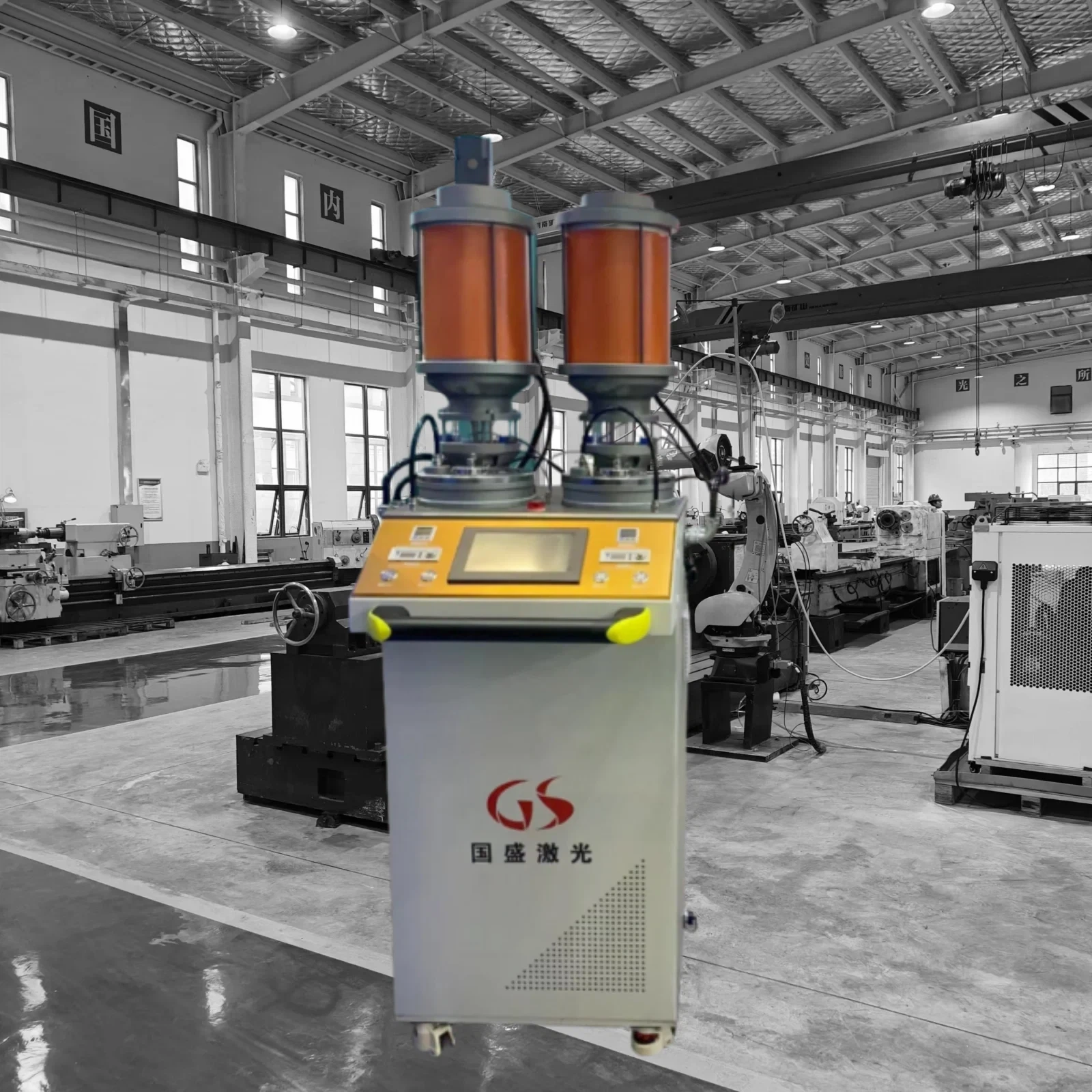
Powder Feeder

Laser Hardening Head
Future Trends in Power Scaling and Semiconductor Innovation
Looking ahead, the future of green diode laser technology in additive manufacturing is focused on power scaling and material innovation. Researchers are currently investigating novel semiconductor compounds that could potentially bypass the need for frequency doubling, leading to even more direct and efficient green light generation. Increasing the kilowatt-range power output of green lasers is a top priority for the industry, as this would enable the high-speed printing of large-scale copper aerospace components and automotive battery parts. As laser power density continues to improve, we expect to see a shift in the standard configuration of metal 3D printers, with green lasers becoming the primary choice for any application involving conductive or reflective alloys. The synergy between advanced optics and smart manufacturing software will likely lead to fully autonomous additive manufacturing cells capable of self-correcting based on real-time spectral feedback. As these technologies mature, the green diode laser will remain at the forefront of the transition toward more precise, efficient, and capable global manufacturing standards.
FAQ
Q: Why is a green diode laser better than an infrared laser for copper 3D printing?
A: Copper has a very low absorption rate for infrared light but absorbs green light at a much higher frequency. Using a green diode laser ensures a stable melt pool, reduces back-reflection that can damage 3D printing equipment, and results in parts with near-100% density.
Q: What are the main components of a green diode laser used in industrial equipment?
A: These lasers consist of an InGaN semiconductor gain medium, a high-precision optical cavity, and a frequency-doubling crystal (like KTP). These components work together to convert electrical energy into a high-coherence green beam suitable for laser additive manufacturing.
Q: Can green diode lasers improve the energy efficiency of laser cladding?
A: Yes. Due to the high absorption rates of the green wavelength on metallic substrates, less raw power is required to reach the melting point. This makes the laser cladding process more energy-efficient and reduces the heat-affected zone (HAZ) on the workpiece.