

Introduction to Laser Cladding for Critical Motor Repair
The reliable operation of high-voltage motors is paramount across industries like power generation, mining, and petrochemicals. A common failure point is the shaft journal or bearing seating area, where wear, scoring, or corrosion can lead to vibration, inefficiency, and unplanned downtime. Traditional repair methods like welding or metal spraying often introduce excessive heat, distortion, or weak bonds. Laser cladding, a precision laser additive manufacturing (LAM) and directed energy deposition (DED) process, emerges as a superior solution. It enables the restoration and enhancement of these critical components by building up a metallurgically bonded, wear-resistant layer directly onto the damaged motor shaft journal, extending service life beyond the original OEM specification and minimizing costly motor replacement.

The Laser Cladding Process Principle and Technology
Laser cladding is an advanced surface engineering technique where a high-power laser beam-typically from a fiber laser or diode laser system-creates a small molten pool on the substrate surface. A stream of specialized metallic powder, the cladding material, is simultaneously injected into this pool via a coaxial nozzle. The powder melts and fuses with the thin surface layer of the base material, forming a dense, pore-free coating with a strong metallurgical bond upon rapid solidification. This laser material processing method allows for precise control over cladding layer thickness, dilution (mixing with the base metal), and the resulting microstructure. The minimal and concentrated heat input is a key advantage, leading to a small heat-affected zone (HAZ) that preserves the mechanical properties of the underlying motor shaft.
Key Advantages for Motor Shaft Journal Restoration
Choosing laser cladding for high voltage motor repair offers distinct benefits over conventional methods. First, it provides superior coating properties. By selecting appropriate alloy powders like nickel-based, cobalt-based, or iron-based alloys, the restored surface achieves exceptional wear resistance, corrosion resistance, and fatigue strength. Second, it ensures high repair precision with minimal thermal distortion. The focused laser energy and low heat input prevent warping, often eliminating the need for post-repair machining. Third, the process allows for flexible, automated application using a CNC-controlled laser cladding system, ensuring consistent quality and enabling on-site repair solutions for large motors. This combination extends motor lifespan and improves operational reliability significantly.


Implementation Steps and Material Considerations
A successful laser cladding repair of a motor bearing seat follows a systematic approach. It begins with thorough surface preparation, including cleaning, degreasing, and machining to remove damage and create a uniform surface. The choice of cladding powder is critical and depends on the base metal (often forged steel shafts) and operational demands; common choices include Inconel 625 for corrosion or Stellite 6 for abrasion. During the cladding process, key laser parameters like laser power, powder feed rate, and traverse speed are optimized to achieve the desired layer properties and bond strength. Finally, the part undergoes controlled cooling, followed by precision machining (e.g., grinding) to restore the final dimensional tolerances and surface finish required for the bearing fit.
Real-World Application and Economic Impact
The practical value of this technology is best illustrated through case studies. For instance, a power plant faced repeated failures of a critical high-voltage motor shaft due to fretting wear at the bearing location. Using a portable laser cladding machine, technicians applied a nickel-chromium-boron alloy coating. The repair was completed in a fraction of the time required for shaft replacement. The restored shaft exhibited superior surface hardness and resistance to adhesive wear. The result was a dramatic reduction in downtime costs and a return on investment (ROI) achieved after a single avoided replacement. This showcases how laser additive repair transforms maintenance from a cost center into a value-adding activity, supporting predictive maintenance strategies.

Laser equipment components

Fiber Laser Machine

Laser Cladding Head
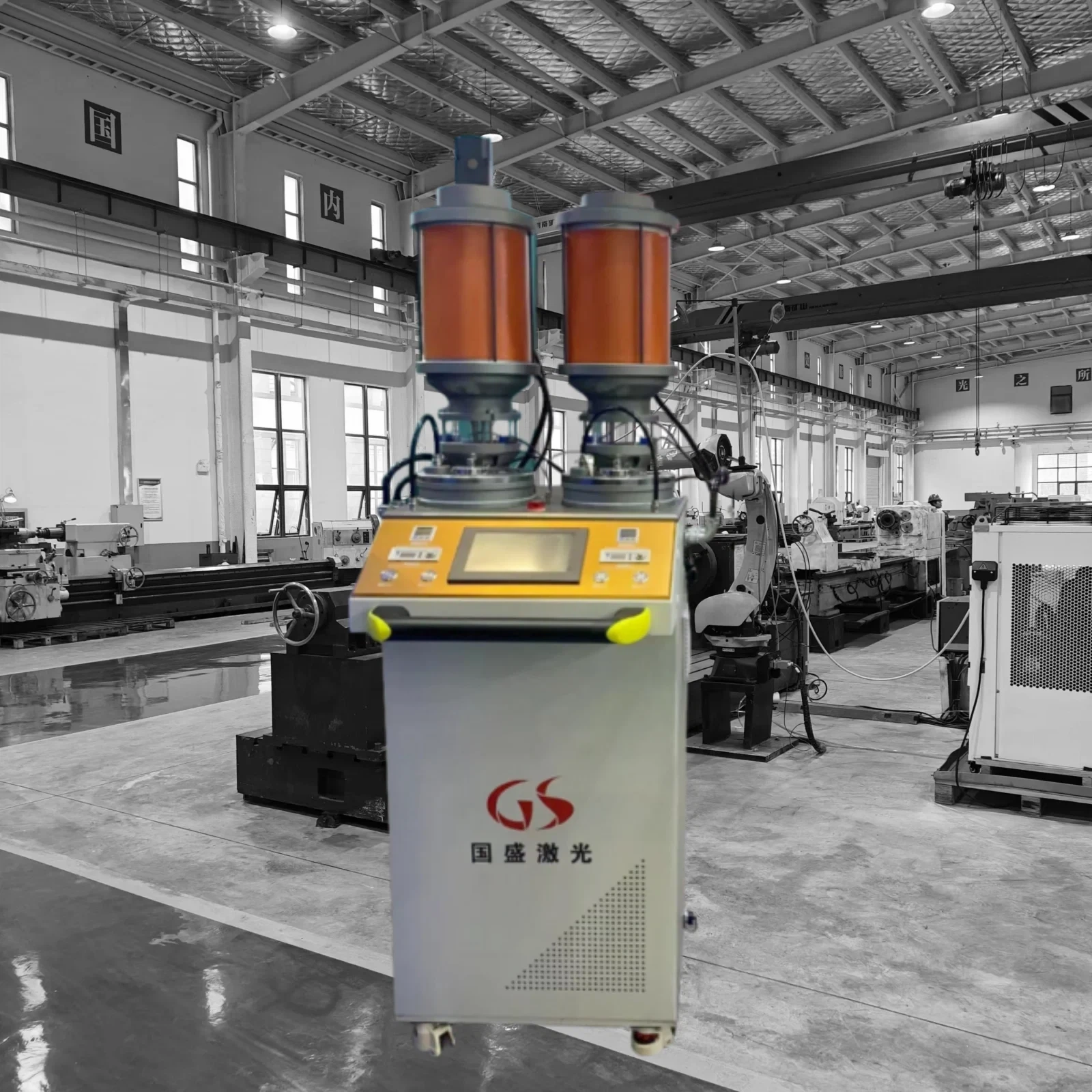
Powder Feeder

Laser Hardening Head
A Strategic Maintenance Solution
In conclusion, laser cladding is not merely a repair tool but a strategic asset lifecycle extension technology for rotating equipment. It provides a robust, precise, and economically compelling method for restoring high voltage motor shaft journals and other worn components. By delivering metallurgically superior coatings with minimal heat impact, it addresses the core limitations of traditional repair techniques. For plant managers and maintenance engineers, integrating this laser-based additive manufacturing process into their toolkit is a forward-looking decision that enhances reliability, reduces lifecycle costs, and ensures the continuous, efficient operation of mission-critical industrial motors.
FAQ
Q: How does laser cladding repair improve the lifespan of a high voltage motor shaft?
A: Laser cladding repairs the worn journal area by adding a dense, metallurgically bonded layer of a harder, more wear-resistant alloy. This restored surface significantly outperforms the original material in resistance to abrasion, fretting, and corrosion, effectively extending the motor shaft's operational life, often beyond its original specification, and preventing catastrophic failures.
Q: Is laser cladding suitable for on-site repair of large motor shafts?
A: Yes, absolutely. With the advent of portable, CNC-controlled laser cladding systems, the process is highly suitable for on-site or in-situ repair. This capability eliminates the need for complete motor disassembly and shaft removal, drastically reducing repair time, logistical costs, and associated downtime for large industrial equipment.
Q: What are the main advantages of laser cladding over traditional welding for shaft repair?
A: Key advantages include a much smaller heat-affected zone (minimizing shaft distortion/damage), a metallurgical bond with low dilution for stronger adhesion, superior control over coating properties (hardness, wear resistance), and the ability to apply specialized alloys that are difficult to weld conventionally. This leads to a more reliable, precise, and durable repair.