

Introduction to Laser Surface Hardening Technology
Laser hardening, an advanced surface treatment within the broader spectrum of laser additive manufacturing and laser material processing, is revolutionizing the production of high-performance mechanical components. This technique precisely enhances the surface properties of critical parts like gears, pinions, and transmission elements. By utilizing a focused, high-energy laser beam, it delivers localized heat treatment that significantly improves wear resistance, fatigue strength, and overall durability. For industries reliant on robust power transmission systems, such as automotive, heavy machinery, and aerospace, integrating laser hardening into the manufacturing workflow offers a path to superior component longevity and reliability, complementing the capabilities of modern laser additive manufacturing systems used for part production and repair.

The Science Behind Laser Hardening: Process and Metallurgy
The core principle of laser hardening involves rapid thermal cycling. A high-power density laser beam, typically from a fiber laser or diode laser system, scans the target area on a metal workpiece, such as an alloy steel gear. This causes extreme, localized heating-often above the austenitizing temperature-within milliseconds. The surrounding cold mass of the material then acts as an efficient heat sink, leading to an ultra-fast self-quenching (or controlled quenching with a gas or mist) process. This rapid cooling transforms the microstructure to a hard martensitic phase, creating a precise, wear-resistant case layer while keeping the core material tough and ductile. This selective transformation is key for parts like differential gears or planetary gear sets, where surface hardness is critical but overall distortion must be minimized.
Key Advantages Over Traditional Heat Treatment Methods
Laser hardening presents distinct benefits compared to conventional methods like induction or flame hardening. Its pinpoint accuracy allows for selective hardening of complex gear geometries, including individual tooth flanks and roots, without affecting adjacent areas. This minimizes thermal distortion and the need for subsequent machining, a significant advantage for precision components. The process is highly efficient, with faster cycle times and lower energy consumption, as it only heats the necessary surface layer. Furthermore, it is easily automated and integrated into production lines alongside other laser processes like laser cladding for additive repair. The resulting hardened layer has excellent adhesion and consistent depth, directly enhancing the service life of industrial gearboxes and drivetrain components.


Critical Processing Parameters for Optimal Results
Achieving consistent, high-quality hardened layers requires careful control of several laser processing parameters. Laser power, scanning speed, and beam spot size (controlled by optics) determine the heat input and hardened case depth. The material composition, such as specific grades of case-hardening steel, dictates the ideal temperature profile. While self-quenching is common, some applications may use a quenching medium like gas or polymer spray for controlled cooling rates. Process optimization often involves adjusting the laser beam path, overlap between scan tracks, and potentially pre-heating to prevent cracking in high-carbon steels. For manufacturers using laser additive manufacturing equipment, these parameters are often managed through integrated CNC software, ensuring repeatability for serial production of hardened components.
Broad Industrial Applications and Future Integration
The application of laser hardening spans industries demanding durable moving parts. In the automotive industry, it is used for transmission gears, crankshafts, and valve seats. Heavy-duty engineering machinery and mining equipment benefit from hardened bucket teeth, axle shafts, and slew rings. The aerospace sector employs it for landing gear components and actuator systems. The technology aligns with sustainable manufacturing goals by reducing waste and energy use. Looking forward, its synergy with laser metal deposition (LMD) and 3D printing is notable. A component can be built or repaired via additive manufacturing and then functionally graded with a hardened surface in the same setup, showcasing the versatile potential of integrated laser-based manufacturing solutions for creating next-generation, high-performance parts.

Laser equipment components

Fiber Laser Machine

Laser Cladding Head
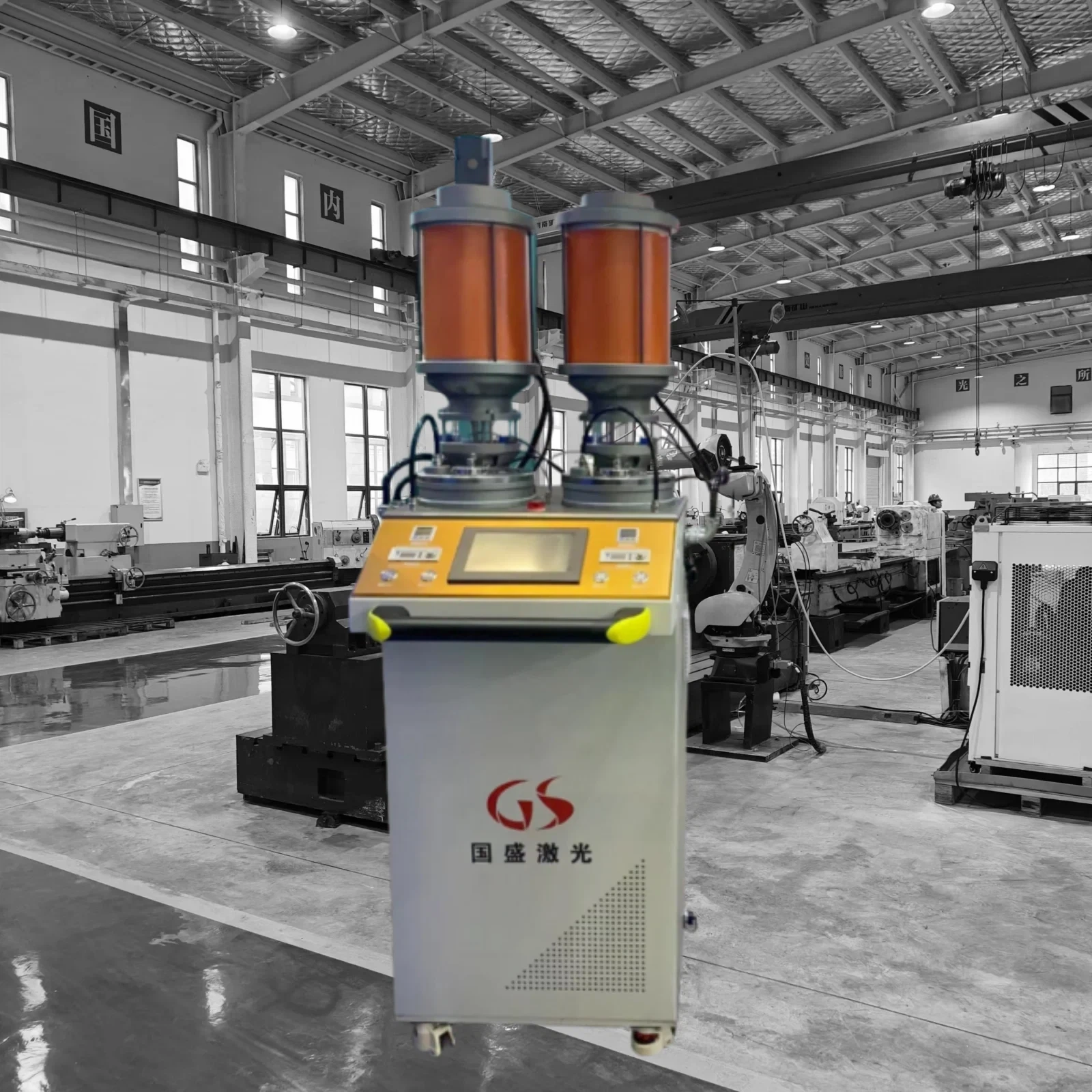
Powder Feeder

Laser Hardening Head
Enabling Advanced Manufacturing
In conclusion, laser surface hardening is a precise, efficient, and versatile technology that significantly upgrades the performance and lifespan of critical mechanical components like gears. Its precision reduces distortion, its efficiency supports lean manufacturing, and its results ensure reliability. As a key technology within advanced laser material processing, it complements the growth of laser additive manufacturing. For OEMs and part manufacturers aiming to push the boundaries of component durability and system efficiency, adopting laser hardening technology is a strategic step towards more robust, sustainable, and high-value manufacturing outcomes.
FAQ
Q: What are the main benefits of using laser hardening on machine parts like gears?
A: Laser hardening provides precise, localized surface hardening that dramatically increases wear resistance and fatigue strength of components like transmission gears. Key benefits include minimal part distortion, no need for post-process machining, high process speed, and the ability to harden complex geometries, leading to longer component life and reduced downtime.
Q: Can laser hardening be used on parts made with metal 3D printing?
A: Yes, absolutely. Laser hardening is an excellent post-processing step for parts produced via laser additive manufacturing (metal 3D printing). It can be applied to enhance the surface properties of the as-printed metal component, such as a laser-deposited gear, combining the design freedom of additive manufacturing with the superior surface durability of hardening for a fully optimized part.
Q: How does laser hardening differ from traditional heat treatment for industrial gears?
A: Unlike traditional furnace or induction hardening that can heat the entire part, laser hardening uses a focused beam to treat only the specific surface area needed, such as a gear tooth flank. This results in significantly less thermal distortion, higher precision, better energy efficiency, and often eliminates the need for costly finishing operations after heat treatment.