

In the modern metal processing industry, welding serves as a core connection technology, widely applied in automotive manufacturing, electronic equipment, aerospace and other fields. However, many long-standing challenges have plagued manufacturers: low welding efficiency in mass production, severe thermal deformation of thin-walled workpieces, unstable welding quality resulting from manual operation, and difficulties in welding dissimilar metals. Traditional welding methods, typified by TIG (Tungsten Inert Gas) welding, are mature and cost-effective but increasingly fail to meet the high-standard demands of modern manufacturing. Against this backdrop, laser welding has emerged as a standout with its unique technical advantages, offering an effective solution to these industry pain points in specific working conditions.
1. TIG welding
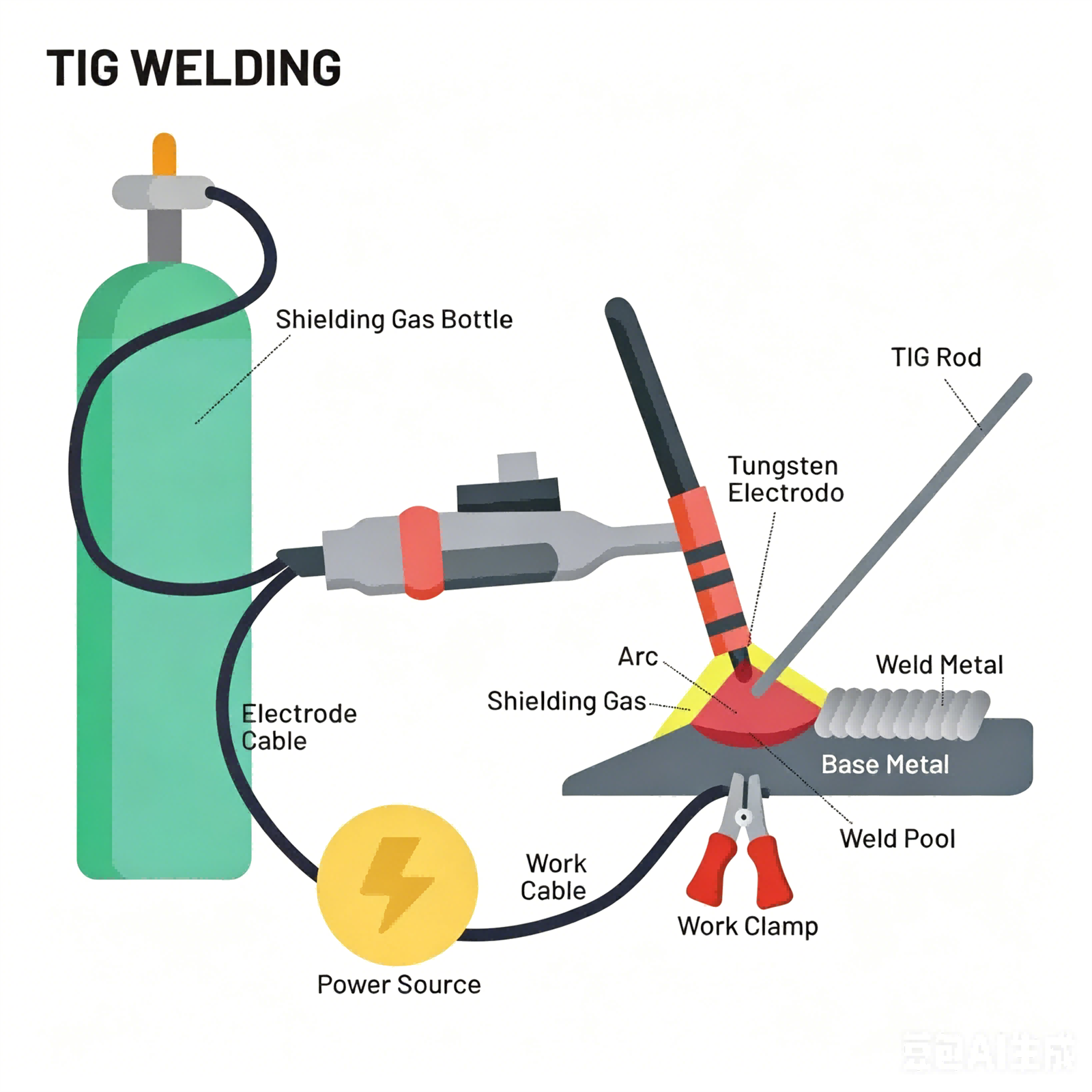
TIG welding, a classic traditional welding method, uses electric arc heat generated between a tungsten electrode and the workpiece to melt the base metal and filler metal, while inert gas protects the welding area from oxidation. It is well-suited for simple working conditions, such as on-site maintenance, small-batch welding of irregular workpieces, and welding of thick carbon steel structural parts. Its greatest strengths lie in low equipment investment and flexible operation-skilled welders can handle complex welding positions and irregular shapes with ease. Nevertheless, TIG welding has obvious limitations when addressing industry challenges: its large heat-affected zone (typically 5-10mm) often causes workpiece deformation, especially for thin plates (less than 2mm), which are prone to warping or burning through. Additionally, its welding speed is only 1-3m/min, making it inefficient for mass production, and its quality is highly dependent on the welder's experience, leading to inconsistent seam formation and high defect rates.


2. Why laser welding?
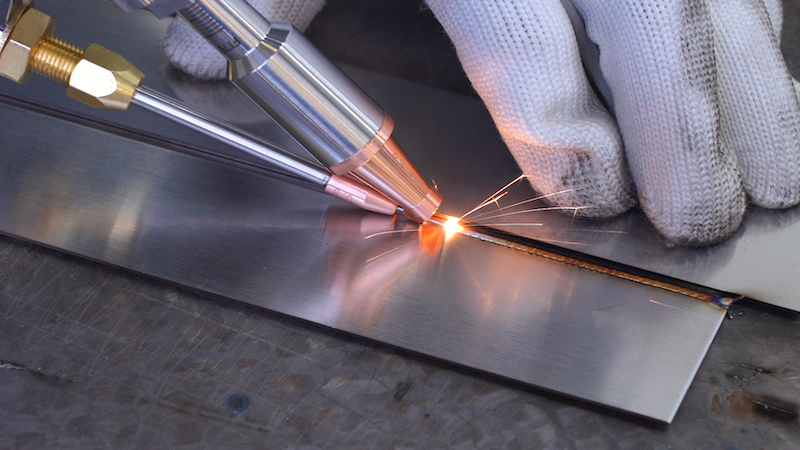
In contrast, laser welding effectively addresses these pain points in targeted working conditions, and its core advantages can be easily understood through several key, easy-to-grasp parameters. First, laser power (measured in watts) directly determines welding penetration: for thin stainless steel sheets (0.5-2mm), 500-1500W of laser power is sufficient to form a strong weld without burning through the workpiece. For thicker workpieces (3-10mm), increasing the power to 2000-5000W enables one-time penetration. Second, its welding speed (usually 4-15m/min) is 4 to 10 times faster than that of TIG welding, significantly boosting production efficiency in mass production scenarios. Third, the laser spot diameter (generally 0.1-0.5mm) is much smaller than the TIG arc, resulting in higher energy density and an extremely narrow heat-affected zone (only 0.1-1mm). This effectively prevents workpiece deformation, a critical feature for precision components like electronic connectors and automotive sheet metal parts.
3. Stand out for Precision
In specific practical applications, laser welding demonstrates irreplaceable advantages.Taking the new energy vehicle industry as an example, the Tesla Model 3 adopts laser annular welding for its vehicle body. Six laser welding robots realize integrated body assembly, reducing the number of components and improving body rigidity.For welding of engine cylinder blocks and gearbox housings that require excellent airtightness, laser micro-penetration welding is applied to prevent oil and air leakage.The lamination welding of motor stator iron cores for new energy vehicles achieves fully automatic mass production via robot path programming.Laser precision welding is used for battery cell tabs (2-5mm in width), equipped with a visual positioning system to avoid welding deviation and short circuits.Laser welding for parts such as seat frames and exhaust pipes boosts production efficiency, minimizes workpiece deformation, and adapts well to assembly line manufacturing.


TIG welding and laser welding are not mutually exclusive but complementary, with their own applicable working conditions. TIG welding is still irreplaceable in simple operation, low-cost and on-site maintenance scenarios. Laser welding, however, is the key to solving the industry's core difficulties-low efficiency, easy deformation and unstable quality-in high-precision, mass production and special material welding scenarios. Manufacturers can solve welding pain points by selecting the appropriate welding method according to workpiece material, thickness, production volume and precision requirements, and adjusting laser power, welding speed and spot diameter reasonably. In the future, with the continuous improvement of laser technology, it will play a more important role in promoting the upgrading of the welding industry.