

Laser Cladding for Glass Molds – A Novel Solution for Surface Enhancement
Glass molds play a critical role in high-precision industries such as optics, automotive manufacturing, and aerospace. However, the inherent characteristics of glass materials, like being prone to wear and corrosion, present challenges to the mold's lifespan and processing accuracy. Laser Cladding for Glass Molds technology is a novel surface modification solution designed to address this very issue. Its core principle involves using the focused thermal effect of a high-energy laser beam to rapidly melt the mold's surface while simultaneously introducing high-hardness, high-performance coating materials into the molten pool. Upon cooling, this forms a metallurgically bonded super-hard protective layer on the substrate surface. This technology significantly enhances the wear resistance, corrosion resistance, and high-temperature tolerance of the glass molds, effectively extending their service life and ensuring the quality of the processed glass products. It is a vital technical means for advancing the field of precision glass processing.

Core Principle: The Synergy of High-Energy Laser and High-Performance Coatings
The principle of Laser Cladding for Glass Molds processing lies in achieving rapid melting and solidification of the material surface to construct a high-performance coating. During the process, a high-energy laser beam is precisely focused onto the glass mold surface, instantly generating high temperatures that melt the surface material to form a molten pool. Simultaneously, high-hardness coating materials, such as carbide or nitride powders, are fed into the liquid pool. These high-performance materials undergo metallurgical reactions or mechanical mixing with the substrate within the molten pool, augmenting the coating's hardness and wear resistance. The rapid movement of the laser beam and the fast cooling and solidification of the molten pool are critical to this process. This rapid cooling suppresses the formation of coarse grains, resulting in a final coating with a dense, uniform microstructure and a robust metallurgical bond with the substrate. This process effectively prevents common issues with traditional coatings, such as poor adhesion or peeling, thus greatly enhancing the overall performance of the glass molds.
Key Features: High Efficiency, Superior Hardness, and Multi-Layer Protection
Laser Cladding for Glass Molds technology demonstrates immense potential in high-precision manufacturing due to its distinctive features. Firstly, it utilizes a high-energy laser beam to achieve rapid melting and forming of the material, leading to extremely high processing efficiency and significantly reducing production cycle times. Secondly, by incorporating high-hardness coating materials like carbides, the clad layer achieves a hardness far superior to the substrate. This dramatically improves the wear resistance of the glass molds, minimizing wear caused by friction. Furthermore, the clad layer offers excellent corrosion resistance and high-temperature tolerance. The coating material forms a dense barrier that effectively shields the mold surface from chemical attack and damage from softening or oxidation in high-temperature environments. This multi-protection characteristic makes it suitable for various types of glass molds, such as those used for flat or curved glass, showcasing broad applicability and reliable performance assurance.


Wide Applications: Empowering Optics, Automotive, and Aerospace Key Sectors
Laser Cladding for Glass Molds technology has been widely applied across multiple fields that demand extremely high precision and reliability. In the optics sector, glass components (like lenses and prisms) require stringent surface quality and durability. Glass molds treated with this technology can significantly improve their wear resistance and corrosion resistance, guaranteeing the processing accuracy and service life of the optical components. In the automotive sector, car glass is susceptible to environmental pollution and frictional damage during use. Enhancing mold performance through laser cladding allows for the production of automotive glass with stronger wear and corrosion resistance, thereby increasing product reliability and safety. In the aerospace sector, glass materials used in extreme conditions (such as high temperature, high pressure, and high speed) require elevated performance. Laser Cladding for Glass Molds provides a superior protective layer that effectively enhances the high-temperature, corrosion, and wear resistance of these critical glass materials, improving their stability and reliability.
Development Outlook: Continuous Technological Innovation and Application Expansion
Looking ahead, Laser Cladding for Glass Molds technology has significant room for further development and refinement. To enhance its competitiveness, future development will focus on several key directions. The first is equipment R&D, which requires developing more efficient, stable, and integrated laser cladding equipment to increase processing speed and the reliability of batch production. The second is material innovation, continuously exploring and screening new coating materials with higher hardness, stronger corrosion resistance, and superior thermal stability to meet specific and demanding application needs. Concurrently, process optimization is central to improving cladding quality. This involves precisely controlling laser parameters and powder feeding systems to enhance the coating's uniformity and density and minimize the defect rate. Ultimately, these technological advancements will drive the expansion of this technology into more emerging fields, such as electronics and energy, providing broader scope for the industrial development of glass molds.

Laser equipment components

Fiber Laser Machine

Laser Cladding Head
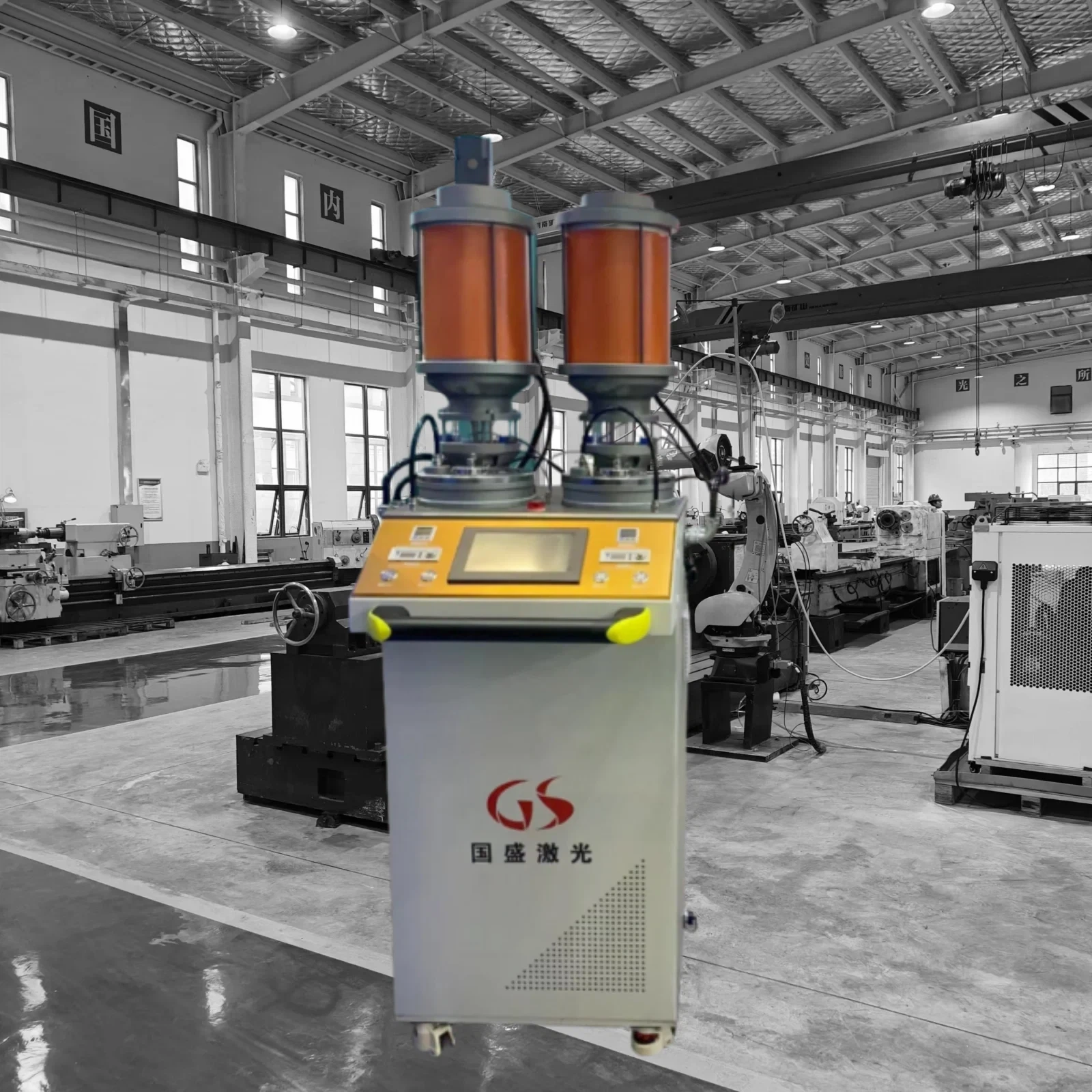
Powder Feeder

Laser Hardening Head
A Core Driver for High-Precision Glass Manufacturing
In conclusion, Laser Cladding for Glass Molds technology, leveraging its unique principle of simultaneous high-energy laser melting and high-performance coating formation, offers an efficient and reliable solution for tackling the wear and corrosion challenges faced by glass molds. The superior properties conferred by this technology-including high hardness, wear resistance, corrosion resistance, and high-temperature tolerance-make it indispensable in fields like optics, automotive, and aerospace, which demand extreme precision and reliability in precision glass processing. While continuous R&D investment is required in equipment, materials, and processes, the growing demand for smart manufacturing and high-performance materials ensures that Laser Cladding for Glass Molds will undoubtedly remain a core driving force for improving product quality, extending mold life, and advancing the high-precision glass manufacturing industry.