

The Core Competitive Edge of Laser Cladding Technology Evolution
As a key technology for surface strengthening and repair of components, laser cladding's coating surface quality directly determines the service life, processing cost, and application scenarios of workpieces. With the escalating demand for precision and efficiency in industrial manufacturing, the technical gaps between ultra-high-speed laser cladding, high-speed laser cladding, and traditional conventional laser cladding have become increasingly prominent – especially in core indicators such as surface roughness, flatness, and subsequent processing difficulty, where next-generation technologies demonstrate disruptive advantages. Starting from the common foundation of the three technologies, this article delves into the core competitiveness of ultra-high-speed and high-speed laser cladding in terms of surface quality, providing professional references for industry selection.

Surface Quality-Related Characteristics Shared by the Three Laser Cladding Technologies
Despite significant differences in technical parameters and effects, ultra-high-speed laser cladding, high-speed laser cladding, and conventional laser cladding share commonalities in core characteristics related to surface quality. Firstly, they have basic consistency in material adaptability: all three are compatible with mainstream cladding materials such as iron-based, nickel-based, and cobalt-based alloys, and the coating forms a metallurgical bond with the substrate, ensuring the stability of surface strengthening. Secondly, the core direction of process control is consistent – the influence logic of parameters such as laser power, overlap rate, and powder feeding rate on surface roughness is identical. For example, increasing the overlap rate can reduce surface stripe defects in all three technologies, though ultra-high-speed and high-speed laser cladding require higher parameter precision to match their high-speed forming needs. Finally, their application objectives are highly unified: all aim to improve the wear resistance, corrosion resistance of workpiece surfaces or repair damaged surfaces, with gradual upgrades in surface forming precision and special material adaptability.
Surface Roughness Advantage of Ultra-High-Speed/High-Speed Laser Cladding
Surface roughness is a core indicator of laser cladding surface quality, where ultra-high-speed and high-speed laser cladding have achieved a crushing breakthrough over conventional technology. Conventional laser cladding requires simultaneous melting of both the substrate and powder due to concentrated heat input, leading to large molten pool fluctuations. After cooling, the surface undulation reaches 0.4-0.5mm, with roughness far exceeding industry precision standards. In contrast, high-speed laser cladding achieves a surface roughness (Ra) of only 5-10μm, while ultra-high-speed laser cladding can reach an even higher precision of Ra ≤ 2.5μm. This difference stems from the fact that next-generation technologies focus laser energy primarily on the powder, resulting in a shallow and stable molten pool on the substrate. After cooling, the surface remains flat and smooth, fundamentally avoiding the uneven defects of conventional technology.


Disruptive Reduction in Subsequent Processing
Surface quality directly determines subsequent processing costs. Relying on excellent forming effects, ultra-high-speed and high-speed laser cladding significantly reduce processing procedures and material waste. Due to numerous surface defects and large undulations, conventional laser cladding must undergo multiple processes of "turning - grinding - polishing", which is time-consuming and wastes substantial coating and substrate materials. In contrast, high-speed laser cladding only requires a grinding allowance of 0.15-0.20mm to achieve a mirror finish with Ra ≤ 0.4μm. Ultra-high-speed laser cladding can even omit the turning step, directly entering precision grinding or polishing before being put into use. This simplified processing flow increases production efficiency by over 30% and reduces overall costs by 20%-40%, making it the preferred solution in precision manufacturing.
Stable and Controllable Surface Quality on Special Substrates
Conventional laser cladding faces technical bottlenecks on fast-heat-conducting substrates such as copper and aluminum. Due to the rapid heat conduction of the substrate, it is difficult to form a stable molten pool, leading to defects such as peeling, cracks, and pores on the coating surface, which fail to guarantee surface quality. In contrast, ultra-high-speed and high-speed laser cladding, with a power density 5-10 times that of conventional technology, can quickly form a stable molten pool on copper and aluminum substrates. Moreover, the concentrated laser energy on the powder minimizes substrate thermal deformation. Additionally, for high-melting-point materials, next-generation technologies can achieve uniform cladding without local incomplete fusion on the coating surface, further expanding the application boundaries of laser cladding.

Laser equipment components

Fiber Laser Machine

Laser Cladding Head
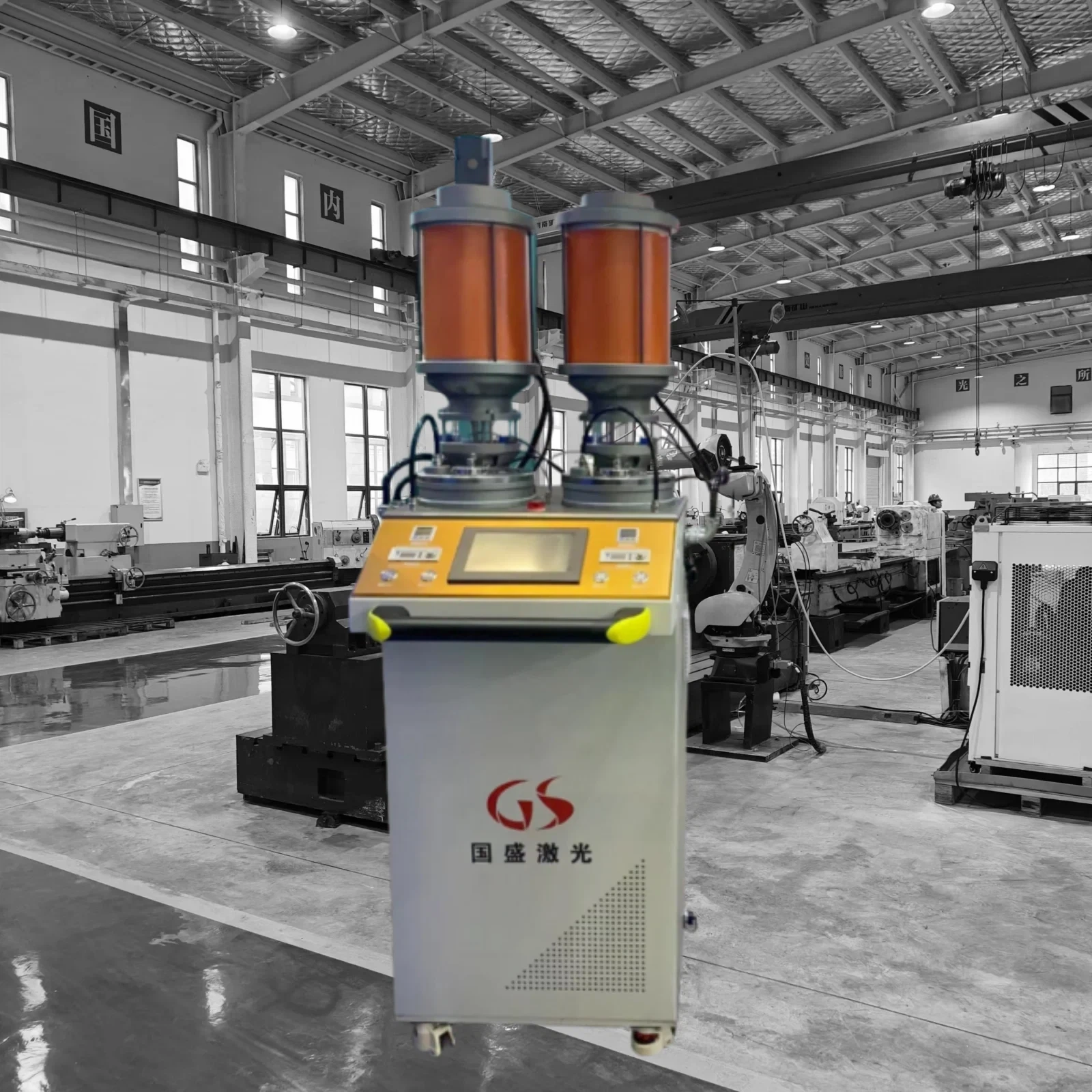
Powder Feeder

Laser Hardening Head
Surface Quality Upgrade Leads Laser Cladding Technology Evolution
Ultra-high-speed laser cladding, high-speed laser cladding, and conventional laser cladding share core foundations such as metallurgical bonding, material adaptability, and process control logic. However, in terms of surface quality, next-generation technologies have achieved a leap from "usable" to "high-performance" through three core advantages: low roughness, minimal processing requirements, and adaptability to special substrates. As industrial manufacturing's demand for precision and efficiency continues to grow, ultra-high-speed and high-speed laser cladding will become core technologies in high-end equipment manufacturing, component repair, and other fields. The continuous optimization of surface quality will also drive laser cladding toward more precise, economical, and widely applicable application scenarios.