1. Improve Shaft Surface Hardness with Laser Cladding
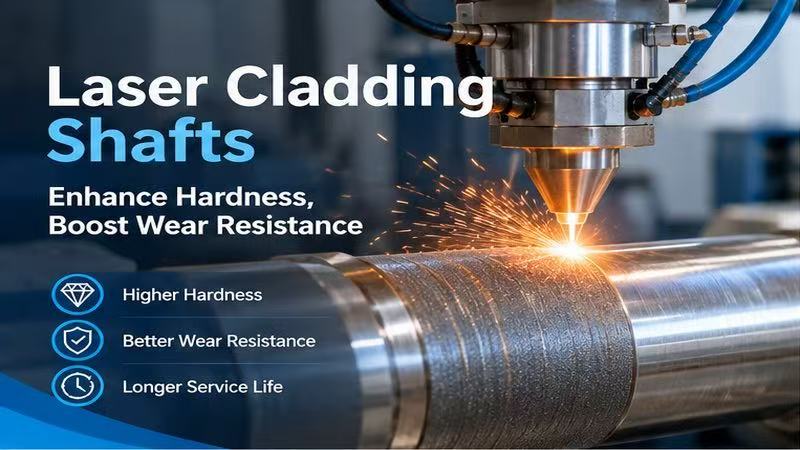
Shafts are widely used in mining machinery, hydraulic equipment, automotive manufacturing, and industrial production. During operation, shaft surfaces are exposed to friction, impact, corrosion, and heavy loads, which can cause wear and reduce service life. Laser cladding for shafts provides an effective surface strengthening solution by depositing wear-resistant alloy materials onto the shaft surface. This process creates a metallurgically bonded coating with low dilution and a strong connection to the base material. By selecting suitable alloy powders, laser cladding can significantly improve shaft surface hardness and provide better protection against mechanical wear.
2. Enhance Shaft Wear Resistance with Advanced Alloy Coatings
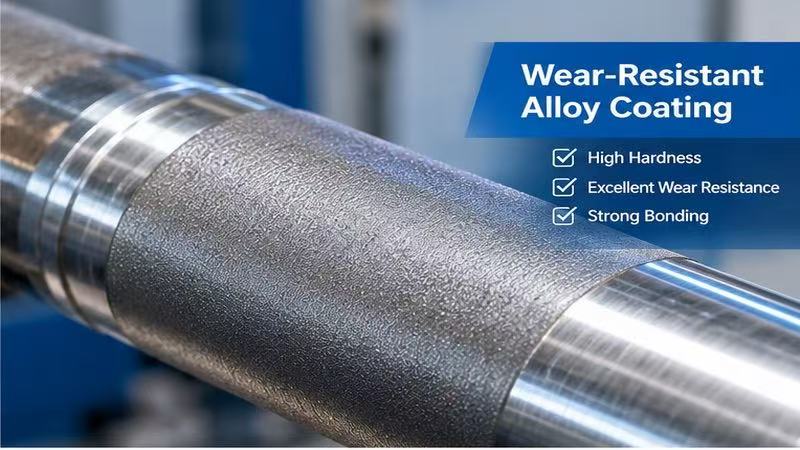
One of the main advantages of laser cladding shaft repair is improved wear resistance. Different alloy powders, such as nickel-based, cobalt-based, and iron-based alloys, can be selected according to the working environment and required surface properties. These coatings help protect shafts against abrasive wear, sliding friction, corrosion, and high-temperature conditions. For applications such as hydraulic piston rods, pump shafts, drive shafts, and mining equipment shafts, laser cladding can extend component service life and reduce maintenance frequency. The final hardness and wear resistance depend on the alloy composition, laser power, scanning speed, powder feeding rate, and processing conditions.
3. Laser Cladding vs. Traditional Shaft Surface Treatment
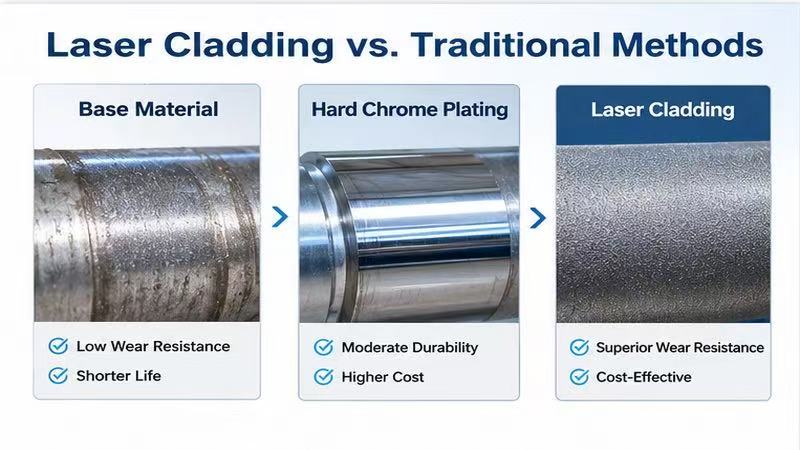
Compared with traditional hard chrome plating, thermal spraying, and conventional welding, laser cladding technology offers several advantages for industrial shaft refurbishment. It produces a metallurgically bonded coating, a relatively small heat-affected zone, and a lower dilution rate when properly optimized. It also allows localized repair of worn shaft surfaces, reducing the need to replace expensive components. Laser cladding can be applied to hydraulic cylinder rods, industrial rollers, mining shafts, and other precision mechanical parts. After cladding, turning, grinding, or polishing can be used to achieve the required shaft diameter, surface finish, and dimensional accuracy.
4. Choose the Right Laser Cladding Machine for Shaft Repair
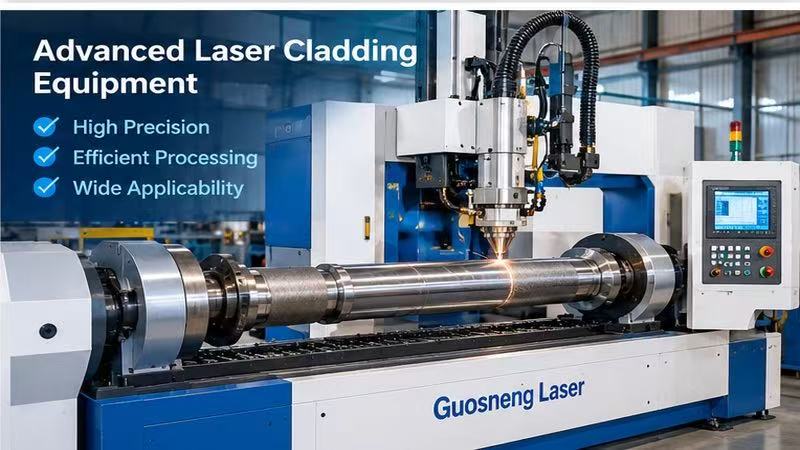
Achieving consistent shaft hardness and wear resistance requires not only suitable alloy powder but also a reliable industrial laser cladding machine. Important factors include laser power, powder feeding accuracy, laser cladding head, cooling system, CNC motion control, and rotary positioning accuracy. For different shaft diameters and lengths, manufacturers should select a laser cladding system that matches their workpiece dimensions and production requirements. Guosheng Laser provides laser cladding equipment for shaft repair, surface strengthening, and industrial component refurbishment. Contact us with your shaft material, diameter, length, wear condition, and target hardness to find a suitable laser cladding solution.