

The Economical and High-Efficiency Surface Hardening Solution
Laser Cladding Technology is an advanced surface engineering technique. It involves adding cladding material (such as alloy or ceramic powder) onto the substrate surface and using a high-energy density laser beam to melt the material together with a very thin layer of the substrate. Upon cooling and solidification, a metallurgical bonded cladding layer is formed on the substrate surface. The core value of this technology lies in its ability to prepare alloy layers with excellent properties on inexpensive substrates in a highly economical way, thereby achieving both high performance and low cost for the parts. Laser cladding not only significantly enhances the part's wear resistance, corrosion resistance, and heat resistance, effectively extending equipment life, but also helps to save precious and rare metal materials during the repair of damaged components. Crucially, the laser cladding repair process is non-polluting, aligning with modern industry demands for green remanufacturing engineering, underscoring its vast potential in resource optimization and environmental protection.

Mold Application Process: Six Steps Ensuring High-Quality Repair and Remanufacturing
The application of laser cladding technology in mold repair follows a standardized six-step process flow to ensure the quality of the repair. The first step is Mold Surface Inspection and Maintenance Plan Confirmation, which requires checking the mold for damages like cracks or pits, and determining a targeted repair plan based on the damage characteristics and customer hardness requirements. The second is Mold Surface Degreasing and Cleaning, where professional cleaning solutions are used to thoroughly remove scale, oil, and grease, a crucial pre-treatment step for ensuring high bonding quality. The third step is Reasonable Coating and Processing Parameter Selection, where the appropriate cladding powder (e.g., iron powder for cast iron) is precisely chosen, along with setting key parameters like laser power, focus, and spot size, based on the maintenance plan and required hardness. The fourth step is the core Cladding Processing, where the laser beam instantaneously melts and metallurgically bonds the coating to the substrate , forming a dense cladding layer.
Superior Characteristics of Laser Cladding: High Hardness, Strong Bond, and Low Defect Rate
Laser cladding technology is the preferred choice for surface strengthening due to the outstanding characteristics of its resulting cladding layer. Structurally, the cladding layer is uniform and fine-grained, with an extremely low defect rate (e.g., no pores or cracks). In terms of performance, the hardness of the coating is very high, typically reaching 50–62 HRC, which provides the part with exceptional wear and corrosion resistance. Regarding bonding strength, the layer forms a metallurgical bond with the substrate, boasting a bonding strength exceeding 95%, ensuring the coating's integrity. Furthermore, the technology offers immense material applicability; coating materials can be metal alloys or cermets, and substrates include various steels and cast iron. The coating thickness can be precisely controlled within the 0–10 mm range, and it can even be designed to form a composition and hardness gradient coating composed of the substrate, an intermediate layer, and an outer layer, meeting the demands of more complex operating conditions.


Focusing on Core Advantages: Low Dilution, Minimal Deformation, and High Automation
Laser cladding technology holds several unique advantages over traditional techniques like surfacing or thermal spraying. Firstly, the dilution rate between the cladding layer and the substrate is extremely low, meaning the superior properties of the cladding material are maximized in the coating without being excessively diluted by the substrate's composition. Secondly, concerning thermal effects, due to the high energy concentration and short interaction time of the laser, the substrate's heat-affected zone (HAZ) is small. Since only the surface lightly melts during processing, the parts exhibit minimal or no thermal deformation after processing, which is vital for the repair of precise molds and critical components. Structurally, the cladding layer is dense and uniform, with high combined strength and good wettability with the substrate. Finally, the technology is easily integrated into CNC systems, making it simple to achieve automated processing, which enhances production efficiency and process stability.
Technological Innovation and Value Magnification: Guosheng Laser's High-Speed and Mobile Solutions
Advanced companies, such as Guosheng Laser, have further amplified the application value of laser cladding through technological innovation. They have developed high-speed laser cladding technology, which boasts a power density 5–10 times that of conventional laser cladding, significantly boosting processing efficiency. Addressing the challenges of repairing large equipment and on-site maintenance, their developed mobile laser cladding equipment avoids the tedious process of remote disassembly, transportation, repair, and reinstallation. This dramatically saves labor and time for maintenance workers, effectively reduces enterprise downtime, and eliminates the high costs associated with replacing new parts and logistics. Furthermore, the development of eight-axis linkage laser cladding equipment, configurable with different specifications of robots, positioners, and rotary/sliding tables, allows it to flexibly adapt to the laser cladding and surface treatment of workpieces with various geometries and processing requirements, realizing high customization and automation.

Laser equipment components

Fiber Laser Machine

Laser Cladding Head
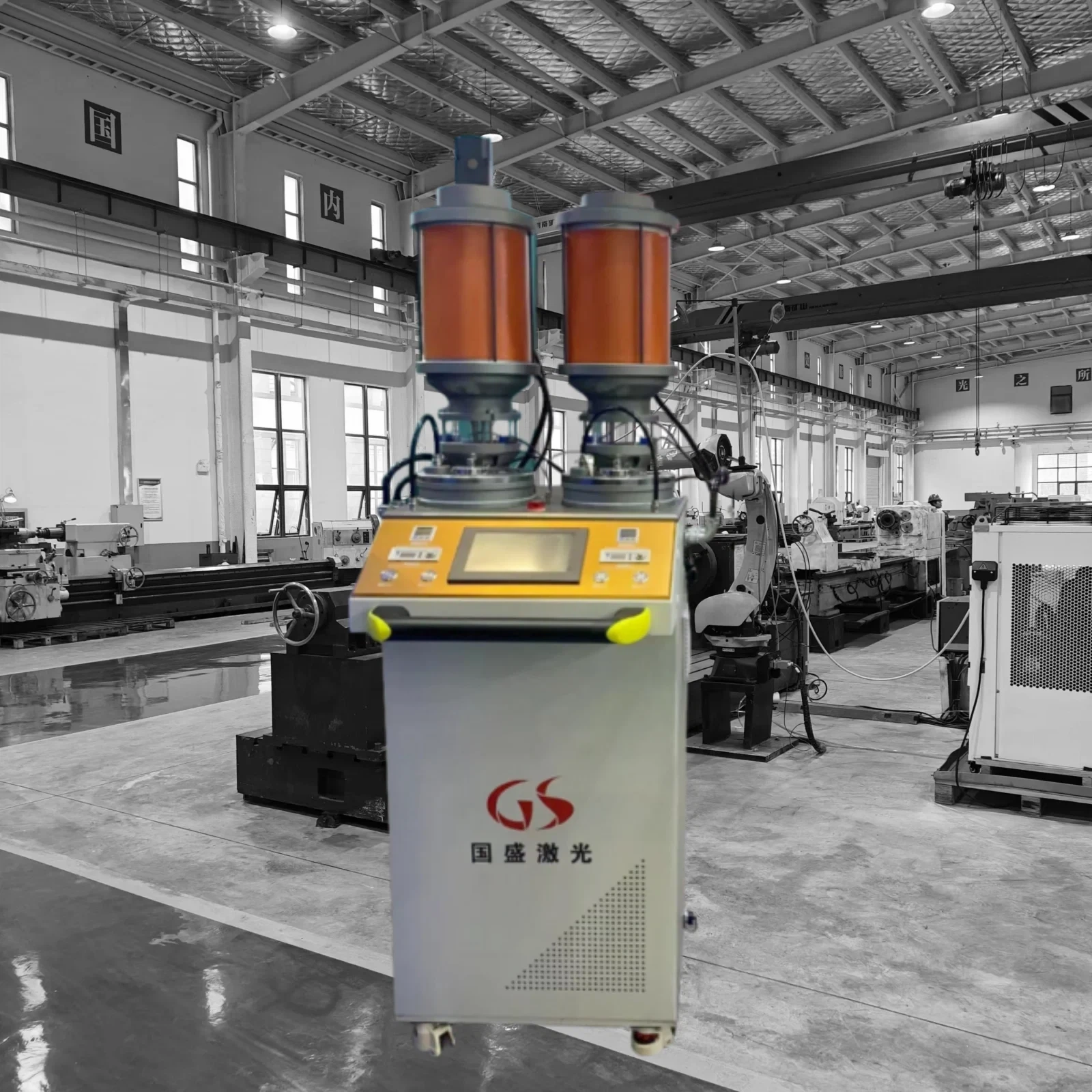
Powder Feeder

Laser Hardening Head
The Future Direction of Green Remanufacturing Engineering
In summary, Laser Cladding Technology, with its excellent performance characteristics, precise process control, and significant economic and environmental benefits, has become the ideal choice for mold remanufacturing and the surface strengthening of critical mechanical components. It not only provides a high-quality cladding layer characterized by high hardness, strong bonding, and low defects, fundamentally improving the durability of parts, but also ensures the repaired component's geometric accuracy and structural integrity through the advantages of low dilution and minimal deformation. This technology contributes significantly to saving rare metal materials and reducing energy consumption, making it a true Green Remanufacturing Engineering solution. With the continuous development of innovative technologies like high-speed, mobile, and multi-axis linkage systems, the scope and value of laser cladding applications will continue to expand, providing a solid technical foundation for modern industry to achieve resource optimization, cost reduction, efficiency improvement, and sustainable development.