

The Future of Industrial Repair: An Overview of Laser Cladding
In heavy industry and energy sectors, large slurry tanks face constant abrasive wear and chemical corrosion. Laser cladding has emerged as a cutting-edge surface modification technique, rapidly replacing traditional cladding and thermal spraying. By utilizing a high-power-density laser beam as a heat source, it simultaneously melts specialized metal powders and the substrate surface to create a superior metallurgically bonded layer. This article explores the precise measurement, physical principles, core advantages, and quality assurance systems of laser cladding, revealing how "light and shadow" can grant a second life to aging industrial equipment.

Precision First: 3D Measurement and Customized Repair Strategy
The restoration process does not begin with the laser, but with a deep perception of the damage. Before operation, technicians use high-precision laser scanners or ultrasonic thickness gauges to create a comprehensive model of erosion pits, cracks, and worn areas on the tank interior. This phase is about "bespoke engineering": calculating the exact geometric dimensions and depth of the damage through data analysis. Based on these results, engineers scientifically set parameters such as laser power density, scanning trajectory, powder feed rate, and overlap rate. This digitized preparation ensures precise heat input control, eliminating the risk of deformation caused by uneven thermal stress.
Micro-Reconstruction: The Mystery of the Keyhole Effect and Dynamic Molten Pool
The core of laser cladding lies in a complex physical metallurgical process. When a high-energy laser beam focuses on the substrate, the surface instantaneously vaporizes to form a "keyhole," into which fluidized metal powder is precisely delivered. Stirred by the laser beam, the molten metal and powder undergo intense heat exchange, forming a fully molten dynamic pool. Due to the high heat dissipation of the tank substrate, the pool edges remain semi-molten, creating a unique temperature gradient. As the beam moves steadily, the liquid metal fills micro-grooves under the balance of gravity and buoyancy, solidifying rapidly to grow a high-performance alloy coating with a fine microstructure.


Performance Leap: From Seamless Aesthetics to Superior Durability
Compared to traditional techniques, laser cladding offers a perfect fusion of "high quality" and "structural toughness." First, it achieves a true metallurgical bond with strength far exceeding that of thermal spraying, ensuring a seamless finish that matches the original substrate's integrity. Second, through customized alloy powder formulas, the repaired layer can achieve higher hardness, wear resistance, and corrosion resistance than the base material. This means the restored slurry tank not only regains its original dimensions but also sees a massive leap in its ability to withstand harsh environments and heavy loads, significantly extending the service life of heavy machinery.
Versatile Adaptation: Multi-Scenario Application and Compliance Control
This technology is highly versatile, covering everything from heavy-duty transport trucks and specialized engineering machinery to slurry processing equipment on energy drilling platforms. However, high-quality repair relies on strict process management. In practice, focus must be placed on dilution rates and residual stress distribution. Upon completion, rigorous quality assessments-such as Penetrant Testing (PT), hardness testing, and metallographic analysis-must be conducted. Ensuring every repair point is not only visually "compliant" but also meets engineering safety standards at a microscopic level is the cornerstone of laser cladding's large-scale application in high-value industrial components.

Laser equipment components

Fiber Laser Machine

Laser Cladding Head
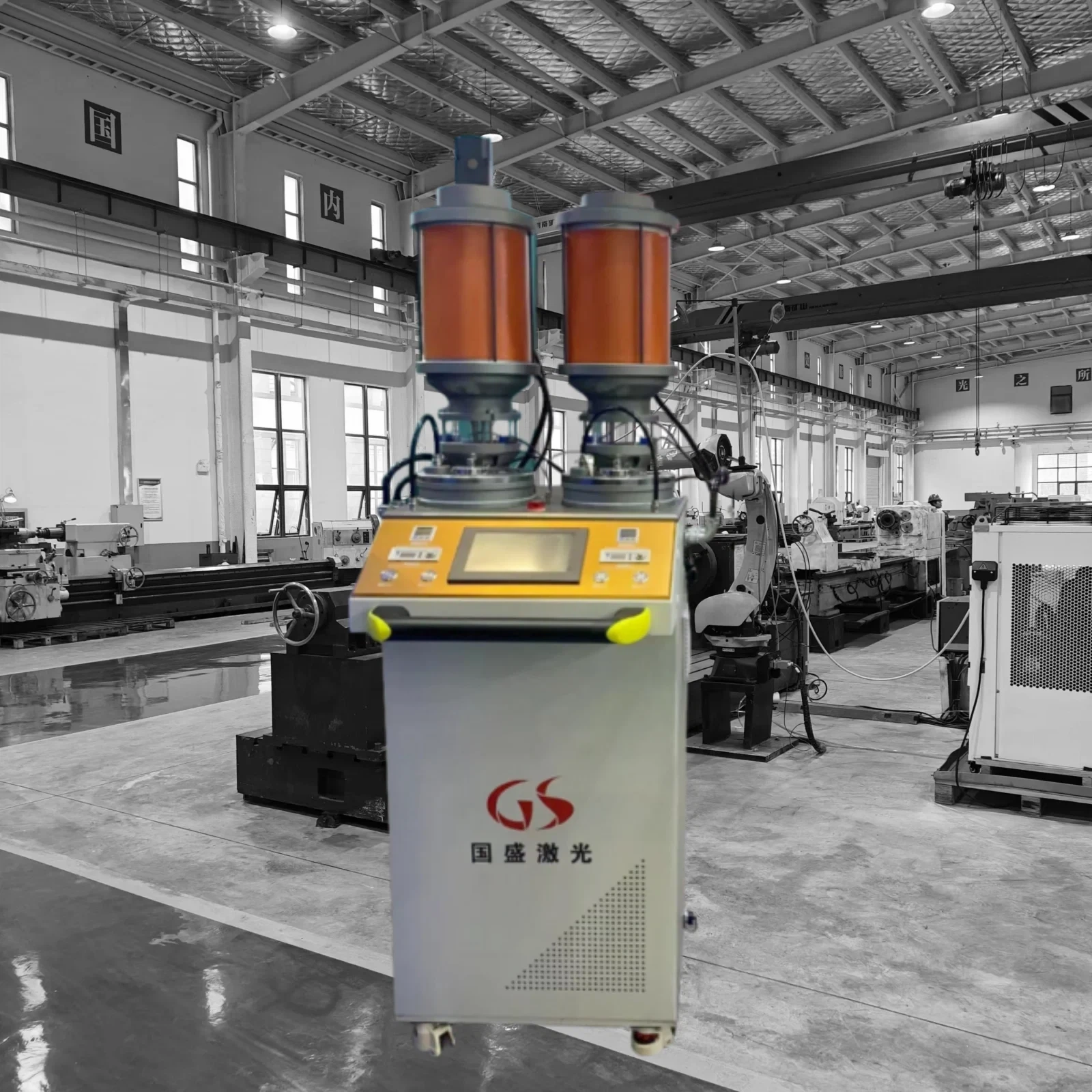
Powder Feeder

Laser Hardening Head
Efficient Restoration Restoring Core Equipment Value
In summary, laser cladding has become the preferred solution for large slurry tank interior repairs due to its high efficiency, high precision, and extreme durability. It not only drastically reduces downtime and maintenance costs but also enhances the overall structural strength of the equipment through surface modification. As industrial automation advances, laser restoration will become more intelligent and mobile, providing a greener and more economical solution for the maintenance of heavy equipment.