

The Evolution of Pinch Roll Restoration Technology
In the modern steel industry, pinch rolls are critical components for maintaining the continuity of rolling production lines. They operate under grueling conditions involving high loads, intense wear, and chemical corrosion. Traditional restoration methods, such as manual arc welding or thermal spraying, often fall short due to large heat-affected zones, insufficient bonding strength, and significant material waste. Laser cladding repair technology has emerged as an advanced green remanufacturing solution. With its superior processing precision and exceptional coating performance, it is rapidly replacing conventional techniques to become the core choice for steel plants aiming to improve equipment operation rates and slash maintenance costs.

Precise Pre-treatment: Building a Solid Foundation for Cladding Quality
The primary stage of laser cladding is rigorous surface pre-treatment. To address the grease, oxide scales, and fatigue layers accumulated during long-term operation, deep physical cleaning and chemical de-rusting must be performed until the substrate reveals a pure metallic luster. Subsequently, sandblasting or specific roughening processes are used to create micron-scale anchor pits. This step is vital; it not only significantly enhances the mechanical interlocking between the subsequent cladding layer and the substrate but also effectively prevents cracks caused by stress concentration during the cladding process, providing a prerequisite for a high-quality metallurgical bond.
Material Formulation: The Core Logic of Customized Powder Preparation
The choice of cladding material directly dictates the physical and chemical properties of the repaired pinch roll. Depending on specific working conditions, high-hardness iron-based alloys, nickel-based alloys, or composite ceramic powders are typically selected. During preparation, high-performance powders are precisely proportioned with appropriate binders and trace elements, then homogenized through ball milling. This customized material strategy ensures the cladding layer maintains high toughness while possessing oxidation and wear resistance far exceeding the original substrate. Scientific powder preparation not only improves laser absorption rates but also ensures the stability of chemical compositions during the instantaneous melting and solidification of the molten pool.


Instantaneous Fusion: Micro-Metallurgy Driven by High-Energy Lasers
The laser cladding operation is the heart of the restoration process. Utilizing a CNC system to manipulate a high-energy laser beam, the pre-placed or synchronously fed powder is instantly melted along with the surface of the pinch roll substrate. Because the laser's energy density is extremely high and the interaction time is very short, the heat-affected zone of the substrate is minimized, effectively preventing thermal deformation of the shaft. Upon solidification, a high-strength metallurgical bond is formed at the interface. This cladding layer, characterized by a refined and uniform microstructure, perfectly corrects dimensional deviations and grants the surface extreme macro-hardness, ensuring excellent anti-cracking performance under high-pressure work.
Performance Enhancement: Refined Post-processing and Comprehensive Evaluation
After cladding, the component must undergo a strict post-processing phase to eliminate residual stress and meet precision standards. The repaired area is first subjected to controlled cooling, followed by polishing and trimming using precision grinders to remove burrs and flash, ensuring the radial runout and surface roughness meet installation requirements. Finally, non-destructive testing (such as ultrasonic or dye penetrant testing) and hardness evaluations are conducted to assess the repaired area. This series of rigorous procedures ensures that the restored pinch roll achieves "original dimension recovery" while significantly surpassing the surface protection performance of a brand-new part.

Laser equipment components

Fiber Laser Machine

Laser Cladding Head
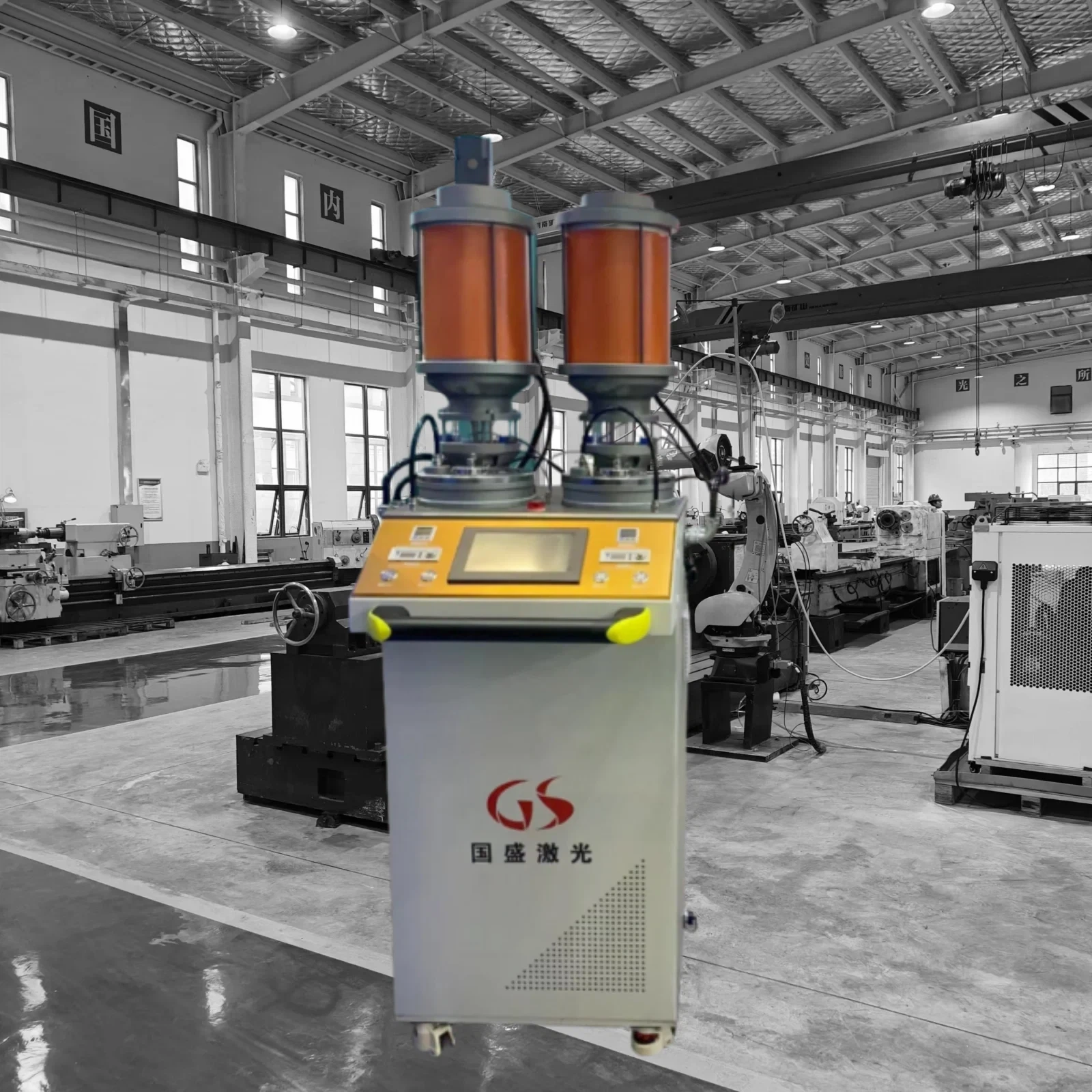
Powder Feeder

Laser Hardening Head
Laser Remanufacturing Empowers Steel Efficiency
The successful application of laser cladding in pinch roll repair not only significantly extends equipment service life but also directly boosts economic benefits by shortening maintenance cycles. Compared to traditional methods, it offers unparalleled advantages in cost control, quality stability, and environmental sustainability. As laser power increases and costs further decrease, this technology will play an even more pivotal role in the maintenance and reinforcement of precision equipment in steel plants. It stands as a vital engine driving the steel industry toward green remanufacturing and digital transformation, holding immense market potential and scientific value.