

A Revolutionary Breakthrough in Bore Reinforcement
In heavy industries such as hydraulic transmission, petrochemicals, and aerospace, the internal bore of a cylinder is a critical power component. Its resistance to wear and corrosion directly determines the reliability of the entire system. Laser cladding technology utilizes a high-energy laser beam to melt and deposit specialized metal powders onto the internal surface, forming a high-performance alloy coating. This technology not only addresses the environmental pollution and weak bonding issues of traditional electroplating but also provides superior physical and chemical properties, making it a key path for enhancing equipment longevity and achieving green remanufacturing.

Meticulous Pre-processing: From Workpiece Preparation to Material Blending
A high-performance cladding layer begins with rigorous preparation. First, the cylinder must be precisely positioned on the laser cladding machine's workstation, ensuring the surface is completely free of oil, defects, and contaminants. This is the foundation of quality assurance. Subsequently, a "customized" material preparation phase begins: metal powders and alloying elements are mixed in precise ratios-often with organic solvents-based on the specific pressure and corrosive environment the cylinder will face. This process is akin to "tailor-made" engineering, allowing for the pre-setting of hardness levels to provide the optimal substrate for the high-energy laser sintering that follows.
Craftsmanship in Process: Surface Regeneration via High-Energy Lasers
During the core laser cladding stage, the high-energy laser beam acts as a precision "surgical knife," creating an instantaneous molten pool on the internal bore surface. The metal powder melts under the laser and forms a robust metallurgical bond with the base material. Unlike physical deposition methods like thermal spraying, this process ensures the coating will not peel or flake under stress. The subsequent post-processing is vital for performance sublimation: heat treatment eliminates residual thermal stress, followed by precision grinding and polishing. These steps not only achieve a mirror-like finish but also further enhance micro-hardness, ensuring smooth operation under extreme high-pressure conditions.


Performance Leap: Dual Guarantee of Hardness and Extended Service Life
The most significant advantage of laser cladding is the exceptional physical attributes it imparts to the cylinder. By introducing ceramic phases or corrosion-resistant alloys, the internal coating achieves a hardness and chemical resistance far exceeding the base material. This "hard shell, tough core" structural characteristic allows the cylinder to maintain its integrity when exposed to abrasive dust or acid-base corrosive media. Statistical data shows that cylinders reinforced with laser cladding typically have a service life several times longer than those treated with traditional methods. This significantly reduces equipment replacement frequency and minimizes production losses caused by downtime.
Green Manufacturing: A Model of Versatility and Energy Efficiency
Against the global backdrop of "Carbon Peaking and Carbon Neutrality," laser cladding demonstrates significant environmental advantages. As an additive manufacturing process, it eliminates the need for large quantities of cutting fluids, abrasives, or toxic electroplating chemicals, drastically reducing environmental load and energy consumption. Furthermore, the technology is highly versatile; it can be applied to various alloy steels and complex geometries with high precision. This broad applicability allows laser cladding to transcend industry boundaries, finding flexible use in deep-sea drilling, large excavators, and aircraft landing gears, serving as a pioneer for energy saving in the industrial sector.

Laser equipment components

Fiber Laser Machine

Laser Cladding Head
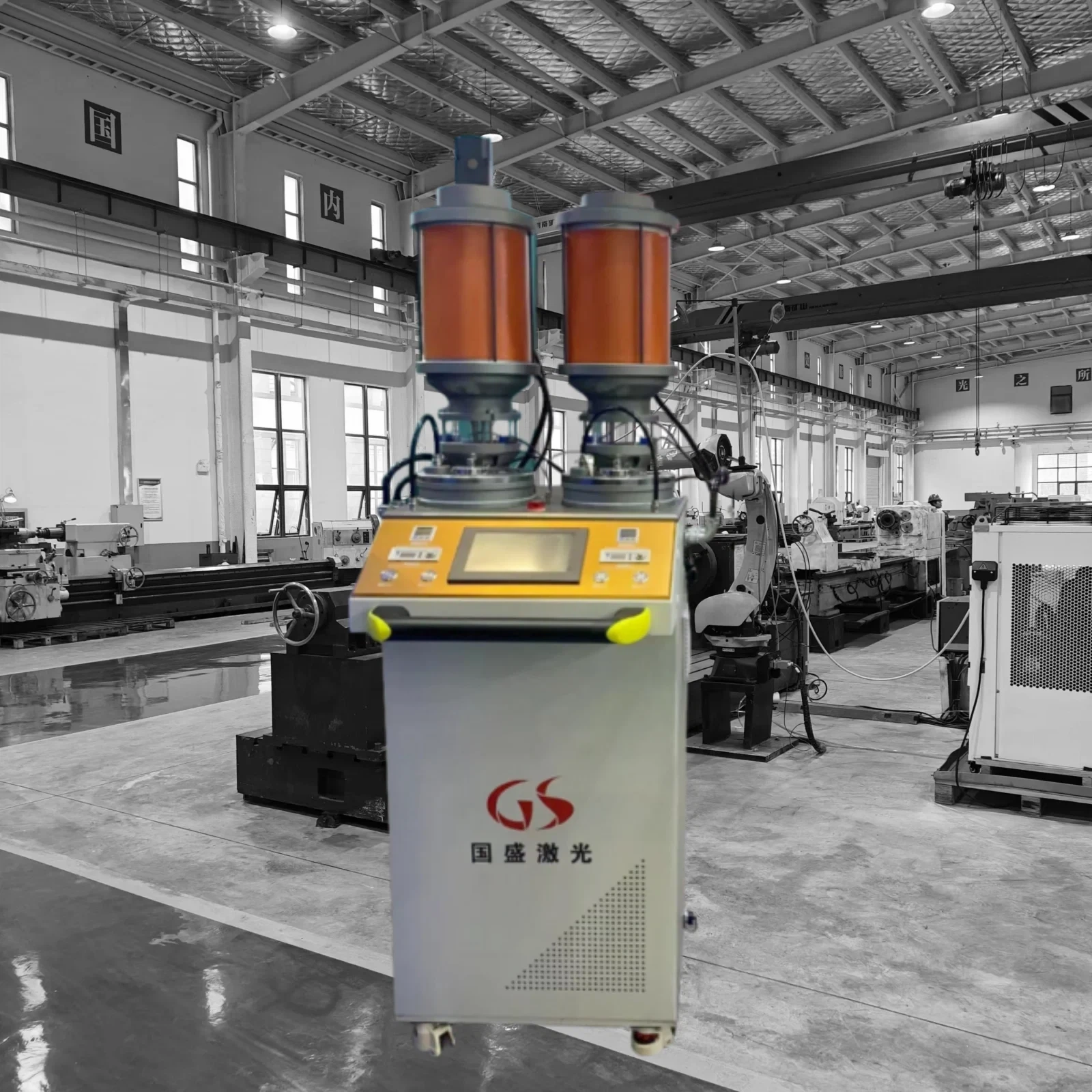
Powder Feeder

Laser Hardening Head
Leading the Future of Industrial Maintenance
In conclusion, laser cladding for hydraulic cylinder internal bores has become an indispensable technical pillar for modern advanced manufacturing, thanks to its high hardness, long service life, versatility, and eco-friendly nature. As laser power continues to increase and automated control systems evolve, this process will move toward even greater intelligence and efficiency. It is not only a tool for enhancing new components but also a core force in circular economy and repair. Looking ahead, laser cladding is set to drive hydraulic equipment toward higher performance and sustainability, opening a new chapter in global industrial surface engineering.