

A High-Performance Heat Treatment Technology Reshaping Metal Properties
In the field of metal manufacturing and processing, surface performance directly determines the service life and application value of workpieces. As a metal surface treatment solution integrating high precision, high efficiency and environmental protection, laser surface hardening technology breaks the limitations of traditional heat treatment by virtue of its unique heating and cooling mechanism, and becomes a core method to improve the hardness and wear resistance of metal parts. Whether it is auto parts, mechanical molds or aerospace components, this technology is promoting the performance upgrade of products and has become an important development direction in the modern heat treatment industry.

Laser-Driven "Rapid Quenching" Mechanism
The core principle of laser surface hardening is consistent with traditional heat treatment, which realizes strengthening through the "heating-austenitization-rapid cooling" process. However, the characteristics of laser endow it with the advantage of rapid processing. This technology uses high-energy laser as the heat source, focusing on a local area of the metal surface. Under the ultra-high heating speed of 10¹⁰℃/s, the target area quickly reaches the austenitization temperature. Theory and practice have confirmed that the surface temperature and thermal penetration depth are proportional to the square root of the laser irradiation time. The processing effect can be accurately controlled by adjusting the spot size, scanning speed and laser power. When the laser beam moves away, the heat quickly diffuses to the cold area inside the workpiece through heat conduction, realizing "self-quenching" without additional cooling media, making the whole process efficient and controllable.
Parameter Optimization for Precise Performance Regulation
The accuracy of laser surface hardening comes from the coordinated regulation of multiple parameters, which is also the core highlight distinguishing it from traditional processes. Due to the small size of the laser spot or beam oscillation range, point-by-point scanning is required to complete the overall processing. To prevent the residual heat of subsequent scanning from causing tempering and softening of the previously hardened area, a grating is needed to make the energy distribution at the beam edge steeper. During the scanning process, in addition to the basic parameters of power and speed, adjusting the amplitude and frequency of beam oscillation can change the power density, thereby controlling the depth and coverage area of the hardened layer. This refined regulation capability enables local quenching of workpieces with complex structures such as small grooves, blind holes and thin walls, meeting the performance requirements of different scenarios.


Three-Layer Structure Ensures Balance Between Performance and Toughness
Similar to induction surface hardening, ordinary steel will form a distinctive three-layer microstructure after laser surface hardening, achieving a balance between surface hardness and core toughness. The outermost layer is the full surface hardened zone. Under rapid heating and cooling, a fine and uniform martensite structure is formed, which is the key to improving surface hardness and wear resistance. The middle layer is the partial hardened zone, whose structure is composed of martensite and incompletely transformed pearlite and ferrite, playing a transitional role. The innermost layer is the unhardened core zone, which retains the original tough structure of the base material, preventing the workpiece from becoming brittle due to overall hardening. This gradient structure design enables the workpiece to be both wear-resistant and not easy to break when bearing external forces, adapting to complex working conditions.
Outstanding Advantages: Leading Traditional Heat Treatment in Multiple Dimensions
Compared with traditional heat treatment, laser surface hardening has significant advantages in efficiency, environmental protection and adaptability. In addition to the minimal thermal deformation caused by ultra-fast heating and cooling, it does not require heating media or cooling media, and no pollutants are emitted during the process, which conforms to the concept of green manufacturing. The characteristic of concentrated energy makes its heat-affected zone small, and the workpiece surface is clean. After processing, it can be directly used as a finishing process, reducing the grinding link. At the same time, this technology supports personalized processing of parts with different materials and shapes, and can be integrated into automated production lines, improving production efficiency while reducing costs, which perfectly adapts to the flexible production needs of modern manufacturing industry.

Laser equipment components

Fiber Laser Machine

Laser Cladding Head
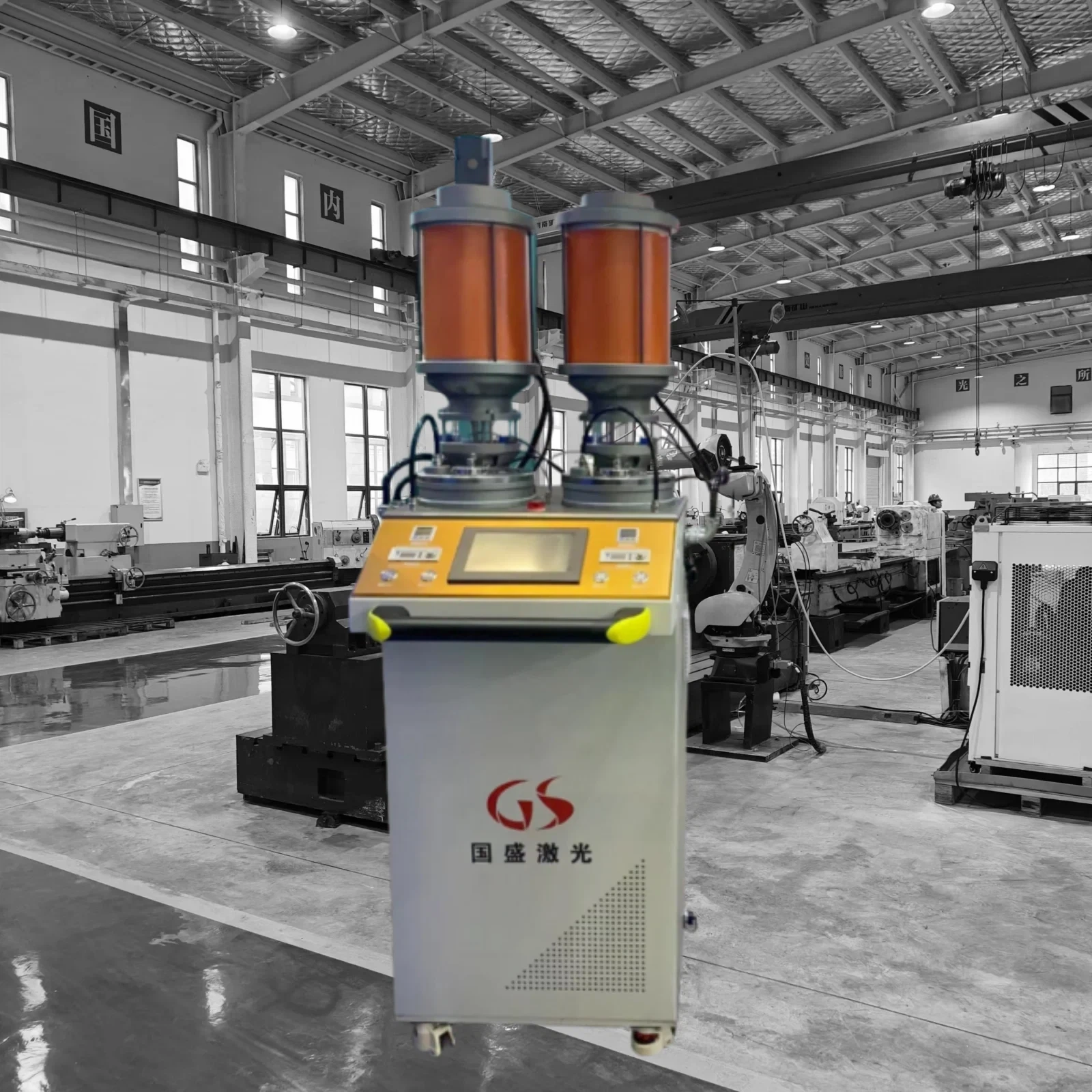
Powder Feeder

Laser Hardening Head
Technological Innovation Drives Industry Upgrade
Laser surface hardening technology, marked by "high hardness, high precision, high efficiency and environmental protection", solves the problems of traditional heat treatment in complex workpiece processing and performance regulation through its unique principle and parameter control method. Its wide application in automotive, machinery, aerospace and other fields not only improves product quality, but also promotes the technological upgrading of the metal manufacturing industry. With the in-depth integration of laser technology and automatic control, laser surface hardening will achieve breakthroughs in more precise and complex scenarios in the future, bringing more innovative possibilities to the metal processing industry and continuously solidifying its core position in the modern heat treatment field.