

A Revolution in High-Efficiency Surface Hardening
Large rolls are essential core components in the production lines of heavy industries like steel, non-ferrous metals, and rubber. Their performance directly determines production efficiency and product quality. Traditional roll surface treatment methods, such as electroplating or conventional heat treatment, often face limitations in terms of efficiency, precision, and environmental compatibility. Laser Quenching Technology (or Laser Hardening) is fundamentally changing this landscape as a cutting-edge surface treatment method. This technology uses a high-energy laser beam to rapidly heat and cool the roll surface, achieving localized, precise roll surface hardening and strengthening. This non-contact, high-efficiency processing method not only significantly shortens the processing cycle but, crucially, enhances the roll's wear resistance and fatigue strength. It is the ideal solution for modern high-end manufacturing seeking high-performance, long-life components. This article will delve into the working principle, core advantages, and broad industrial application prospects of Laser Quenching.

The Microscopic Dynamic Mechanism of Laser Quenching
The essence of Laser Quenching Technology is utilizing the high energy density and instantaneous action of the laser beam to achieve rapid material phase transformation. When the high-energy laser beam precisely scans the roll surface, within an extremely short period (typically milliseconds), the surface material is heated to the austenitizing temperature, sometimes even reaching a molten or boiling state. Subsequently, the massive volume of the roll body (especially the core) acts as an efficient cooling medium due to its relatively low temperature, causing the surface layer material to undergo ultra-fast cooling-a process known as "self-quenching." This extremely high cooling rate ($10^3 \sim 10^6 \text{ K/s}$) inhibits the growth of carbides and other grains, forcing the austenite to rapidly transform into fine martensitic structures, thereby imparting exceptionally high hardness and excellent wear resistance to the surface. Successful Laser Quenching requires extremely precise control over process parameters, including laser power density, scanning speed, and spot size. Engineers must accurately adjust these parameters to ensure the hardened layer depth and performance indicators for roll surface strengthening are met with precision.
Non-Contact, High Precision, and Eco-Friendly Support for Roll Surface Strengthening
Large Roll Laser Quenching Technology has become an industry favorite because it establishes a comprehensive advantage matrix that surpasses traditional processing methods. First is the leap in processing efficiency: The rapid heating and self-quenching mechanism significantly shortens the treatment time, enhancing production line efficiency. Second is unparalleled precision control: It allows for accurate control over the depth, width, and hardness indicators of the hardened layer, enabling the treated roll to perfectly match the stringent requirements of specific working conditions, achieving ideal roll surface strengthening effects. Third is strong geometric adaptability: The laser beam is easily guided and focused, allowing it to process rolls of complex shapes and super-large sizes, overcoming the size limitations of induction hardening. Fourth is non-contact assurance: The Laser Quenching process does not exert mechanical stress or cause macro deformation to the roll, ensuring the roll's geometric accuracy. Finally, the technology demonstrates excellent environmental performance: As a clean process, it generates minimal waste and pollution, reflecting modern manufacturing's commitment to sustainable development.


Creating Core Value in Steel and Heavy Industries
Among its many applications, Laser Quenching Technology plays the most critical role in the Steel Industry, being an indispensable part of roll manufacturing and repair. During the rolling process of steel, the roll surface endures immense pressure, friction, and high temperatures, making it highly susceptible to wear and fatigue. Through the Laser Quenching treatment, the roll's surface hardness and wear resistance are significantly enhanced, achieving highly effective roll surface strengthening. This directly yields two core values: first, extending the service life of the rolls, thereby drastically reducing downtime and replacement costs; second, improving the surface quality of the rolled steel. In addition to the steel industry, this laser hardening technology is widely used on critical rolls in the rolling of non-ferrous metals, paper machinery rollers, and rubber and plastics processing machinery. For these high-value devices with high downtime costs, Laser Quenching achieves a dual optimization of economic benefit and technical performance through high-performance surface strengthening.
Technology Advancements and Customization Drive Future Roll Surface Strengthening
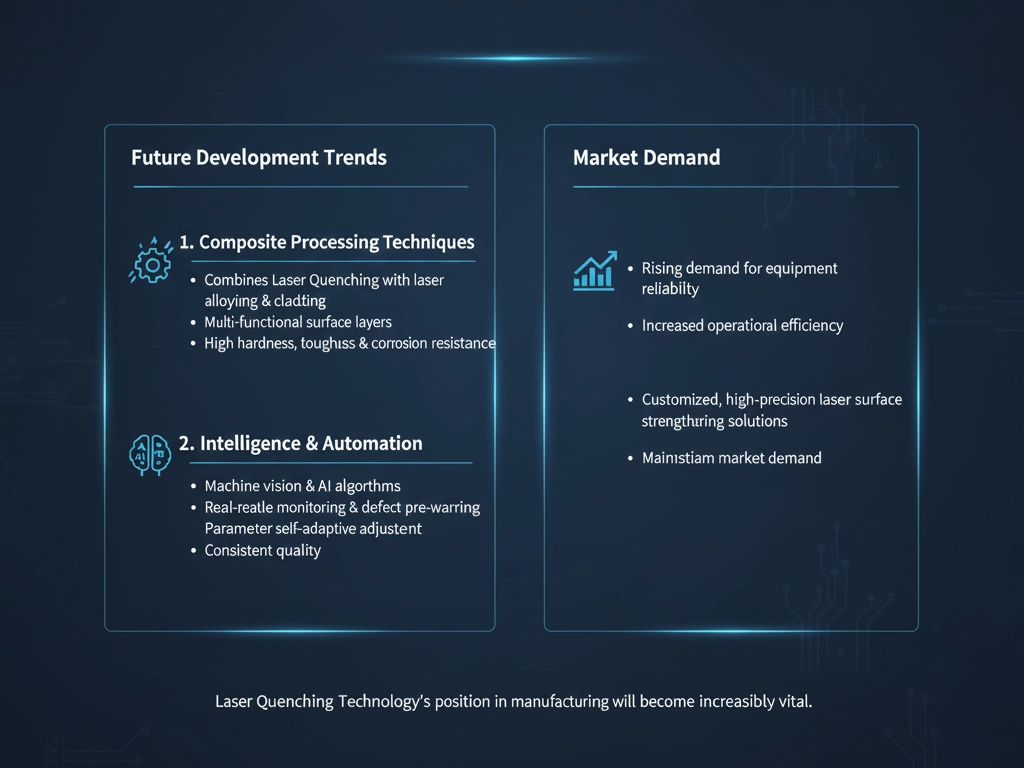
Looking ahead, large roll Laser Quenching Technology is still in a phase of continuous development and optimization. With the popularization of high-power, high-beam quality fiber lasers, processing efficiency and energy utilization will further improve. The future development trends of the technology primarily focus on two aspects: first, composite processing techniques, combining Laser Quenching with other surface engineering technologies like laser alloying and laser cladding to achieve multi-functional surface layers that possess high hardness, high toughness, and excellent corrosion resistance; second, intelligence and automation, utilizing machine vision, sensors, and AI algorithms to achieve real-time monitoring of the Laser Quenching process, defect pre-warning, and parameter self-adaptive adjustment, ensuring quality consistency in every procedure. As industry demands for equipment reliability and operational efficiency continue to rise, customized, high-precision laser surface strengthening solutions will become the mainstream market demand, and the position of Laser Quenching Technology in the future manufacturing landscape will become increasingly vital.
Laser equipment components

Fiber Laser Machine

Laser Cladding Head
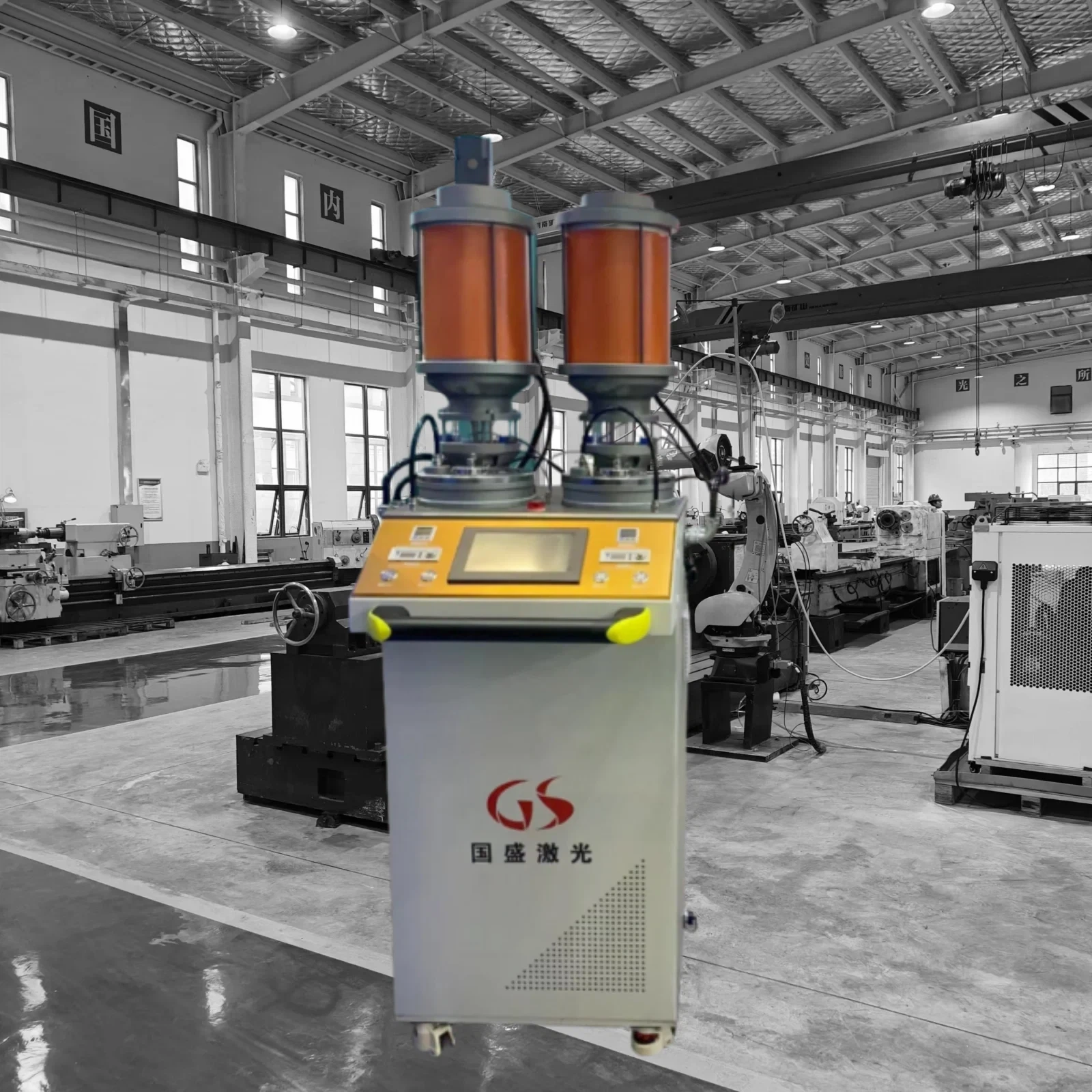
Powder Feeder

Laser Hardening Head
Laser Quenching – The Path to High-Performance Manufacturing
In summary, Large Roll Laser Quenching Technology, thanks to its unique rapid thermal processing mechanism, unparalleled precision control, strong process adaptability, and environmental characteristics, has become a representative technology for achieving roll surface strengthening and performance enhancement in modern high-end manufacturing. It not only significantly increases roll durability and effectively reduces production costs but also provides solid technical assurance for the continuous and efficient operation of heavy industries like steel and non-ferrous metals. With the continuous advancement of Laser Quenching technology and the expansion of its application scenarios, it is set to further deepen its core value in the field of high-performance manufacturing, acting as a key driver in pushing industrial equipment towards higher reliability and longer lifespan.