

Advanced Surface Engineering Surpassing Traditional Repair
Laser Cladding Technology is a groundbreaking advanced surface engineering technique that fundamentally transforms traditional methods of parts repair and strengthening. The technology utilizes the powerful energy of a high-energy laser beam to rapidly melt selected metal or alloy powders simultaneously with the surface of the substrate material. Upon cooling, a layer of superior performance, known as the cladding layer, is formed on the substrate. Unlike conventional surface treatments like electroplating or thermal spraying, the cladding layer achieves a robust metallurgical bond with the substrate, ensuring extremely high bonding strength-often no less than 95% of the original base material's strength. This core advantage ensures that the repaired part not only restores its original appearance and dimensions but, more critically, its operational performance often meets or exceeds the level of new products. Due to its high efficiency, precision, and low heat input characteristics, laser cladding has become the preferred technology for the repair and strengthening of heavy-duty, high-value critical components, offering robust technical support for enterprises seeking efficient management and sustainable operation of their equipment assets.

The Mechanism of Metallurgical Bonding and Ultra-Fine Grain Formation
The success of Laser Cladding Technology hinges on its unique microscopic dynamic mechanism, which ensures the high quality and superior performance of the clad layer. Firstly, the high-energy laser beam is precisely focused on the powder and substrate surface, achieving rapid, simultaneous melting of both. Under the laser's action, only slight melting of the substrate surface occurs, with the micro-melt layer typically ranging from 0.05 to 0.1 mm in thickness. This low heat input characteristic is crucial, as it effectively confines the substrate's Heat-Affected Zone (HAZ) to a minimal range (generally 0.05–0.1 mm), thus minimizing part deformation during processing. Secondly, due to the small size of the melt pool and the extremely high cooling rate, the clad layer does not have time to form coarse cast structures during solidification. The final cladding layer and its interface structure are dense, exhibit fine grains, and are free from defects such as voids, inclusions, or cracks. This fine-grain strengthening effect significantly improves the hardness, wear resistance, and corrosion resistance of the clad layer, equipping the repaired part with superior service performance compared to the original substrate.
Economic Benefits of Extended Life and Enhanced Efficiency
The economic value that Laser Cladding delivers to enterprises is substantial and multifaceted. The most immediate benefit is realized through a significant reduction in cost and a marked increase in efficiency. Repairing worn parts using laser cladding technology typically costs less than 1/5 of the price of purchasing a new replacement part, saving companies substantial expenses on spare parts. More importantly, the strength of laser-clad parts often exceeds the strength of the original substrate, and the service life can be extended by 1.5 to 3 times. This extended lifespan translates directly into a considerable reduction in equipment downtime, effectively addressing the critical need for rapid repair of essential components to ensure the continuous and reliable operation of large-scale integrated equipment. Furthermore, cladding with ultra-wear-resistant and corrosion-resistant alloys fundamentally improves the service performance of the component surface, achieving critical component surface strengthening that allows them to operate stably in harsh conditions for extended periods without deformation, providing long-term, substantial economic returns and guaranteed production efficiency for the enterprise.


Repair and Strengthening of Critical Parts in Oil Fields and Heavy Machinery
Laser Cladding Technology, due to its unique advantages, plays an indispensable role in many industrial sectors, particularly in heavy-duty machinery and harsh operational environments. Taking oil fields as an example, working conditions are notoriously severe, with numerous metal components subjected to heavy loads accompanied by corrosion, friction, and wear, leading to premature failure. Traditional surface treatments are often too thin to address wear gaps that are in the order of millimeters. Laser cladding technology perfectly solves this problem by offering an adjustable cladding thickness ranging from 0.2 to 2 mm. This technology is widely applied to high-value critical equipment such as petroleum drill pipes, sucker rods, and pipelines. By cladding the surfaces of these components with alloys resistant to corrosion, wear, and high temperatures, it not only significantly extends their service life and reduces maintenance costs but also improves oil production efficiency. In summary, laser cladding has become a crucial technical support system ensuring the continuous, efficient, and reliable operation of core equipment in industries such as oil, mining, metallurgy, and power generation.
Composite Technology and Intelligence Leading the Future Direction
Looking ahead, Laser Cladding Technology is rapidly evolving toward hybridization and intelligence to meet increasingly complex and demanding industrial needs. Composite processing techniques are a current research hotspot; this involves combining laser cladding with other advanced surface engineering technologies like laser alloying or high-velocity oxygen fuel (HVOF) spraying to form multi-functional surface layers that possess multi-level capabilities, integrating high hardness, high toughness, and excellent corrosion resistance. On the operational level, intelligence and automation are becoming the mainstream. The future will increasingly utilize machine vision, high-precision sensors, and AI algorithms to achieve real-time monitoring, automatic defect pre-warning, and self-adaptive parameter adjustment of the Laser Cladding process. This will ensure the high consistency and reliability of the clad layer quality across every batch. As industry demands for equipment reliability and customization increase, providing customized, high-precision laser surface strengthening solutions tailored to specific working conditions will be the dominant market trend, signaling that Laser Cladding Technology will occupy an even more central role in the future of high-end manufacturing and remanufacturing.

Laser equipment components

Fiber Laser Machine

Laser Cladding Head
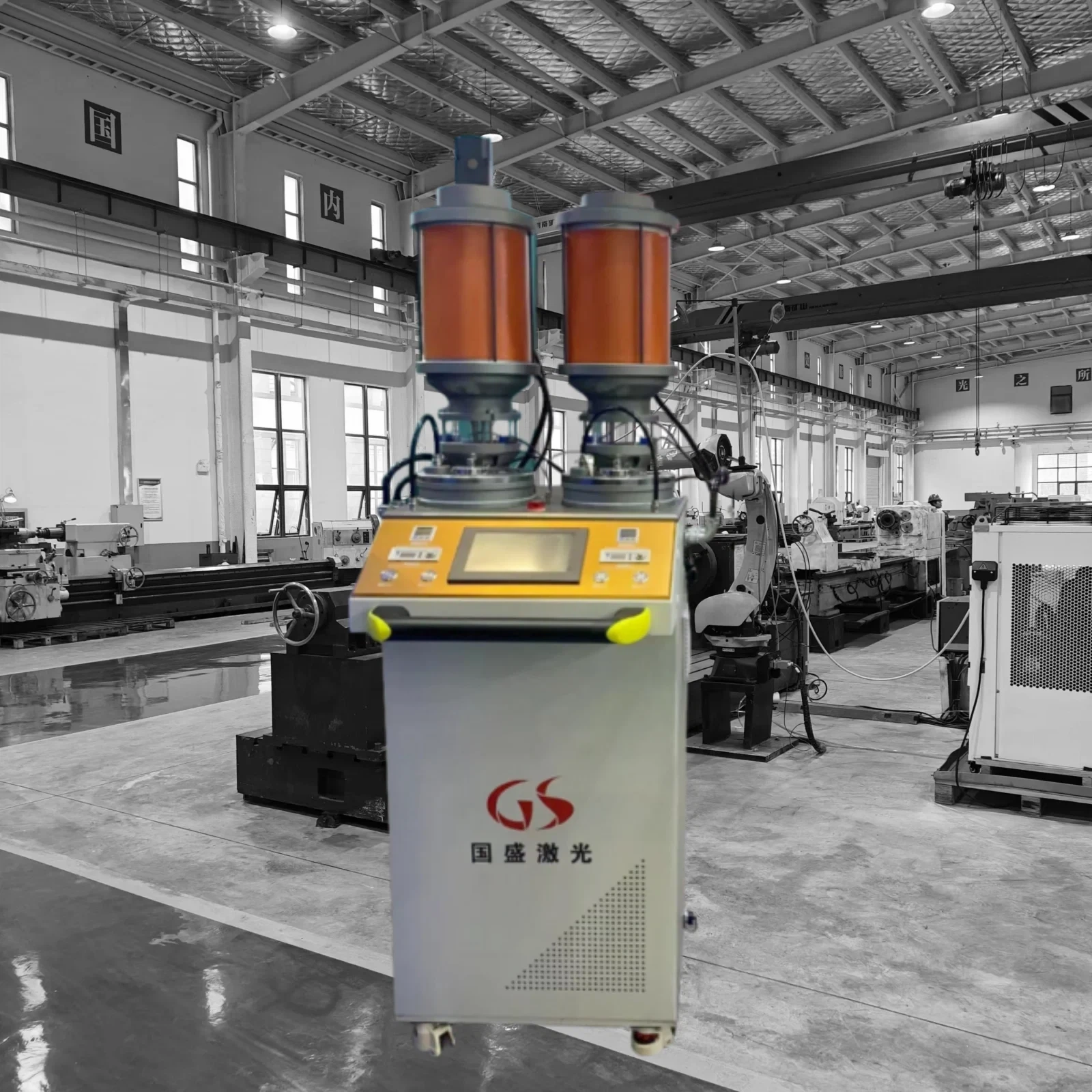
Powder Feeder

Laser Hardening Head
Laser Cladding – The Core Driver for Industrial Equipment Remanufacturing and Upgrading
In conclusion, Laser Cladding Technology is a revolutionary advanced surface engineering technique. It surpasses traditional component repair methods through the high strength of its metallurgical bond, the low deformation risk inherent in its low heat input, the customizable thickness and material properties it offers, and its significant economic benefits. This technology not only restores damaged parts but, through cladding with ultra-wear-resistant and corrosion-resistant alloys, achieves high-performance upgrading of critical components, thus substantially extending their operational lifespan. Against the backdrop of "cost reduction and efficiency enhancement" and "green manufacturing" becoming key contemporary themes, Laser Cladding, as the core remanufacturing technology for ensuring the continuous and efficient operation of heavy-duty equipment, will continue to play an increasingly vital role in critical industrial sectors such as oil, steel, and power, serving as a key driver propelling industrial equipment toward greater reliability and longer service life.