

Powder Feeders-The Critical Hub of Modern Precision Manufacturing
The powder feeder is an indispensable component in modern industrial processes, with the core function of achieving precise, stable, and controlled delivery of powdered materials. This specialized equipment plays a vital role in several high-tech sectors, including Additive Manufacturing (AM), powder metallurgy, and stringent pharmaceutical production. The demand for material dispensing accuracy in contemporary manufacturing is constantly increasing, and the powder feeder serves as the technological core that meets this requirement. Through precise metering and real-time control, it ensures that powdered materials are delivered to the target process point at the preset volume and rate, directly influencing the final product's quality, consistency, and production efficiency. With the advancement of Industry 4.0 and smart manufacturing, the powder feeder has evolved from a simple transport tool into a precision device integrating sensors and advanced control systems, continually pushing related manufacturing processes forward and becoming foundational to achieving high-precision, low-waste production models.

Precision Powder Dispensing Based on Metering Principles
Powder feeders are categorized into four main types based on their metering principles, each optimized for specific accuracy and application needs. Volumetric Powder Feeders dispense based on a predetermined volume, relying on mechanisms like screws or augers, suitable for medium-to-low precision applications where volumetric consistency is required, such as basic coating processes. The weight-based measurement types offer higher precision: Gravimetric Feeders continuously monitor and adjust output based on the desired weight, ensuring powder dispensing accuracy. Loss-in-Weight Powder Feeders are even more sophisticated; they adjust the feed rate by continuously measuring the weight loss of the container in real-time, providing exceptional accuracy and control, widely used in pharmaceuticals and food processing where strict weight compliance is critical. Furthermore, Vibratory Powder Feeders use vibration to maintain a steady flow, effectively solving powder bridging or clumping issues, making them suitable for cohesive powdered materials. Selecting the appropriate type is the crucial first step to ensure the required precision delivery for a specific manufacturing process.
Integrating Metering, Control, and Powder Conditioning
The exceptional performance of the powder feeder stems from its integrated working principle, which combines advanced metering, control, and conditioning technologies. The core metering mechanisms-including augers, screws, belts, and vibratory trays-are selected based on the powder's characteristics, such as particle size and cohesion, and the required precision. To ensure stable and accurate flow rates, the equipment integrates advanced control systems, typically comprising high-sensitivity sensors, feedback loops, and PLCs (Programmable Logic Controllers), which enable real-time monitoring and closed-loop adjustment of the powder flow rate, maximizing accuracy and consistency. Additionally, for materials susceptible to environmental factors or inherent characteristics, the feeder may include powder conditioning features like deaeration or anti-caking measures. This fine-tuned conditioning ensures the powder maintains its ideal state throughout the feeding process, serving as a powerful guarantee for achieving high-quality, high-reliability precision manufacturing.


Key Support from Additive Manufacturing to Pharmaceuticals
The powder feeder commands an extremely broad application scope in modern manufacturing, serving as a core supporting technology for multiple key industries. In the Additive Manufacturing (3D Printing) sector, the feeder plays a critical role, responsible for delivering precise quantities of metal, polymer, or ceramic powders layer by layer, which is fundamental to building complex, high-precision structures. In Powder Metallurgy, the feeder ensures the uniform distribution of metal powders, directly impacting the quality and strength of the final components. Within the Pharmaceutical Manufacturing industry, to guarantee patient safety, the feeder is utilized for the controlled dispensing of Active Pharmaceutical Ingredients (APIs), ensuring absolute accuracy in tablet and capsule dosages. Furthermore, in sectors like powder coating, food processing, and ceramics production, powder feeders consistently enhance product quality, durability, and nutritional composition by achieving uniform and precise material dispensing.
Advancing to Automation and Industry 4.0 Integration
The significance of the powder feeder extends beyond its current precision functions; it lies in its core role in driving future manufacturing upgrades. Firstly, it provides a significant increase in precision and efficiency, effectively minimizing material waste and improving the utilization of production resources through highly accurate control. Secondly, the deep integration of feeders with automated systems reduces reliance on manual labor, achieving faster production rates and higher process consistency, making it an indispensable part of manufacturing automation. Modern equipment design increasingly focuses on customization and flexibility, allowing it to accommodate a wide variety of complex powder characteristics. Looking ahead, some advanced powder feeders are equipped with connectivity features for seamless integration with Industry 4.0 technologies, enabling real-time monitoring, data analysis, and remote control, pushing their development towards a smart and connected manufacturing environment, laying the foundation for more efficient and flexible production models.

Laser equipment components

Fiber Laser Machine

Laser Cladding Head
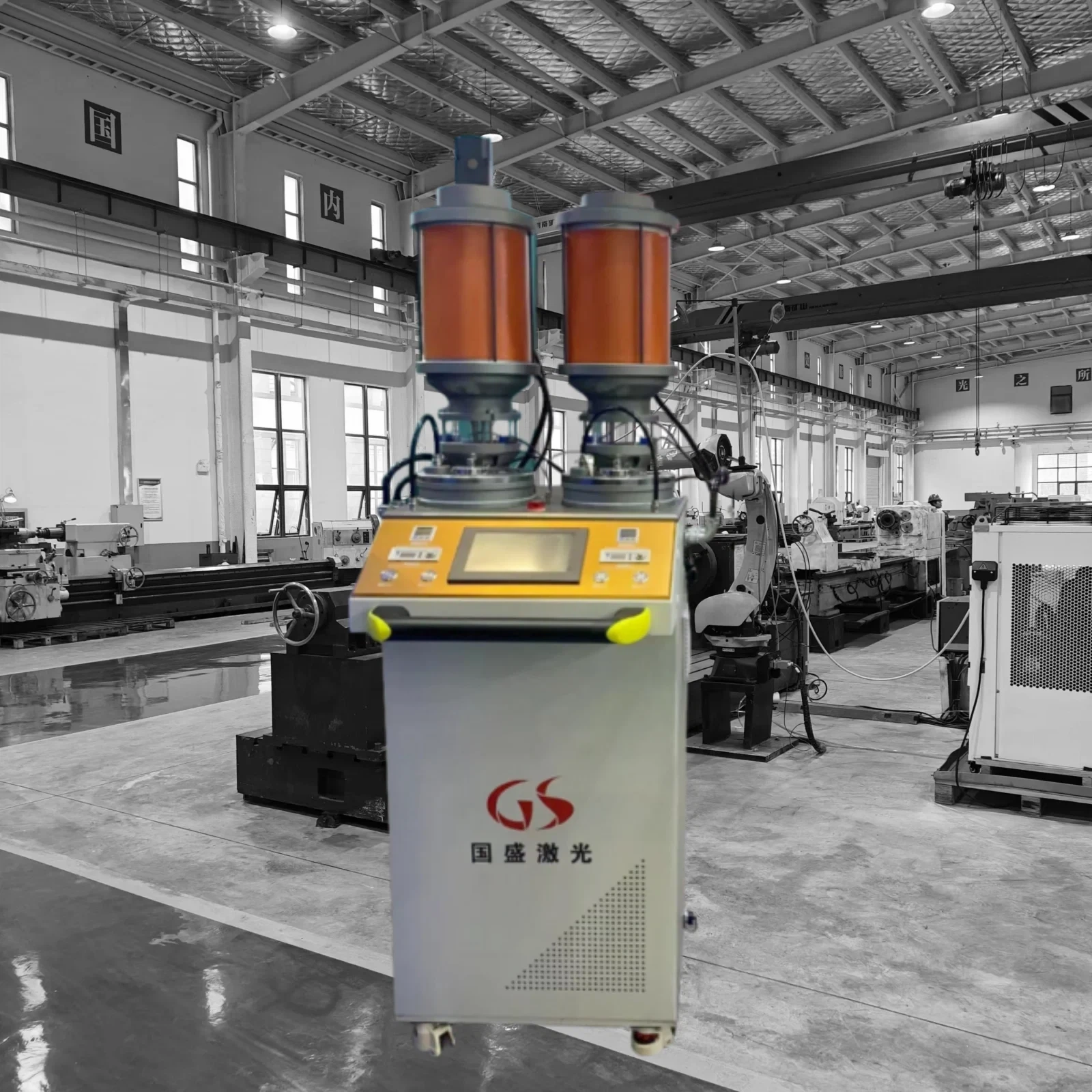
Powder Feeder

Laser Hardening Head
Challenges and Outlook-A Core Driver Shaping the Future of Manufacturing
In conclusion, the powder feeder is the cornerstone of modern precision manufacturing, providing reliable powder precision delivery solutions across various industries through volumetric, gravimetric, loss-in-weight, and other technical means. Its core advantages lie in high accuracy, low waste, and perfect integration with automation technology, making it widely applicable in demanding fields such as Additive Manufacturing, Pharmaceuticals, and Powder Metallurgy. However, the technology must still address challenges such as the complexity of powder characteristics, regular maintenance and cleaning, and compatibility with diverse processes. Despite these challenges, with continuous optimization of equipment design and deep integration with Industry 4.0 and automation, the powder feeder is expected to play an increasingly central role in future manufacturing, continuing to be the core driver shaping the next generation of innovative products and green production models with its exceptional precision and efficiency.