

The Strategic Value of High-Density Energy Deposition
Within the advanced manufacturing sector, Broadband Laser Cladding (BLC) has firmly established itself as a leading Directed Energy Deposition (DED) technology. It surpasses conventional treatment methods by enabling the creation of precise, metallurgically bonded coatings and facilitating near-net-shape additive manufacturing. From both technical and economic perspectives, BLC delivers significant value by extending the service life of capital-intensive components, enabling rapid repair and remanufacturing, and allowing for material functional grading. Its application is critical in industries prioritizing asset integrity and operational continuity, such as aerospace, energy, and heavy machinery, representing a cornerstone technology for sustainable and cost-effective lifecycle management.

System Architecture, Process Mechanism, and Core Advantages
A professional-grade Broadband Laser Cladding system integrates multiple high-precision subsystems, relying on the synergy between a high-power laser source, precision optics, a synchronized powder feeder, and multi-axis motion control. The process mechanism involves creating a melt pool on the substrate surface using a high-energy-density laser beam. Injected metal powder, such as nickel-based or cobalt-based alloys, instantly melts and rapidly solidifies within this pool, forming a dense coating with a metallurgical bond and low dilution to the substrate. Compared to traditional surface technologies, its core advantages include minimal heat input that reduces workpiece distortion and the heat-affected zone, exceptionally high material utilization (often exceeding 90%), and the ability to deposit surface layers with superior wear, corrosion, or high-temperature resistance that are difficult to achieve by conventional means.
Process Parameter Control and Metallurgical Outcomes
Achieving a stable, high-quality clad layer requires precise control over a set of key process parameters. These primarily include laser power density, beam spot size and energy distribution, scanning speed, powder feed rate, and carrier gas flow. The coordinated optimization of these parameters directly influences melt pool dynamics, solidification behavior, and the final coating's microstructure. Through precise control, one can manage coating thickness, hardness, residual stress levels, and minimize defects like porosity or cracking. The inherently high cooling rates of the process often promote the formation of refined grain structures and non-equilibrium phases, imparting the coating with enhanced mechanical properties. This metallurgical foundation is key to significantly extending component service life.


Strategic Industrial Application Scenarios
The strategic application of Broadband Laser Cladding manifests primarily in three dimensions. The first is the repair and remanufacturing of high-value-added components, such as restoring worn areas on aero-engine blades, hydraulic turbine runners, or extrusion screws to reclaim their geometry and performance. Secondly, it is used to apply high-performance protective coatings on new parts, like cladding wear- and corrosion-resistant alloys onto petroleum drilling tools, hydraulic valve plates, or hot-work dies to drastically extend their service life. Furthermore, it serves as a vital method for metal additive manufacturing, useful for rapid prototyping, fabricating functionally graded materials, or adding complex features to existing parts, demonstrating its strong potential within flexible manufacturing systems.
Implementation Considerations and Return on Investment Analysis
Successful deployment of this technology requires systematic consideration, including process development for specific material combinations (substrate and powder), integration with CAD/CAM software for path planning, and professional training for operators. From a return on investment perspective, its value lies not only in direct savings from purchasing new parts but, more significantly, in the comprehensive benefits gained by dramatically extending the life of critical components, reducing unplanned downtime, and lowering spare parts inventory. Precise digital process control ensures excellent reproducibility, helping companies establish reliable remanufacturing and enhancement process standards, ultimately optimizing total cost of ownership and improving asset performance.

Laser equipment components

Fiber Laser Machine

Laser Cladding Head
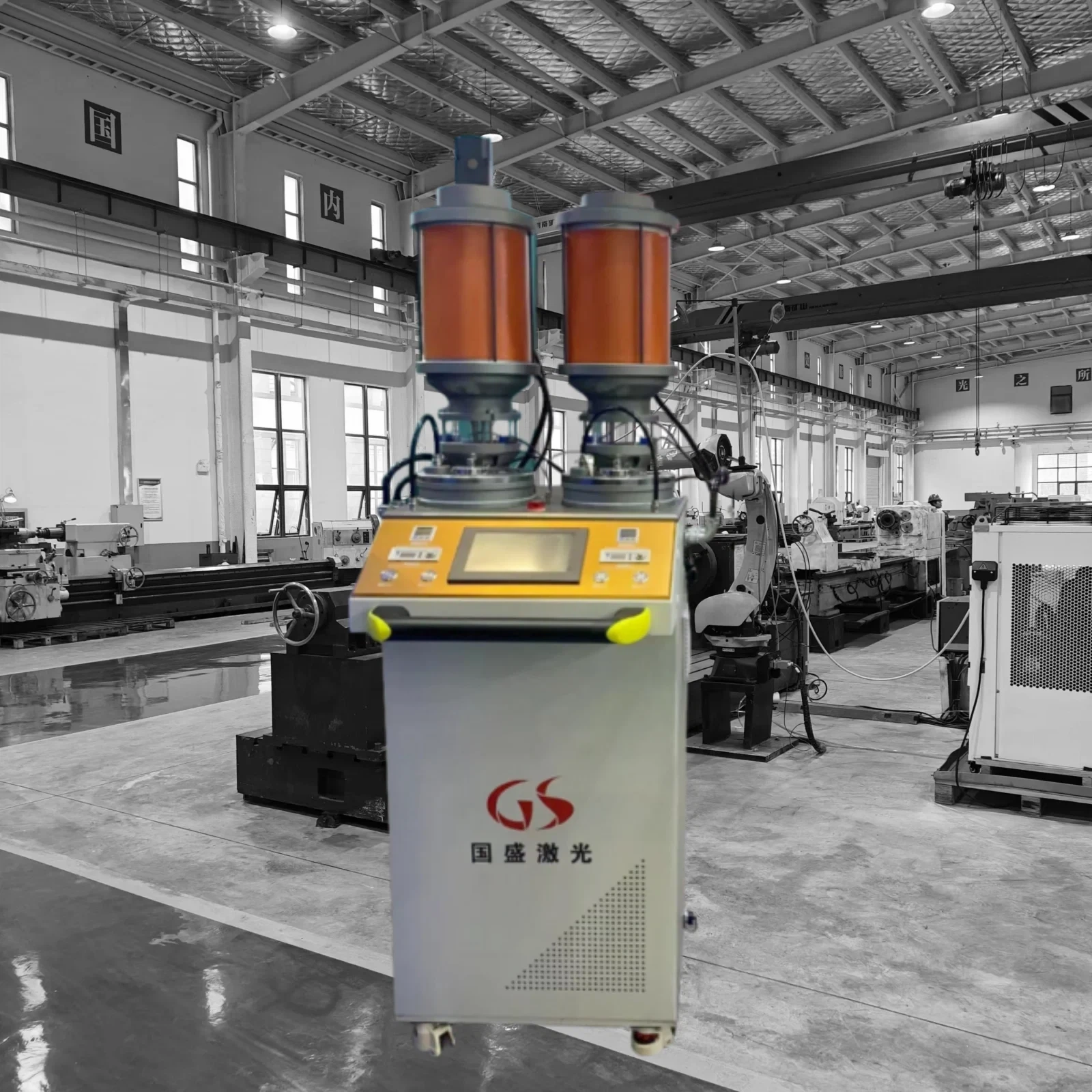
Powder Feeder

Laser Hardening Head
A Key Enabling Technology for Sustainable Manufacturing
In summary, Broadband Laser Cladding has evolved from an advanced surface treatment process into a key enabling technology supporting sustainable manufacturing and circular economy strategies. Its exceptional processing flexibility, material adaptability, and superior coating performance provide a fundamental solution to component wear, corrosion, and fatigue failures in industrial sectors. With further integration of intelligent sensing, in-process monitoring, and digital twin technologies, BLC is advancing towards greater intelligence and robustness. It will continue to provide core technical assurance for the reliable, safe, and economical operation of high-end equipment.
FAQ
Q: What is the main difference between Broadband Laser Cladding and thermal spraying?
A: The primary difference lies in the bonding mechanism. Broadband Laser Cladding achieves a high-strength bond between the coating and substrate through metallurgical bonding, whereas thermal spray coatings primarily rely on mechanical bonding. Consequently, laser-clad layers typically offer far superior bond strength, density, and resistance to impact and fatigue compared to thermal spray coatings.
Q: What specific workpieces or components is this technology commonly used to repair?
A: This technology is particularly suitable for repairing high-value, complex-shaped core components. Common applications include gas turbine blades, steam turbine rotors, injection mold cavities, crankshafts for heavy-duty vehicles, mill rolls, and sealing surfaces of various pumps and valves. It can precisely restore dimensions and enhance surface properties.
Q: Which process parameters need focused optimization to achieve ideal cladding quality?
A: Core parameters such as laser power, beam spot size and profile, scanning speed, powder feed rate, and overlap rate must be systematically optimized. The compatibility of these factors directly determines the clad layer's dilution rate, hardness, defect rate, and bond strength with the substrate, making them the key to process development.