

Enhancing Industrial Durability with Advanced Laser Surface Treatment
In the competitive landscape of modern manufacturing, the structural integrity and surface performance of critical components like press roller dies dictate overall production efficiency. Laser hardening, a sophisticated surface treatment technology, has emerged as a transformative solution for industries ranging from steel processing to rubber and plastic extrusion. By utilizing high-energy laser beams to perform rapid heating and self-quenching, this method achieves localized surface hardening and significant reinforcement. As a premier manufacturer of laser additive manufacturing equipment, we recognize that the lifespan of industrial rollers directly impacts product quality and operational downtime. Implementing laser quenching allows manufacturers to target specific wear zones with extreme precision, ensuring that the core of the material remains ductile while the surface attains superior hardness. This balance is vital for components subjected to high cyclic loading and abrasive environments. As global manufacturing standards shift toward higher precision and sustainability, laser hardening technology provides the necessary edge for facilities to optimize their tool performance and maintain a robust competitive advantage in the international market.

Technical Limitations of Traditional Quenching versus Laser Innovation
Conventional hardening methods for press roller dies typically rely on furnace heating followed by rapid cooling in oil or water media. While these traditional techniques provide a degree of surface hardening, they are often plagued by inherent limitations such as shallow hardening depth, uneven cooling rates, and a high risk of thermal cracking or warping. In contrast, laser quenching technology offers a non-contact, highly controlled alternative that eliminates the need for external cooling media. The precision of the laser beam ensures that thermal input is confined to the surface layer, resulting in minimal distortion and a significantly deeper, more uniform hardened zone. Furthermore, the rapid self-quenching effect of the bulk material provides a finer martensitic microstructure compared to oil-based processes. For manufacturers dealing with complex roller geometries, the ability to avoid post-hardening straightening or extensive secondary machining is a major economic benefit. Transitioning from traditional thermal processing to laser-based systems effectively resolves the common issues of surface defects and inconsistent hardness levels across large workpieces.
The Material Science and Phase Transformation of Laser Quenching
The scientific foundation of laser hardening involves the precise interaction between a high-energy laser beam and the metallic surface of the roller die. When the laser scans the material, it elevates the surface temperature above the transformation point almost instantaneously. Due to the massive heat sink effect of the cold underlying metal, the heated zone undergoes rapid self-quenching, leading to a sophisticated phase transformation. This process creates a dense, hard-wearing surface layer that can reach depths ranging from several millimeters to centimeters depending on the equipment settings. The resulting microstructure is characterized by refined grains that significantly enhance wear resistance and fatigue life. Additionally, laser quenching induces beneficial compressive residual stresses on the surface, which act as a barrier against crack initiation and corrosive penetration. For industrial rollers operating under extreme pressure, this improved microstructural stability ensures that the component can withstand abrasive wear and chemical degradation much longer than untreated or conventionally hardened materials, thereby extending the maintenance cycles significantly.


Precision Equipment and Processing Parameters for Optimal Results
Successful implementation of laser hardening requires high-power fiber lasers or CO2 laser systems integrated with high-precision CNC motion control. As a leader in laser additive manufacturing solutions, we emphasize the importance of synchronizing the laser output with the scanning path to ensure consistent energy distribution across the roller surface. Key processing parameters, including laser power density, scanning speed, and spot size, must be meticulously optimized based on the specific metallurgy of the roller die. Advanced systems utilize real-time thermal monitoring to adjust parameters dynamically, preventing overheating and ensuring a uniform hardened track. The motion system must be capable of handling heavy industrial rollers while maintaining sub-millimeter accuracy to cover complex profiles or tapered sections. By performing detailed thermal analysis prior to processing, operators can determine the ideal overlap rate and power settings to achieve the desired hardness profile. This level of technical control is what distinguishes modern laser quenching from older thermal methods, allowing for customized surface properties tailored to specific industrial requirements.
Expanding Applications in Steel Rubber and Plastic Industries
The industrial validation of laser hardening technology is most evident in its widespread adoption across the steel, non-ferrous metal, and polymer processing sectors. In steel rolling mills, laser-hardened rollers demonstrate a 300% increase in service life compared to standard components, directly translating to higher production uptime and reduced replacement costs. In the rubber and plastic extrusion industries, the technology is used to protect expensive dies from the corrosive and abrasive nature of modern composite materials. The versatility of laser quenching allows it to be applied to various grades of alloy steel, cast iron, and even certain non-ferrous materials, providing a flexible solution for diverse manufacturing needs. Beyond simple hardening, this technology is often used in conjunction with laser cladding to repair worn surfaces or add specialized alloy layers for extreme environments. By optimizing the process for different industrial workpieces, manufacturers can achieve superior quality assurance and meet the rigorous demands of high-speed extrusion and rolling lines, ensuring that every product meets the highest dimensional tolerances.

Laser equipment components

Fiber Laser Machine

Laser Cladding Head
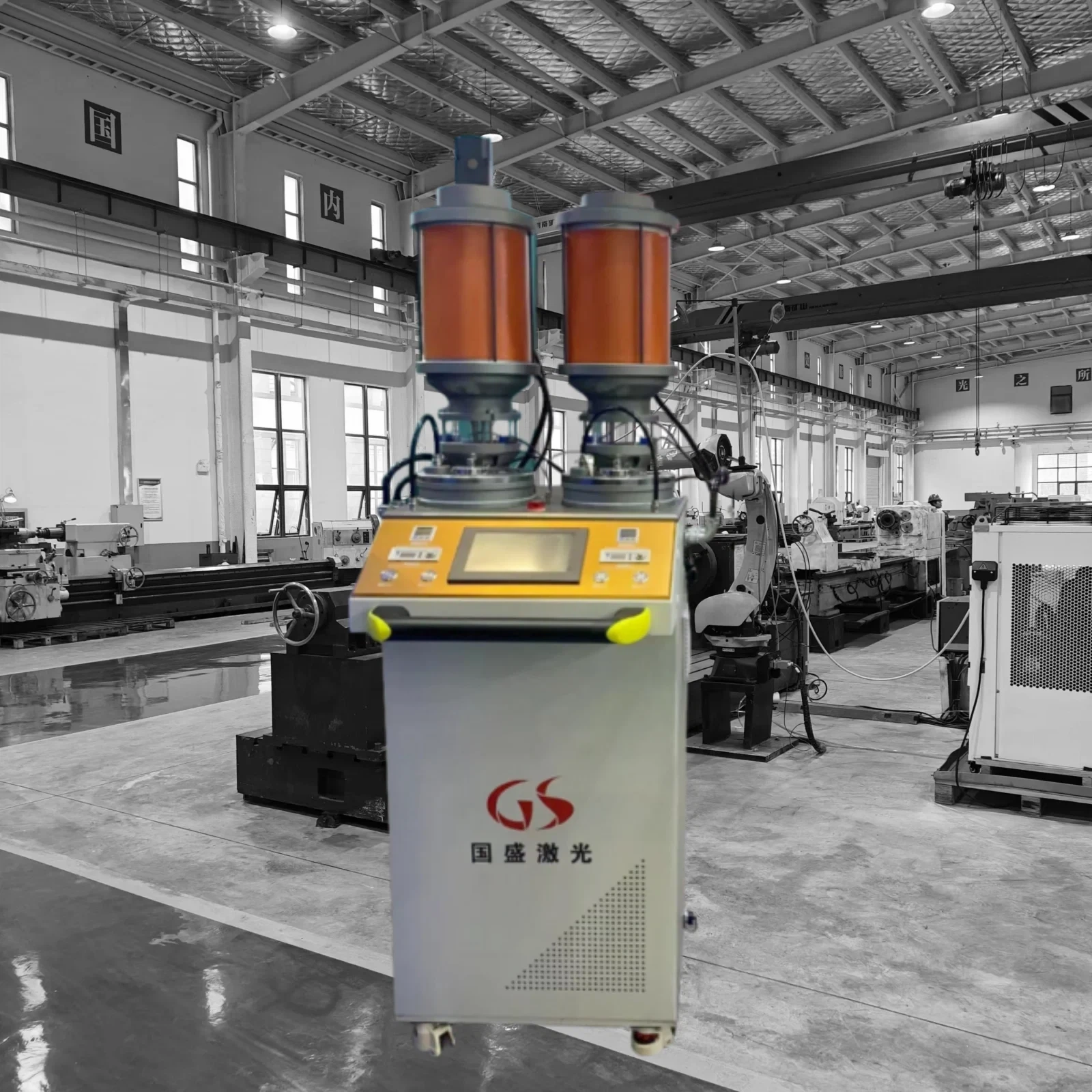
Powder Feeder

Laser Hardening Head
Strategic Conclusion on the Future of Laser Manufacturing Excellence
In conclusion, laser hardening technology represents a critical advancement in surface engineering, offering unparalleled benefits in terms of hardness, precision, and component longevity. By addressing the shortcomings of traditional quenching and leveraging the power of modern fiber lasers, industries can achieve a level of tool performance that was previously impossible. For manufacturers looking to upgrade their production capabilities, investing in laser surface treatment is a strategic move toward Industry 4.0 and smart manufacturing. As material science continues to evolve, the synergy between laser energy and new high-performance alloys will drive further innovations in the field. Our commitment to developing cutting-edge laser additive manufacturing and surface reinforcement equipment ensures that our clients stay at the forefront of these technological shifts. As costs continue to normalize and automation becomes more integrated, laser quenching will undoubtedly become the standard for any high-value industrial component requiring extreme durability. Embracing this optical revolution is essential for any facility aiming to maximize efficiency, reduce waste, and deliver superior product quality in the global industrial marketplace.
FAQ
Q: How does laser quenching improve the fatigue life of industrial roller dies?
A: Laser quenching improves fatigue life by refining the surface microstructure and inducing beneficial compressive residual stresses. This prevents the initiation of micro-cracks under cyclic mechanical loads. Unlike traditional methods, the rapid heating and cooling cycle creates a tougher, more wear-resistant surface that can withstand the extreme pressures of industrial extrusion and rolling without premature failure.
Q: Can laser hardening be applied to rollers made of different materials?
A: Yes, laser hardening is highly versatile and can be used on various materials, including medium-to-high carbon steels, alloy steels, and cast iron. By adjusting the laser power, scanning speed, and spot size, the process can be customized to match the thermal conductivity and phase transformation characteristics of the specific workpiece, making it ideal for diverse industrial applications.
Q: What are the primary advantages of laser quenching over oil or water quenching?
A: The primary advantages include minimal thermal distortion, deeper and more uniform hardening, and the elimination of hazardous cooling media. Laser quenching is a non-contact process that provides superior precision, allowing for localized hardening of specific wear areas. It also results in a finer microstructure and eliminates the risk of quench cracking often associated with traditional liquid-based cooling methods.