

Addressing the Critical Need for Advanced Rail Repai
The relentless demand on global railway networks leads to inevitable track degradation, including wear, cracks, and rolling contact fatigue. Traditional repair methods like arc welding or replacement are often time-consuming, costly, and can compromise the structural integrity of the rail. This article explores laser cladding, an advanced additive manufacturing (AM) technique, as a transformative solution for rail maintenance. By enabling precise, high-performance surface restoration, laser cladding technology significantly extends rail service life, enhances operational safety, and reduces long-term maintenance costs, presenting a superior alternative for infrastructure managers seeking efficiency and reliability.

The Growing Challenge of Rail Wear and Damage
Railways continuously face the challenge of material loss and surface defects due to heavy axle loads, high speeds, and environmental factors. Common issues include head wear, corrugation, and shelling, which threaten track geometry and safety. Conventional repair techniques, such as manual pad welding, often introduce excessive heat, leading to distortions, residual stresses, and imperfect metallurgical bonds that may fail prematurely. These limitations create a pressing need for a controlled, automated process that restores the rail profile with minimal thermal input and superior material properties, paving the way for laser-based additive repair methods.
Laser Cladding Technology: A Precision Additive Manufacturing Process
Laser cladding, specifically a form of Directed Energy Deposition (DED), is a cutting-edge surface engineering technology. It utilizes a high-power laser beam to create a small melt pool on the substrate material, into which metal powder or wire is precisely injected. The material rapidly solidifies, forming a dense, metallurgically bonded coating with minimal dilution from the base rail steel. This process allows for exceptional control over layer thickness, hardness, and composition. Key advantages include a narrow heat-affected zone (HAZ), reduced risk of thermal distortion, and the ability to deposit advanced, wear-resistant alloys that are difficult to apply with traditional methods.


The Laser Cladding Repair Procedure for Railway Rails
A systematic approach is crucial for successful laser cladding repair. The process begins with thorough surface preparation, including abrasive cleaning to remove contaminants and grinding to establish a sound base. Critical to the operation is the selection of appropriate cladding material, typically cobalt-based or iron-based alloys designed for high hardness, crack resistance, and compatibility with rail steel. Using specialized laser cladding equipment, technicians program the robotic arm's path and optimize parameters like laser power (e.g., 2-6 kW), powder feed rate, and traverse speed. Post-process finishing, including machining or grinding, restores the rail to its exact geometric profile, ready for immediate service.
Proven Benefits for Quality, Efficiency, and Total Cost
Implementing laser cladding for rail repair delivers measurable operational and economic benefits. The primary advantage is the exceptional quality of the clad layer, which offers superior wear and fatigue resistance compared to the parent material, effectively hardening the running surface. This translates directly into extended maintenance intervals and longer rail lifespan. Furthermore, the process's speed and automation drastically reduce track occupancy time compared to traditional methods, minimizing network disruption. While the initial investment in laser cladding systems is significant, the long-term reduction in material waste, labor, and frequency of repairs leads to a lower total cost of ownership (TCO) for rail operators.

Laser equipment components

Fiber Laser Machine

Laser Cladding Head
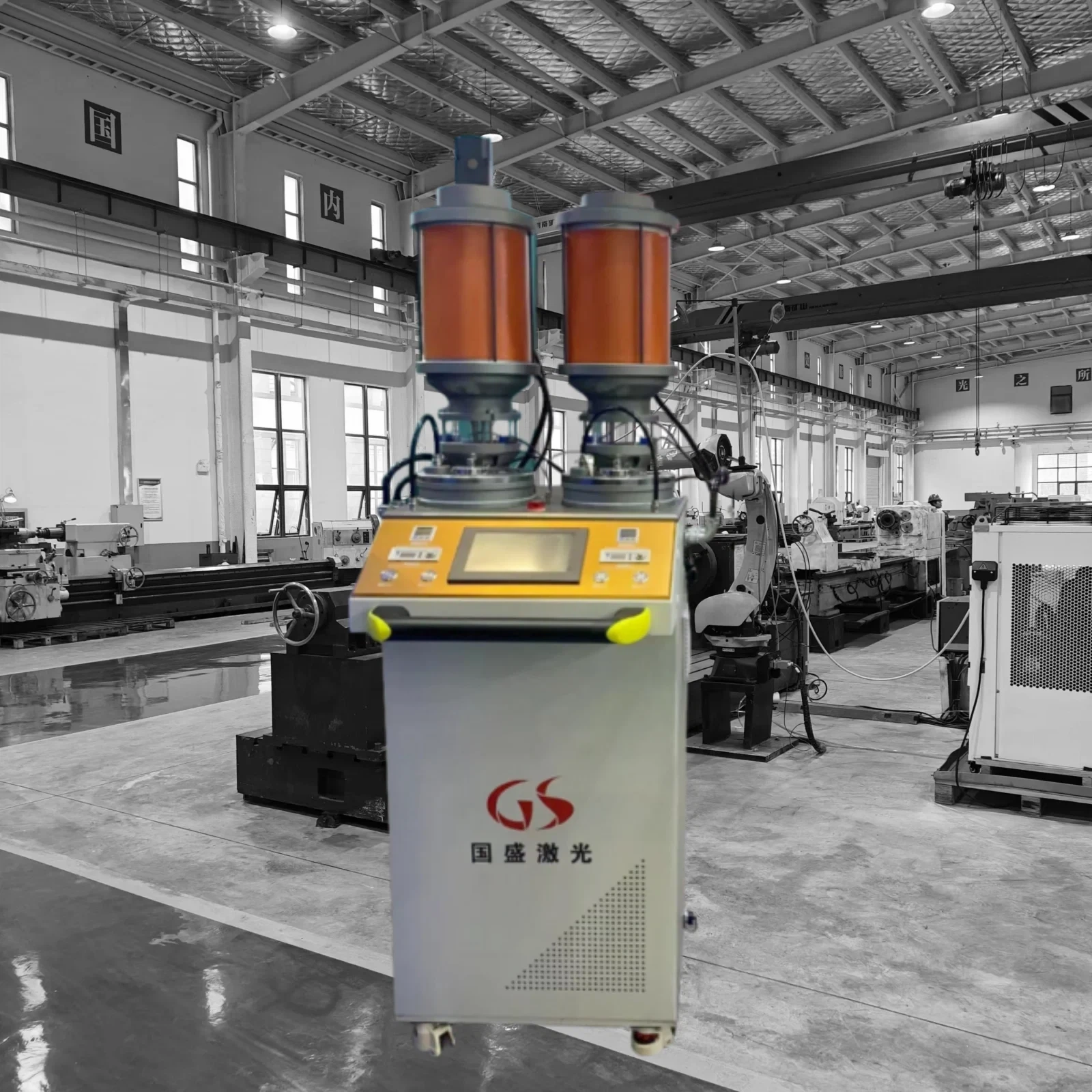
Powder Feeder

Laser Hardening Head
The Future of Sustainable Rail Infrastructure
Laser cladding represents a paradigm shift in rail maintenance strategy, moving from reactive replacement to proactive, precision restoration. As a versatile additive manufacturing technology, it provides a sustainable solution by revitalizing existing assets with high-performance coatings. The integration of laser cladding equipment with automated inspection and robotic systems promises even greater efficiency for future rail networks. For operators aiming to maximize safety, uptime, and return on investment, adopting laser cladding for critical repair and hardening applications is no longer just an innovation-it is becoming an industry best practice for building resilient and cost-effective railway infrastructure.
FAQ
Q: What is laser cladding used for in rail maintenance?
A: Laser cladding is used to repair and harden worn railway tracks. It deposits a wear-resistant metal layer onto damaged areas, restoring the rail profile and significantly extending its service life, which improves safety and reduces replacement costs.
Q: How does laser cladding compare to traditional welding for rail repair?
A: Unlike traditional welding, laser cladding uses a focused laser beam, creating a smaller heat-affected zone. This minimizes thermal distortion and stress, results in a stronger metallurgical bond, and allows for the use of superior, harder alloys for longer-lasting repairs.
Q: What type of laser equipment is needed for rail cladding?
A: Rail laser cladding typically requires high-power (multi-kilowatt) fiber lasers integrated with a robotic arm and a precision powder feed system. This setup, often called a laser metal deposition (LMD) system, enables automated, on-site repair of tracks.