

Extending Equipment Lifespan with Advanced Technology
Shaft failures due to wear, corrosion, or fatigue are a critical and costly issue across manufacturing, energy, and transportation industries. Traditional repair methods often fall short, compromising dimensional accuracy or material integrity. Laser cladding, a precise Directed Energy Deposition (DED) additive manufacturing process, offers a superior alternative for shaft restoration. By depositing advanced alloys layer-by-layer, this high-power laser technology rebuilds worn shafts to exact specifications, enhancing surface properties with superior wear and corrosion resistance. For engineers and maintenance managers, adopting laser cladding for shaft refurbishment translates into significant cost savings on replacements, minimized unplanned downtime, and restored equipment to peak performance with a robust, metallurgically bonded coating.

The Core Technology Behind Laser Cladding for Shaft Repair
Laser cladding for shaft repair utilizes a focused, high-energy laser beam-commonly from a fiber laser system-to create a small, precise melt pool on the component's surface. Metal alloy powder, such as cobalt-based or nickel-based superalloys, is synchronously fed into this pool via a coaxial nozzle. The base material and additive material fuse as the laser passes, rapidly solidifying to form a dense, pore-free layer with minimal dilution. Key process parameters like laser power (3-8 kW typical), beam spot size, and powder feed rate are meticulously controlled to tailor the clad layer's hardness, thickness (typically 0.5-2.0 mm), and bond strength, ensuring restoration without distorting the delicate shaft geometry.
Key Advantages for Cost-Effective and High-Quality Maintenance
This advanced repair method provides distinct operational and economic benefits. The primary advantage is the exceptional quality of the deposited layer, which offers greater hardness and fatigue resistance than the original substrate, effectively creating a "better-than-new" surface. This drastically extends the service interval of critical equipment. Unlike traditional welding, the low heat input and rapid cooling minimize the Heat-Affected Zone (HAZ), preserving the shaft's core mechanical properties. The process allows for targeted, minimal material addition, reducing waste and energy consumption. Its speed and suitability for on-site or in-shop application dramatically cut turnaround times, maximizing asset availability.


Wide-Ranging Industrial Applications for Shaft Rejuvenation
The versatility of laser cladding equipment makes it indispensable across sectors requiring durable shaft repair. In the automotive and heavy machinery industry, it restores worn crankshafts, camshafts, and transmission shafts. For marine and offshore applications, it repairs large propeller shafts and pump shafts, combating seawater corrosion. The energy sector relies on it to refurbish turbine shafts, generator rotors, and pump shafts in power plants, ensuring operational stability. In chemical processing, it rebuilds pump shafts and agitators exposed to abrasive slurries and corrosive media. Even the demanding aerospace industry utilizes this method for high-precision repair of aircraft engine shafts and landing gear components.
Optimizing the Process for Superior and Repeatable Results
Achieving optimal outcomes requires a systematic approach. The process begins with critical pre-processing: thorough cleaning and machining to remove damage and create a uniform surface. Material selection is paramount, with choices like stainless steel 316L for corrosion resistance or Stellite alloys for extreme wear. Modern laser cladding machines integrate CNC controls or robotic arms for precise path programming, ensuring consistent overlap and uniform layer deposition. Post-process finishing, including turning and grinding, is essential to achieve the final required diameter and surface finish (Ra value), guaranteeing the repaired shaft meets or exceeds original equipment manufacturer (OEM) specifications for seamless reintegration.

Laser equipment components

Fiber Laser Machine

Laser Cladding Head
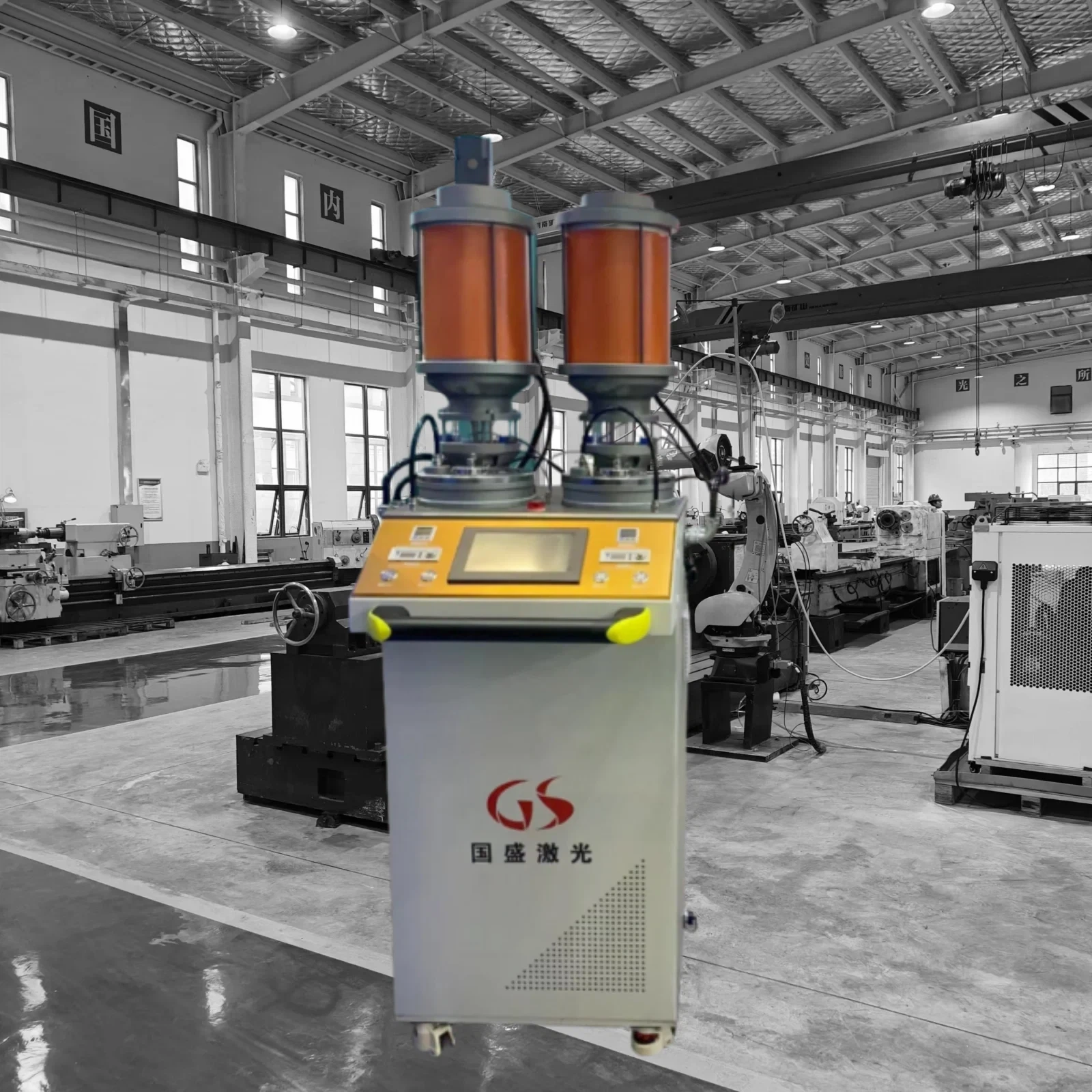
Powder Feeder

Laser Hardening Head
A Strategic Investment for Sustainable Operations
Laser cladding has redefined industrial shaft repair from a temporary fix to a strategic life-extension solution. As a core metal additive manufacturing technology, it supports sustainable practices by revitalizing high-value components rather than replacing them. The fusion of high-power laser systems, advanced alloy powders, and automation delivers unmatched repair quality, efficiency, and return on investment. For industries aiming to enhance reliability and reduce lifecycle costs, integrating laser cladding into their maintenance protocol is a forward-thinking decision that builds a foundation for more resilient and productive operations.
FAQ
Q: What are the main benefits of using laser cladding for shaft repair over traditional welding?
A: Laser cladding provides a stronger metallurgical bond with less heat, minimizing distortion and preserving the shaft's strength. It allows for precise deposition of superior wear-resistant alloys, resulting in a longer-lasting, higher-performance repair than conventional weld overlay.
Q: What types of materials can be used in the laser cladding process for shafts?
A: The process commonly uses fine metal powders, including tool steels, stainless steels (like 420 or 316L), cobalt-based alloys (Stellite), and nickel-based superalloys (Inconel). The material is chosen based on the required hardness, corrosion resistance, and operating temperature.
Q: Can laser cladding equipment be used for on-site repair of large industrial shafts?
A: Yes, portable or modular laser cladding systems with robotic arms are available for field applications. This enables on-site repair of large, hard-to-move shafts like those in turbines, marine vessels, and heavy machinery, significantly reducing downtime and disassembly costs.