

Detailed Explanation of Key Processing Parameters for High-Speed Laser Cladding
High-speed laser cladding is a mainstream and efficient laser surface treatment technology in the industrial field. With its core advantages of excellent cladding quality, fast processing speed, and low comprehensive cost, it is widely used in scenarios such as parts repair and surface hardening. However, its final forming effect and processing quality highly depend on the reasonable configuration of key parameters - if parameters are improperly selected, it may easily cause problems such as cladding layer deformation, surface roughness, and oxidation. This article will systematically analyze the eight key processing parameters that affect the effect of high-speed laser cladding, helping enterprises and technicians master the logic of parameter optimization and improve the stability of the cladding process.
Core Parameters for Energy Supply and Laser Spot
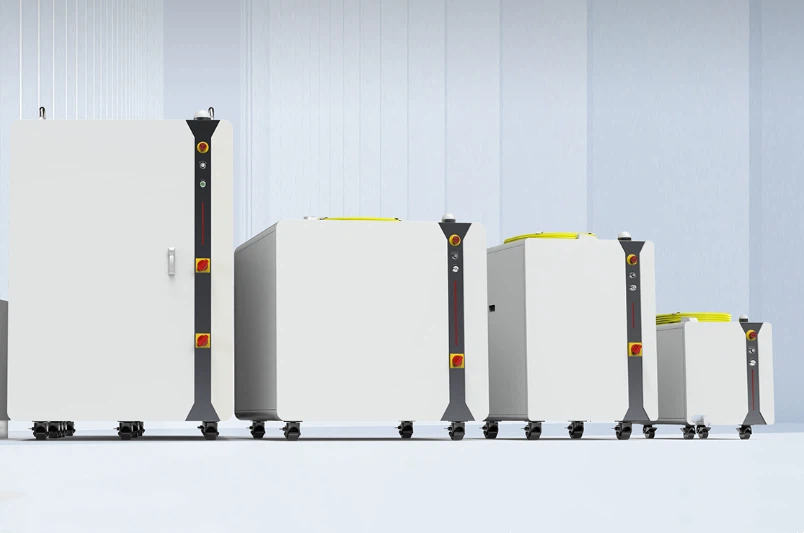
Laser power, laser spot shape, and laser spot size together form the "energy foundation" of high-speed laser cladding, directly determining the melting efficiency and energy distribution of the cladding layer. In terms of laser power, KW-class lasers such as LT-3KW and LT-4KW are widely used in the market, which can meet the energy needs of most industrial scenarios, avoiding incomplete powder melting due to insufficient power or substrate ablation caused by excessive power. The laser spot shape is determined by the optical system: circular spots are suitable for uniform cladding of regular workpieces (e.g., cylindrical surfaces), while rectangular spots are more suitable for large-area flat plate processing. The laser spot size affects the laser power density - under the same power, small spots are suitable for high-melting-point metal powders (e.g., titanium alloys), and large spots can prevent excessive flow of low-melting-point powders (e.g., aluminum alloys).
Key Parameters for Processing Precision Control
Processing distance (laser spot distance) and overlap rate are core indicators to ensure the "precision and flatness" of high-speed laser cladding. Processing distance refers to the distance required for the laser beam to absorb heat from the molten pool. In practical applications, when the processing distance is controlled within the range of 3-5 mm, the bonding strength and surface quality of the cladding layer are optimal. Too short a distance may easily cause overheating and deformation of the substrate, while too long a distance will increase energy loss. Overlap rate is divided into "powder-substrate overlap" and "laser spot trajectory overlap": the higher the former, the easier it is to reduce surface roughness; the latter needs to reach 70%-80% in high-speed cladding (far higher than the 30%-50% of conventional cladding). However, it is necessary to balance the depth uniformity of the overlapping area to avoid local defects caused by excessive overlap.
Optimization Parameters for Processing Efficiency and Powder Feeding
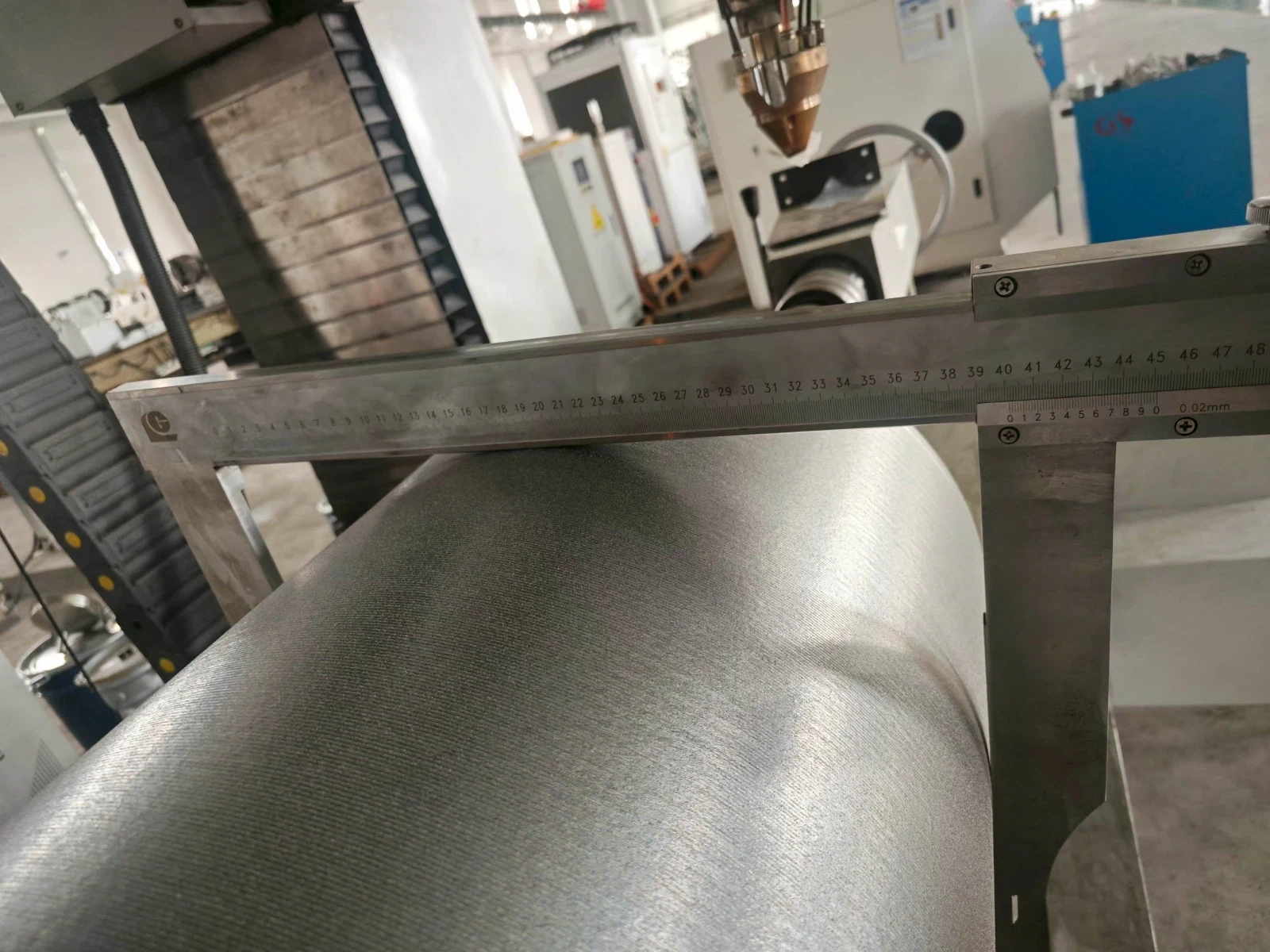
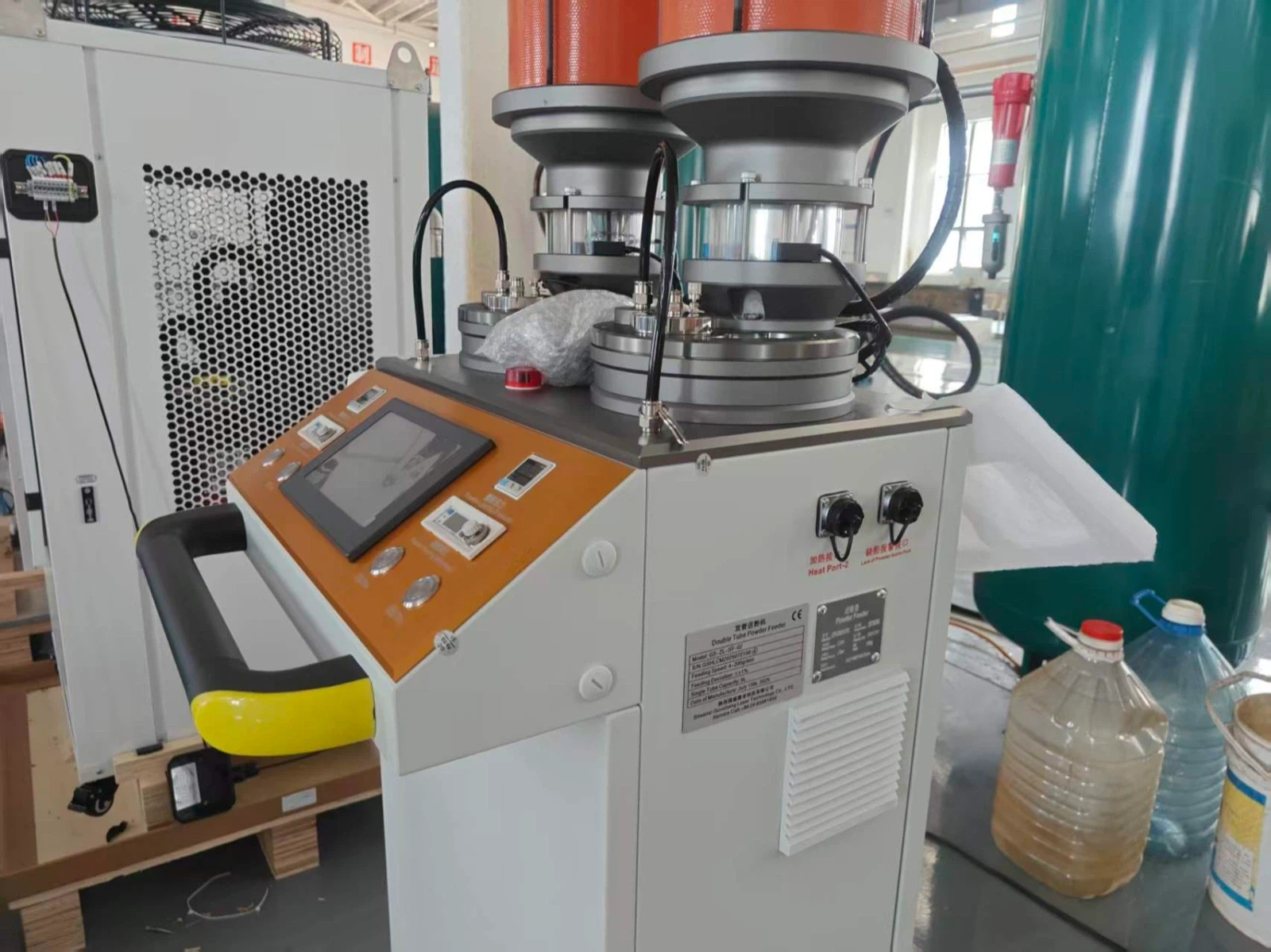
Cladding speed and powder feeding method are directly related to the "processing efficiency and powder utilization rate" of high-speed laser cladding. Cladding speed can be measured by linear speed (20 m/min - 50 m/min in actual tests) and area rate (0.6 - 1.2 m²/h when the cladding thickness is 0.2 - 0.6 mm). It needs to match the laser power and spot size: too fast a speed may easily reduce the bonding force, while too slow a speed will lower the efficiency. Powder feeding methods are divided into central powder feeding and annular powder feeding: central powder feeding has a higher powder utilization rate but is more difficult to design, making it suitable for precision repair scenarios; annular powder feeding has a simple structure and wide application, which can meet the needs of conventional large-area cladding.
Parameters for Oxidation Protection and Quality Assurance
Shielding gas pressure is a key guarantee to avoid "oxidation defects" in high-speed laser cladding. During the cladding process, the substrate and cladding material are prone to react with oxygen in the air to form oxides, causing the workpiece surface to turn black, dull, and hard. Therefore, nitrogen or argon should be used as the shielding gas - it not only assists in powder feeding but also forms a closed protective area around the molten pool. In actual operation, the pressure should be adjusted according to the cladding speed and powder feeding amount to ensure full coverage of the protective area, while avoiding molten pool spattering caused by excessive pressure or inadequate protection due to insufficient pressure.

Summary of Parameter Selection for High-Speed Laser Cladding
The parameter optimization of high-speed laser cladding must follow the principle of "synergistic matching": energy-related parameters (laser power, laser spot) determine the melting foundation, precision-related parameters (processing distance, overlap rate) ensure forming quality, efficiency-related parameters (cladding speed, powder feeding method) affect production efficiency, and protection-related parameters (shielding gas pressure) avoid oxidation defects. Enterprises need to adjust parameter combinations in a targeted manner based on the workpiece material (e.g., high-melting-point/low-melting-point metals), forming requirements (e.g., roughness, thickness), and production scenarios (e.g., precision repair/large-area hardening). Only in this way can the technical advantages of high-speed laser cladding be fully utilized, achieving dual improvement in process stability and processing efficiency.