

Laser Quenching Technology Significantly Extends Component Lifespan
As critical precision components in high-end manufacturing sectors such as automotive, aerospace, and petrochemicals, the performance of industrial wheels (or disks) directly determines equipment efficiency and safety. However, under long-term service in environments characterized by high temperatures, high pressure, and corrosion, these wheels inevitably face damage such as deformation, severe wear, and cracking. Scrapping and replacing them not only incurs high costs but often involves long procurement cycles. Therefore, wheel repair technology-particularly solutions integrating advanced surface engineering-has become a vital topic in industrial maintenance. This article delves into the full workflow of wheel repair, focusing on how Laser Quenching technology restores dimensional accuracy while significantly boosting surface hardness and wear resistance, achieving a "re-manufacturing" upgrade for the components.

The Foundation of Repair: Precision Inspection and Surface Pre-treatment
Any high-precision repair begins with rigorous preparation. Before starting, a comprehensive "physical examination" is essential: technicians use precision instruments to scan the damaged wheel, detailing its material properties, deformation, and wear depth to guide the repair plan. Equipment preparation, including grinders and specific repair agents, must also be complete. Following measurement, the critical surface treatment phase begins. This involves professional cleaning to remove deep-seated oil and rust. Crucially, a "roughening" operation is performed to increase the microscopic surface area. This step significantly boosts the adhesion strength of the repair material, preventing future delamination and establishing a robust foundation for the core repair process.
Core Process: The Mechanism of Laser Quenching Technology
After foundational processing, the repair moves to its most critical stage: Laser Quenching. This advanced surface modification technology uses a high-energy density laser beam as a heat source. As the laser scans the repair area, the metal surface instantly absorbs the energy, causing its temperature to rise rapidly. A subsequent, rapid self-cooling process occurs due to the substrate's quick heat conduction. This extreme thermal cycle transforms the internal metal structure into hardened Martensite tissues. The key feature is "localized customized" quenching, which strengthens severely worn areas without compromising the base material's toughness. Through this mechanism, the repaired wheel not only recovers its original dimensions but often achieves micro-hardness and wear performance superior to new components.


Technical Advantages: Why Choose Laser Quenching Repair?
Compared to traditional methods like flame or induction hardening, laser quenching offers overwhelming advantages for wheel repair, making it the industry's preferred choice. Firstly, it provides superior performance enhancement by forming a fine grain structure, significantly increasing surface hardness and wear resistance, directly extending the component's lifespan. Secondly, the technology ensures minimal deformation; unlike traditional methods that cause massive thermal stress, laser quenching allows for precise, localized heat control, maintaining the wheel's high-precision geometric shape. Furthermore, it is highly cost- and energy-efficient as it requires no cooling media and speeds up the maintenance cycle. Lastly, it is an environmentally friendly re-manufacturing solution, producing no chemical waste, aligning perfectly with sustainable industrial practices.
Perfect Delivery: Refined Post-Processing and Strict Quality Control
Even after laser quenching reinforces performance, the wheel must undergo a strict post-processing stage before returning to service. The core task here is "shaping" and "validation." Technicians use professional tools and high-grit polishing agents to refine the repaired surface, ensuring its finish fully complies with design blueprints and reducing operational friction. Quality inspection is paramount, involving routine dimensional checks, Non-Destructive Testing (NDT) to rule out internal defects, and hardness testing to verify the quenching effect. As wheel repair is systematic, strict control over construction parameters like temperature and humidity is vital. Only after passing these multiple layers of strict control and validation testing is the repaired wheel deemed qualified for delivery, guaranteeing safe and stable high-load operation.

Laser equipment components

Fiber Laser Machine

Laser Cladding Head
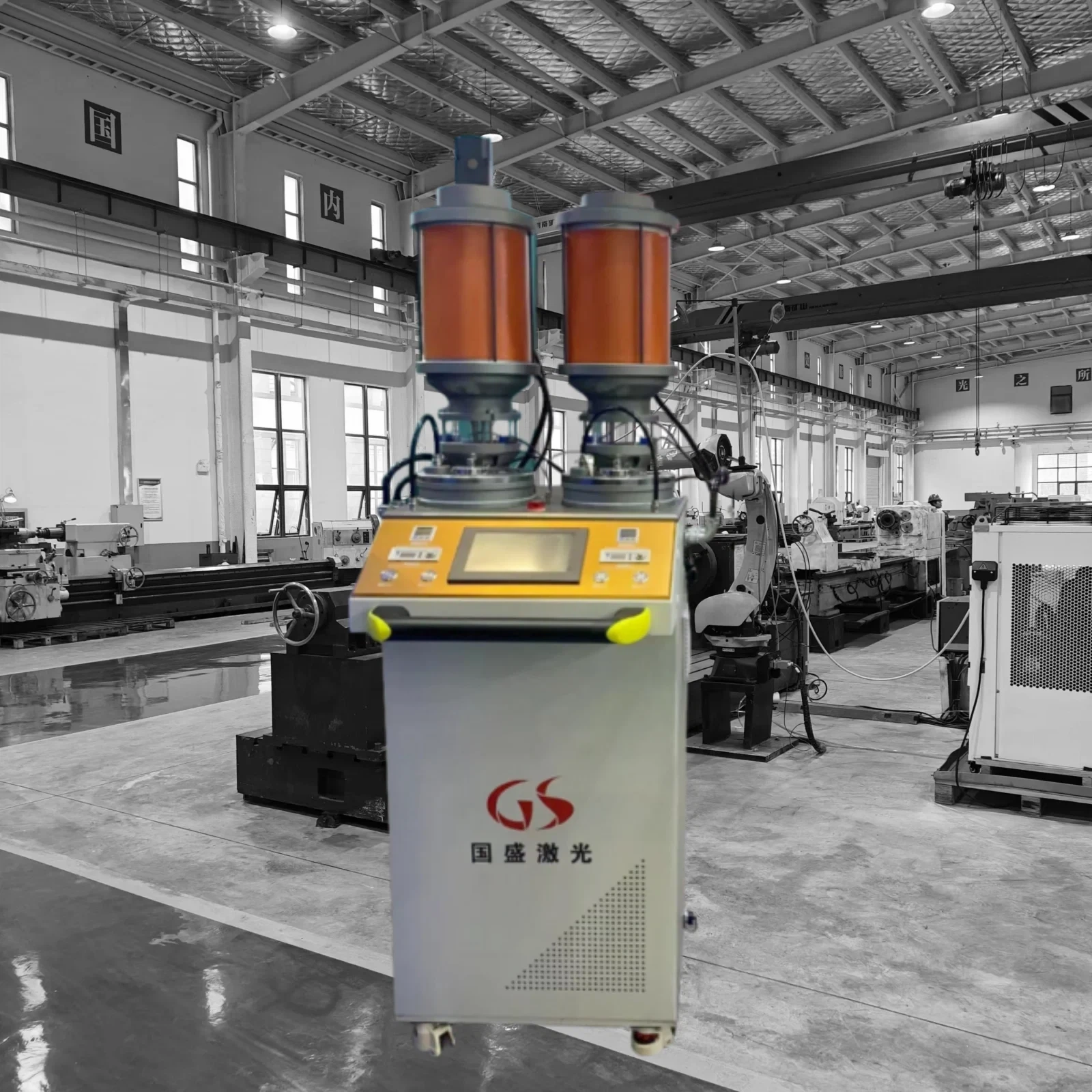
Powder Feeder

Laser Hardening Head
Technology Empowering Industrial Sustainability
In summary, industrial wheel repair is far more than a simple patching job; it is a comprehensive high-tech engineering project integrating materials science, optics, and mechanical processing. Through scientific surface pre-treatment, advanced laser quenching technology, and rigorous post-processing inspection, we not only solve issues of deformation, wear, and cracking but also endow old components with new vitality. This re-manufacturing mode centered on laser quenching achieves effective resource recycling and environmental protection while guaranteeing product quality and precision. For modern industrial enterprises pursuing high efficiency and low costs, mastering and applying this technology is a significant pathway to enhancing equipment management levels and core competitiveness.