

Internal Hole Laser Cladding: A Key Technical Solution to Overcome Repair Challenges of Small and Medium-Caliber Components
In manufacturing sectors such as shipbuilding, petroleum, and mining, the internal hole surfaces of core components (e.g., pipelines, bearings, cylinders, valves) are subjected to long-term wear, erosion, and corrosion. This directly shortens equipment service life and increases operation and maintenance costs. Although traditional laser cladding technology can achieve surface modification, it is limited by spatial structure and struggles to meet the processing needs of small and medium-caliber internal holes-problems such as difficulty in inserting the laser head, low processing efficiency, and frequent damage to protective mirrors are common. The emergence of **internal hole laser cladding technology**, however, has accurately addressed this industry pain point through integrated design and process innovation, becoming a core technical direction for promoting component repair and performance upgrading in the manufacturing industry.
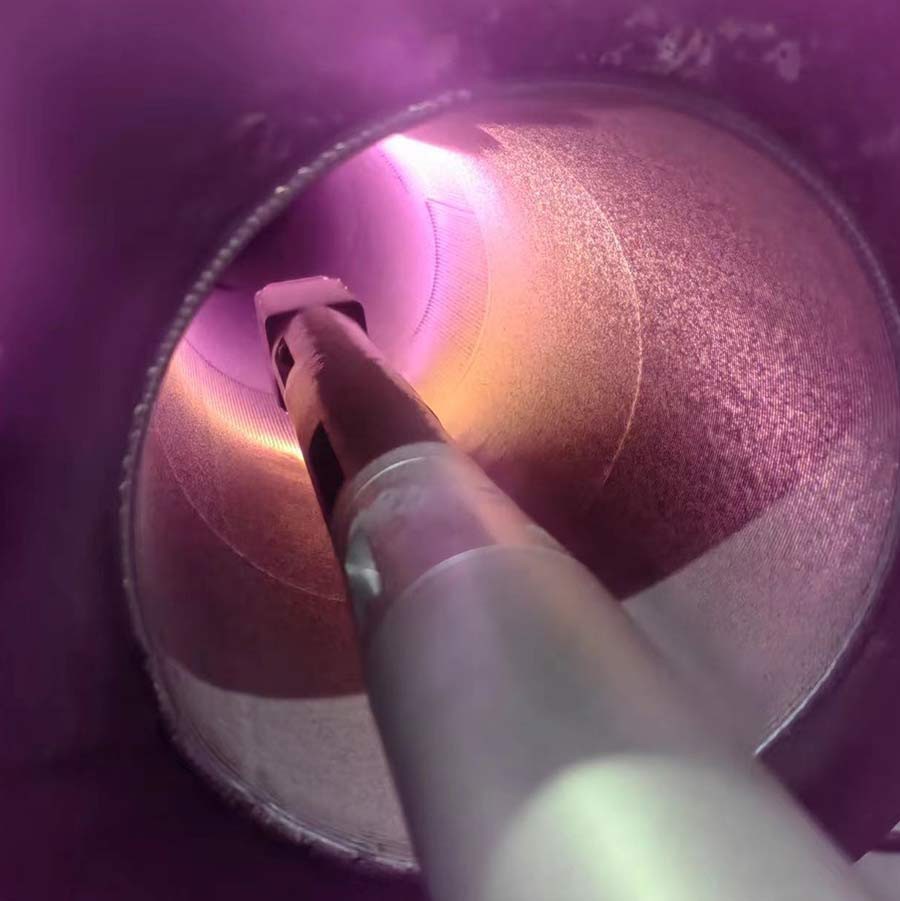
Industry Pain Points in Internal Hole Component Repair: Limitations of Traditional Technologies and Demand Gaps
In the manufacturing industry, wear issues of internal hole components (e.g., pipelines with inner diameter < 200mm, blind-hole oil cylinders, inner cavities of precision molds) are particularly prominent: wear on the inner wall of pipelines can lead to medium leakage, while corrosion of cylinder internal holes reduces transmission accuracy. These failures not only affect production efficiency but also pose potential safety risks. Nevertheless, traditional laser cladding technology has obvious shortcomings in processing such components: on one hand, it is difficult to transport the laser head, cladding powder, and cooling water over long distances in narrow spaces, leaving small and medium-caliber internal holes "with no way to start"; on the other hand, traditional equipment has a long laser focusing distance and a large heat-affected zone, which easily causes component deformation or unstable processing quality. As the demand for "wear resistance, corrosion resistance, and high-precision repair" of high-load components continues to rise, the industry is in urgent need of an internal hole processing technology that can break through spatial limitations while balancing efficiency and quality.
Principle of Internal Hole Laser Cladding Technology: Core Logic of High-Precision Internal Surface Modification
Different from external wall laser cladding, the core of **internal hole laser cladding technology** lies in "multi-system collaboration in limited space"-through modular design, the laser beam, cladding powder, cooling water circuit, and protective gas circuit are integrated into a slender tube, enabling long-distance (up to 300mm on one side) delivery to the internal hole processing area. Its workflow is as follows: the selected coating material (e.g., iron-based, nickel-based alloys) is accurately delivered to the internal hole surface in powder form; high-energy laser irradiation melts both the powder and the substrate surface layer simultaneously; and rapid solidification at an ultra-fast cooling rate of 10³~10⁶ °C/s ultimately forms a dense cladding layer with metallurgical bonding to the substrate. This technology not only significantly improves the wear resistance and corrosion resistance of the internal hole surface but also controls the heat-affected zone to less than 0.1mm, avoiding damage to component performance and perfectly meeting the processing needs of precision internal holes.


Core Performance of Internal Hole Laser Cladding Systems: Application Scenarios and Technological Breakthroughs
A high-quality internal hole laser cladding system must possess three key characteristics: "high integration, high adaptability, and multi-functionality". Taking the internal wall laser processing system of Xi'an Guosheng Laser Technology as an example, its technological breakthroughs accurately address industry needs: first, it breaks through caliber limitations, adapting to small and medium-caliber pipelines with a minimum inner diameter of Ф85mm and solving the "inability to access" problem of traditional technologies; second, it supports blind-hole processing-through the 45° oblique incidence design of powder flow and laser beam, it avoids processing dead angles at the bottom of blind holes; third, it enables multi-functional switching-only by replacing the front nozzle can it complete processes such as cladding, surfacing, welding, and quenching, reducing equipment investment costs; fourth, it ensures processing stability-the powder, gas, water, and light circuits are fully integrated within the system, minimizing external interference and guaranteeing precision and efficiency during long-distance processing. Additionally, the system can be linked with machine tools and robots to realize "integrated internal and external wall cladding" operations, adapting to processing scenarios of different components.
Material and Industry Adaptability of Internal Hole Laser Cladding: Covering Repair Needs Across Multiple Fields
The wide application of internal hole laser cladding is inseparable from its compatibility with diverse materials and its ability to customize processes for different industries. In terms of material selection, this technology can produce various alloy claddings such as iron-based (for ordinary mechanical components), nickel-based (for high-temperature corrosion resistance), cobalt-based (for high wear resistance), copper-based (for high thermal conductivity), and composite materials, meeting the performance needs of different industries-for example, corrosion-resistant nickel-based coatings are used for petroleum pipelines, while wear-resistant iron-based coatings are used for internal holes of mining machinery. In terms of industry adaptability, for pipeline repair in the shipbuilding industry, internal surface strengthening of oil cylinders in the petroleum industry, and internal hole protection of valves in the mining industry, internal hole laser cladding technology can customize exclusive process specifications to ensure that parameters such as cladding layer thickness and bonding strength comply with industry standards, truly realizing "on-demand customization" of repair solutions.
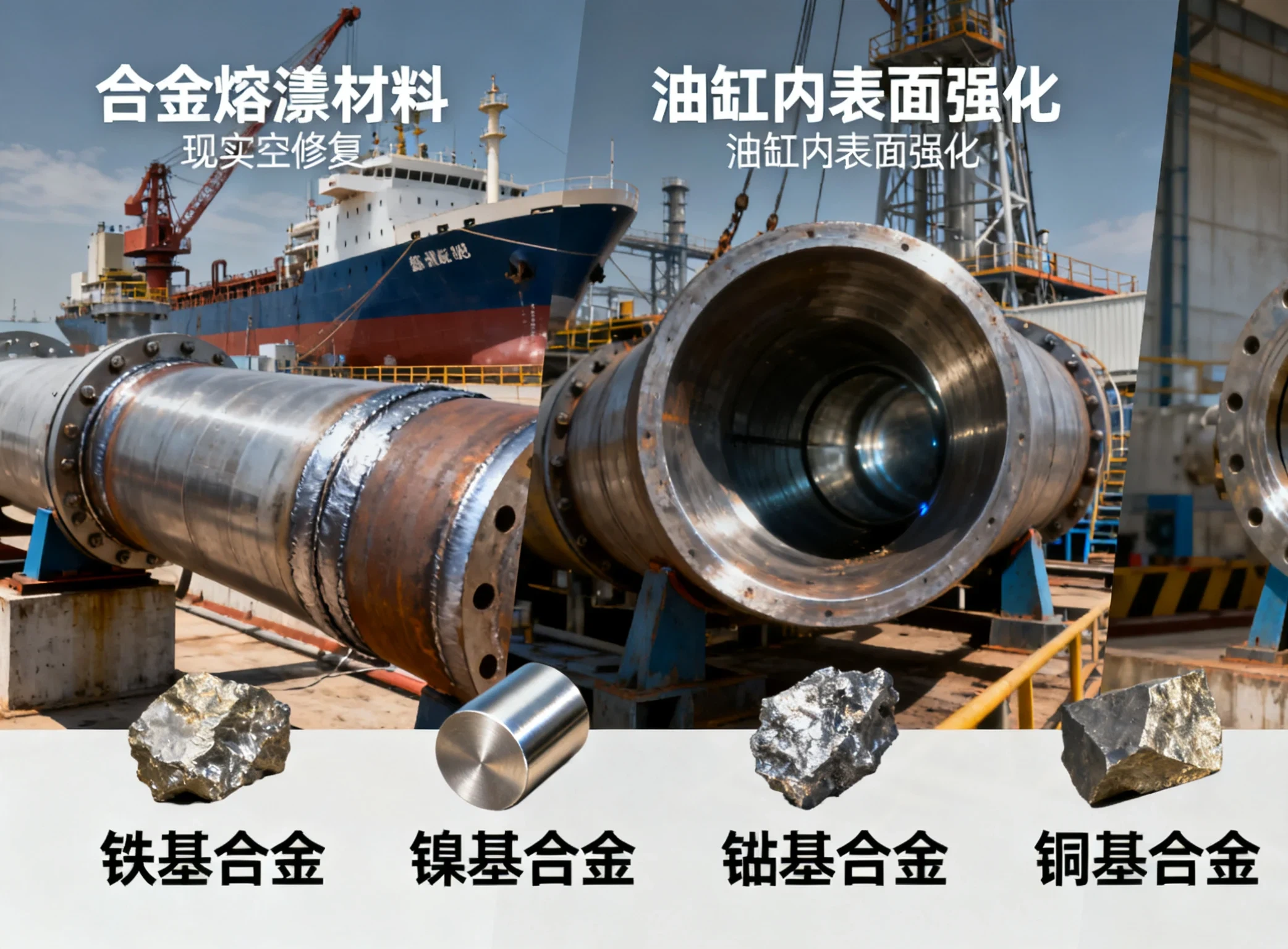
Internal Hole Laser Cladding Drives the Upgrade of Component Repair in the Manufacturing Industry
As a technology that accurately addresses the pain points of internal hole component repair, internal hole laser cladding not only breaks through the spatial and efficiency limitations of traditional technologies but also provides an effective path for the manufacturing industry to reduce operation and maintenance costs and extend equipment service life through its advantages of "high precision, high stability, and multi-functionality". From small and medium-caliber pipelines to precision blind-hole components, and from single cladding to multi-process integration, this technology is gradually becoming a "standard repair solution" in fields such as shipbuilding, petroleum, and mining. In the future, with further upgrades in modular design and automated control, internal hole laser cladding will play a role in more segmented scenarios, driving the manufacturing industry to continue developing towards the direction of "high efficiency, energy conservation, and high-quality repair".