

Laser cladding technology has emerged as a cutting-edge solution to enhance the surface properties of various materials in industrial applications. With its ability to provide precise control over material deposition and offer superior efficiency, laser cladding machines have become indispensable tools in industries such as aerospace, automotive, oil and gas, and mold manufacturing.
1. Components and Operation of Laser Cladding Machines
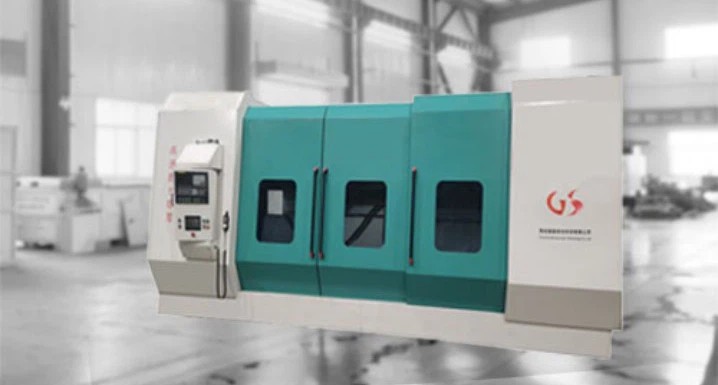
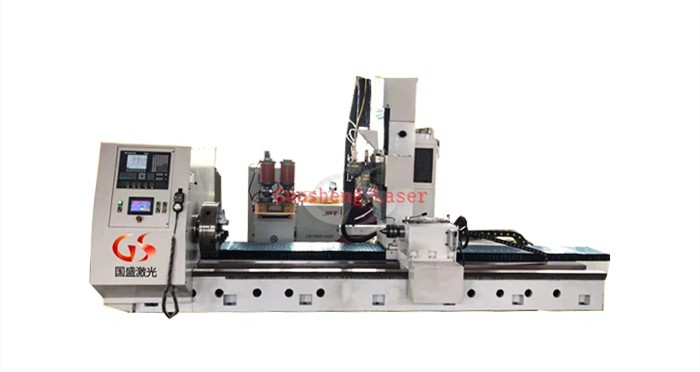
Laser cladding machines consist of several key components that work together to enable precise and efficient material deposition. The main components include the laser source, powder feeding system, optics, and motion control.
The laser source provides the high-intensity laser beam necessary for the cladding process. It can be a solid-state, fiber, or CO2 laser. The choice of laser source depends on factors such as power requirements, material compatibility, and cost.
The powder feeding system is responsible for delivering the cladding material to the desired area. It can utilize various methods such as coaxial, lateral injection, or through a powder hopper. The powder feed rate and direction are precisely controlled to ensure accurate material deposition.
Optics play a crucial role in focusing the laser beam onto the workpiece surface with high precision. They consist of lenses and mirrors that manipulate and shape the laser beam to achieve the desired spot size and intensity.
The motion control system enables precise movement of the laser cladding head and workpiece. It involves CNC (Computer Numerical Control) systems that accurately position and synchronize the motion of the laser beam and the workpiece during the cladding process.
Different types of laser cladding machines are available, including direct energy deposition (DED) and powder-bed fusion (PBF) systems. DED machines utilize a focused laser beam to melt and fuse the cladding material onto the workpiece surface directly. PBF systems, on the other hand, use a powder bed that is selectively melted and solidified to create the desired cladding layer.
The operation of laser cladding machines involves several steps, starting with pre-processing tasks such as surface preparation and design optimization. The workpiece is then positioned and secured in the machine, and the appropriate process parameters are set. During the cladding process, the laser beam is precisely controlled to melt the cladding material, which fuses onto the workpiece surface. After the cladding is complete, post-processing steps such as cooling, cleaning, and finishing may be required to achieve the desired surface properties.
2. Advancements in Laser Cladding Technology
Laser cladding technology has witnessed significant advancements in recent years, driven by ongoing research and development efforts. These advancements have expanded the capabilities and applications of laser cladding machines, making them more efficient, precise, and versatile.
Increased power and speed: Improved laser sources have enabled higher power outputs, allowing for faster cladding speeds and deeper penetration into the substrate material. This results in increased productivity and reduced processing time.
Improved automation: Laser cladding machines now incorporate advanced automation features such as robotic arms, multi-axis control, and real-time monitoring systems. These advancements enhance workflow efficiency, reduce human error, and enable precise control over the entire cladding process.
Enhanced control systems: Modern laser cladding machines employ sophisticated control algorithms that optimize process parameters in real-time. This ensures consistent and uniform material deposition, minimizing defects and improving the quality of the cladding layer.
Advanced alloys and hybrid processing approaches: Laser cladding machines are now capable of working with a wide range of advanced alloys, including high-temperature materials, superalloys, and metal matrix composites. Additionally, hybrid processing approaches such as combined laser cladding and machining operations offer enhanced flexibility and precision in achieving complex geometries.
In-situ monitoring and inspection: Laser cladding machines can now integrate in-situ monitoring and inspection systems, such as thermal imaging, spectroscopy, and non-destructive testing techniques. These systems enable real-time feedback on the cladding process, allowing for immediate adjustments and quality control.
3. Benefits and Challenges of Laser Cladding
Laser cladding machines offer numerous benefits and advantages over traditional surface enhancement and repair methods. These benefits include:
Reduced material waste: Laser cladding provides precise control over material deposition, minimizing material wastage compared to processes like thermal spraying. This results in cost savings and environmentally sustainable manufacturing practices.
Enhanced design freedom: Laser cladding machines enable the deposition of complex geometries and intricate patterns, offering design flexibility that is not achievable with traditional methods. This opens up new possibilities for innovative product designs.
Improved surface finish: Laser cladding produces a high-quality surface finish with minimal porosity, reducing the need for additional post-processing steps. The resulting cladding layer exhibits excellent adhesion, uniformity, and superior mechanical properties.
However, there are challenges and considerations that need to be addressed when implementing laser cladding:
Material compatibility: Laser cladding is most effective when used with compatible materials. It is crucial to select cladding materials that exhibit good metallurgical compatibility with the substrate material to ensure bonding and avoid cracking or delamination.
Process optimization: Laser cladding requires careful optimization of process parameters such as laser power, scanning speed, powder feed rate, and gas shielding. Finding the optimal balance between these parameters is essential to achieve the desired cladding properties and prevent defects.
Cost-effectiveness: Implementing laser cladding machines can involve significant capital investment. However, the long-term benefits, including reduced maintenance costs, extended component lifespan, and improved operational efficiency, often outweigh the initial investment.
4. Case Studies and Real-world Examples
Numerous industries have successfully implemented laser cladding to address specific challenges and achieve tangible improvements. Here are a few examples:
In the aerospace industry, laser cladding machines are used to repair turbine blades and engine components with protective coatings. This extends component lifespan, reduces downtime, and ensures optimal performance.
In the automotive sector, laser cladding is employed to enhance the wear resistance of engine components such as cylinder liners and valve seats. This results in improved durability, reduced maintenance costs, and increased engine efficiency.
The oil and gas industry utilizes laser cladding machines to apply corrosion-resistant coatings and repair damaged parts in pipelines and drilling equipment. This enhances the longevity and reliability of critical infrastructure.
In the mold manufacturing industry, laser cladding is used to apply precise coatings to complex molds, improving their durability and reducing the need for frequent maintenance or replacement.
Case studies like these demonstrate the significant benefits achieved through the implementation of laser cladding machines, ranging from increased component lifespan to reduced downtime and improved operational efficiency.
Laser cladding machines have revolutionized surface enhancement and repair processes in various industries. Their ability to provide precise control, enhanced efficiency, and versatile applications has propelled the advancement of laser cladding technology. With ongoing research and development efforts, laser cladding machines continue to push boundaries, enabling cost-effective repairs, improving surface properties, and unlocking new possibilities for innovation. As industries strive for improved performance, efficiency, and durability, laser cladding machines will play an increasingly vital role in shaping the future of surface engineering.
Guosheng is a professional and highly reputable equipment manufacturing company with a vast array of technical resources, strong R&D capabilities, and advanced production technologies. Our Laser Cladding Machine is cost-effective and sold domestically and abroad. If you're interested in our products, please contact us: terry@gshenglaser.com.