

In heavy industries-where equipment operates under extreme conditions like high pressure, abrasive materials, and corrosive environments-unplanned downtime and component failure can lead to millions in lost productivity. Traditional repair methods (e.g., welding, thermal spraying) often fall short of delivering long-lasting solutions, but Laser Cladding has emerged as a game-changing technology. By depositing high-performance alloy coatings onto worn or damaged parts, it restores functionality, boosts durability, and cuts maintenance costs. Below, we explore how laser cladding addresses wear and corrosion challenges across key heavy industry sectors.

Laser Cladding for Mining Machinery: Extending Service Life of Drill Bits and Crusher Parts
Mining machinery-from drill bits to crusher components-faces relentless abrasion from rock, ore, and mineral deposits. A single drill bit, for example, can wear down by 20% after just 10 hours of operation, requiring frequent replacement. Laser Cladding solves this by applying wear-resistant alloys (e.g., tungsten carbide-reinforced steel) to critical surfaces of drill bits and crusher jaws.
The precision of laser cladding ensures the coating adheres tightly to the base material, forming a bond 2–3 times stronger than thermal spraying. For cone crusher liners, this process not only restores worn dimensions but also increases surface hardness by 40–60%, extending service life by 2–3 times. Mining operators report a 30% reduction in maintenance costs and 25% less unplanned downtime after adopting laser-clad components.
Oil and Gas Industry Applications: Corrosion-Resistant Coatings for Downhole Tools
Downhole tools (e.g., drill collars, packers, valves) in the oil and gas sector endure a brutal combination of high pressure (up to 15,000 psi), extreme temperatures (over 300°C), and corrosive fluids (e.g., saltwater, hydrogen sulfide). Corrosion-related failures of these tools account for 40% of well intervention costs.
Laser Cladding offers a targeted solution: depositing corrosion-resistant alloys (e.g., Inconel 625, Hastelloy C-276) onto tool surfaces. Unlike traditional coatings (which can peel or crack under stress), laser-clad layers integrate with the base metal, creating a seamless barrier against corrosion. Field tests show that laser-clad downhole tools maintain integrity for 5+ years in harsh offshore environments-double the lifespan of uncoated or thermally sprayed alternatives.

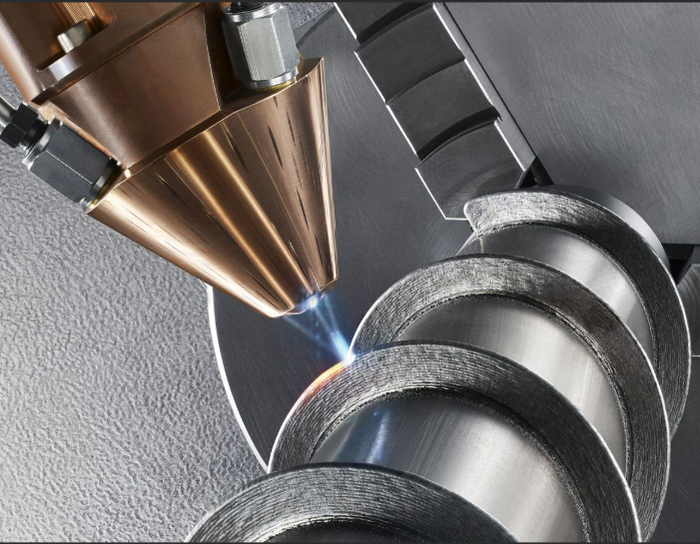
Automotive and Aerospace Solutions: Repairing Engine Components with Laser Cladding Technology
In automotive and aerospace, engine components (e.g., crankshafts, camshafts, turbine disks) demand tight tolerances and high fatigue resistance. When these parts develop wear, cracks, or material loss, replacement is often costly (e.g., a single aerospace turbine disk can cost $50,000).
Laser Cladding enables precise, cost-effective repair: by melting alloy powders (matched to the component's base material) onto damaged areas, it restores original dimensions while maintaining mechanical properties. For automotive crankshafts, laser cladding repairs journal wear with a 0.01mm tolerance, and the restored part meets OEM performance standards. In aerospace, laser-clad turbine blades have passed 10,000+ hours of cyclic fatigue testing-proving their reliability for critical flight systems.
Power Generation Sector: Enhancing Turbine Blades Against High-Temperature Wear
Power generation (fossil fuel, nuclear, geothermal) relies on turbine blades that operate at temperatures exceeding 1,000°C, facing oxidation, thermal fatigue, and erosion. Blades that degrade prematurely can shut down entire power plants, costing $1–2 million per day in lost output.
Laser Cladding addresses this by applying high-temperature-resistant coatings (e.g., MCrAlY alloys, ceramic composites) to blade surfaces. These coatings form a protective oxide layer that withstands extreme heat, reducing wear by 70% and extending blade life by 4–5 years. For coal-fired power plants, laser-clad turbine blades also resist ash erosion-a common failure cause-cutting annual maintenance costs by $500,000+ per unit.
