

Revolutionizing Aerospace Maintenance with Advanced Additive Manufacturing
The relentless demand for performance and safety in the aerospace industry pushes materials to their absolute limits. Nickel-based superalloys, prized for their unparalleled high-temperature strength and corrosion resistance, are the backbone of critical components like turbine blades and combustor liners. However, wear, thermal fatigue, and corrosion are inevitable. Traditional repair methods often compromise these delicate materials. This is where laser cladding, a precision-directed energy deposition process, emerges as a transformative solution. It enables the precise, layer-by-layer addition of nickel alloy powder to restore, reinforce, or coat high-value aerospace parts, extending service life, reducing replacement costs, and enhancing operational reliability under extreme conditions.

How Laser Cladding Works with Nickel-Based Superalloy Powders
Laser cladding, also known as Laser Metal Deposition, is a sophisticated additive manufacturing technique. A high-power laser beam is focused onto the surface of a substrate-such as a worn turbine blade. Metallic powder, typically a nickel-chromium-based superalloy like Inconel 718 or Hastelloy, is injected into the melt pool through a coaxial nozzle. The intense laser energy instantly melts the powder particles and a thin layer of the substrate, creating a metallurgically bonded, dense coating. The process is characterized by extremely rapid heating and solidification cycles. This results in a minimal heat-affected zone, preserving the base material's critical microstructure and mechanical properties, which is essential for aerospace component integrity.
Achieving Precision Coatings and Superior Thermal Management
The key advantage of laser cladding over conventional welding for superalloys is its exceptional control and low thermal impact. Parameters like laser power, beam diameter, scanning speed, and powder feed rate are digitally controlled, allowing for precise deposition of thin, uniform layers with complex geometries. This directed energy deposition process generates significantly less heat input. Consequently, it minimizes thermal distortion, residual stress, and unwanted phase transformations in the heat-affected zone of the nickel alloy substrate. This precise thermal management is crucial for maintaining the fatigue resistance and creep strength that aerospace components require in jet engine hot sections.


Core Aerospace Applications from Repair to Performance Enhancement
Laser cladding technology is revolutionizing several critical areas in aerospace manufacturing and maintenance. Its most prominent application is the repair and refurbishment of high-cost components like turbine blades, vanes, and fan disks, restoring them to original dimensions with superior, crack-resistant material. Beyond repair, it is used for applying protective coatings to combat oxidation and hot corrosion in combustion chambers and exhaust sections. Furthermore, manufacturers utilize laser cladding to add wear-resistant features or create functionally graded materials on new parts, such as sealing surfaces on casings or hard-facing on gear teeth, directly during production using advanced LMD equipment.
Addressing Challenges and Future Outlook for Industrial Adoption
While the benefits are clear, widespread industrial adoption faces specific challenges. The process requires precise parameter optimization for each alloy-powder combination-such as Inconel 625 powder-to prevent defects like porosity or micro-cracking. Scaling the process for large parts while ensuring consistent quality and deposition rate also presents engineering hurdles. The future lies in overcoming these through smarter systems: integrating real-time melt pool monitoring and adaptive control powered by AI algorithms, developing next-generation nickel superalloy powders with improved flowability, and establishing industry-wide standards for qualifying laser-clad aerospace components to meet strict FAA and EASA certifications.

Laser equipment components

Fiber Laser Machine

Laser Cladding Head
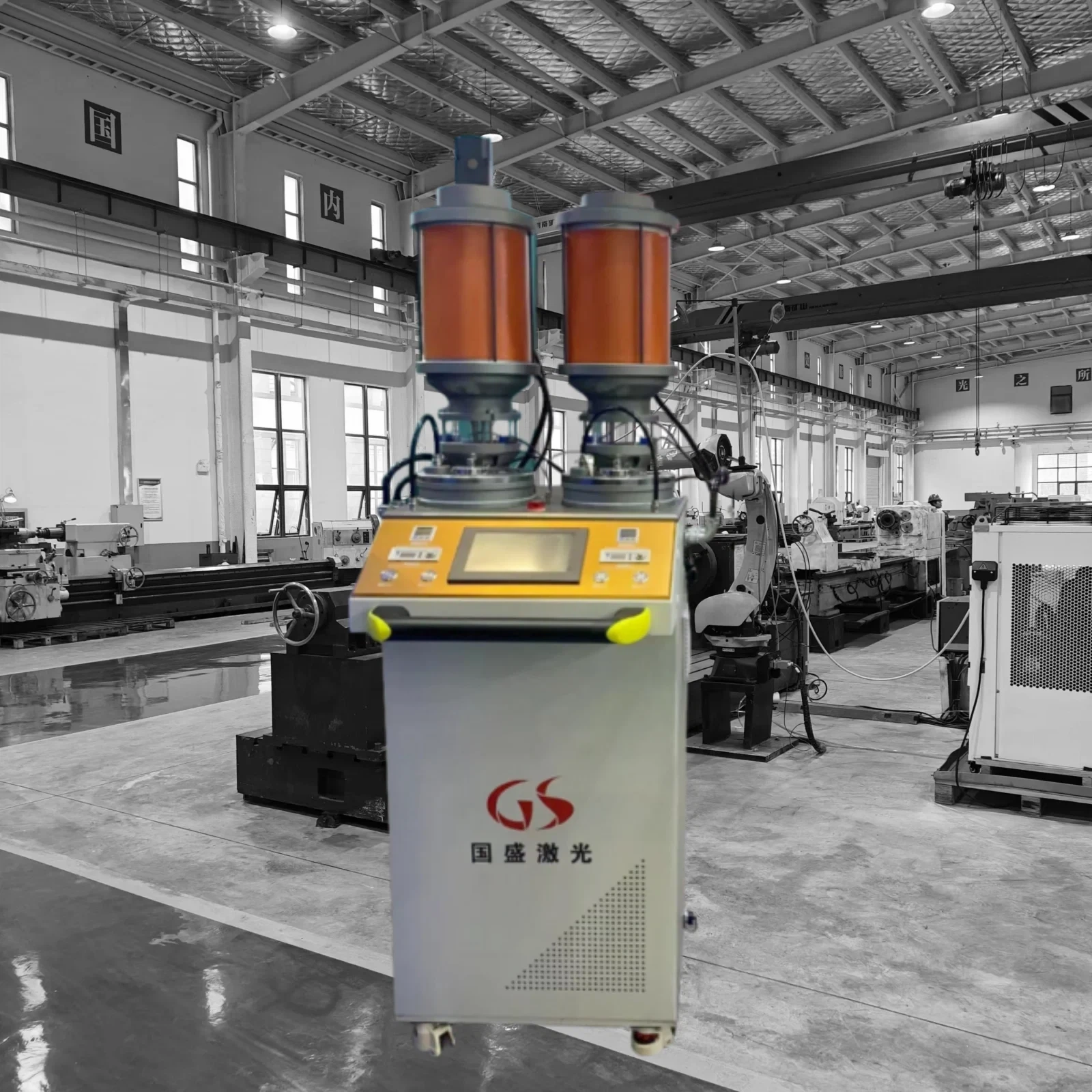
Powder Feeder

Laser Hardening Head
A Strategic Advantage for Next-Generation Aerospace Manufacturing
In conclusion, laser cladding of nickel-based superalloys is not merely an alternative repair method; it is a strategic manufacturing technology that enhances performance, sustainability, and cost-efficiency. By enabling precise, localized material addition with minimal thermal damage, it allows aerospace engineers to extend the lifespan of critical engine parts, reduce lifecycle costs, and push the boundaries of component design. As additive manufacturing systems evolve with better sensors and control software, laser cladding will become an indispensable pillar of digital manufacturing, ensuring that aerospace fleets worldwide can operate more safely, reliably, and efficiently for years to come.
FAQ
Q: What are the main benefits of using laser cladding to repair turbine blades vs. traditional welding?
A: A: Laser cladding offers superior precision with minimal heat input, preserving the blade's delicate microstructure. It creates a metallurgically bonded, dense coating with reduced risk of distortion or cracking, leading to longer component life and better performance under high thermal stress compared to conventional TIG or plasma welding.
Q: How does laser cladding ensure the quality and durability of the nickel alloy coating?
A: Quality is ensured through precise control of process parameters like laser power and powder feed rate, and by using qualified nickel-based superalloy powders. Advanced systems often include in-situ monitoring (e.g., melt pool cameras) for real-time defect detection, resulting in coatings with excellent adhesion, low porosity, and optimal mechanical properties for aerospace applications.
Q: Why are nickel-based superalloys like Inconel the preferred material for laser cladding in aerospace?
A: Nickel-based superalloys like Inconel 718 provide exceptional high-temperature strength, oxidation resistance, and fatigue life-critical for jet engine components. Laser cladding effectively deposits these alloys without compromising their properties, making them ideal for repairing and protecting parts exposed to extreme heat and corrosive environments.