

A High-Efficiency Innovation for Industrial Support Safety
In modern industrial production, hydraulic support columns serve as the core structural support components widely utilized in heavy-duty sectors such as mining and metallurgy. Their operational stability is directly linked to the continuity of production lines and the safety of personnel. However, long-term exposure to harsh working conditions often leads to wear, corrosion, and eventual failure, while traditional repair methods suffer from low precision, poor efficiency, and high costs. The emergence of laser cladding repair technology offers a high-efficiency solution, marking a key technological innovation in safeguarding industrial support structures. This article provides an in-depth analysis of the technology's core logic, application value, and practical implementation.

Core Advantages: Why Laser Repair is the Top Industrial Choice
Compared to traditional machining and manual repair, laser repair for hydraulic columns holds the industry high ground due to several primary strengths. Its core advantage lies in high precision, where high-energy-density laser beams allow for precise control over the thickness and composition of the cladding layer, effectively preventing secondary damage to the column body. Furthermore, the efficiency of this technology is outstanding, as it eliminates the need for cumbersome pre-processing and extensive post-grinding, thereby significantly reducing maintenance downtime. Simultaneously, the technology offers broad versatility, compatible with various common materials such as carbon steel and stainless steel. With repair costs reduced by over 30% compared to traditional schemes, it has become the preferred choice for enterprises seeking to lower operation and maintenance costs.
Repair Process: Standardized Steps Ensure Repair QualityRepair Process: Standardized Steps Ensure Repair Quality
The repair of hydraulic support columns follows a rigorous standardized workflow to ensure performance standards are met. The process begins with surface pre-treatment, where professional cleaning removes oil, rust, and oxide layers to prevent impurities from interfering with laser energy absorption. This is followed by the laser cladding stage, during which a high-energy laser beam rapidly melts the metal surface to form a molten pool, while alloy powder is simultaneously added to optimize the structural properties of the cladding layer. Subsequently, precise heat treatment is applied by controlling heating temperatures and cooling rates to eliminate internal stresses and enhance hardness. The process concludes with finishing touches, such as grinding and polishing, to ensure the repaired surface is smooth and perfectly matches the original equipment's dimensional specifications.


Applicable Scenarios: Technical Application Boundaries Under Diverse Working ConditionsApplicable Scenarios: Technical Application Boundaries Under Diverse Working Conditions
The adaptability of laser repair allows it to deliver significant value across multiple industrial environments. In mining operations, it effectively repairs columns damaged by impact and abrasion, significantly extending the service life of underground equipment. In the metallurgical industry, customized alloy cladding layers can be applied to columns in high-temperature and corrosive environments to enhance their durability. Furthermore, for aging machinery, laser repair enables performance upgrades and equipment retrofitting, which drastically reduces the cost of renewal compared to purchasing entirely new components. This ability to handle different materials and varying degrees of damage makes it a central technology for industrial maintenance.
Value Empowerment: Dual Guarantee of Economy and SafetyValue Empowerment: Dual Guarantee of Economy and Safety
Ultimately, the value empowerment provided by laser repair is reflected in both economic and safety dimensions. Economically, the technology can extend the lifespan of hydraulic columns by more than 50%, reducing replacement frequency and procurement costs while improving production line uptime. From a safety perspective, the precise restoration ensures the structural stability of the supports, preventing accidents like collapses or unplanned shutdowns. In conclusion, laser cladding repair technology has shattered the limitations of traditional methods. As the technology continues to evolve, it will drive the industrial maintenance sector toward a more efficient, precise, and green future, providing a robust technical guarantee for safe and stable industrial operations.

Laser equipment components

Fiber Laser Machine

Laser Cladding Head
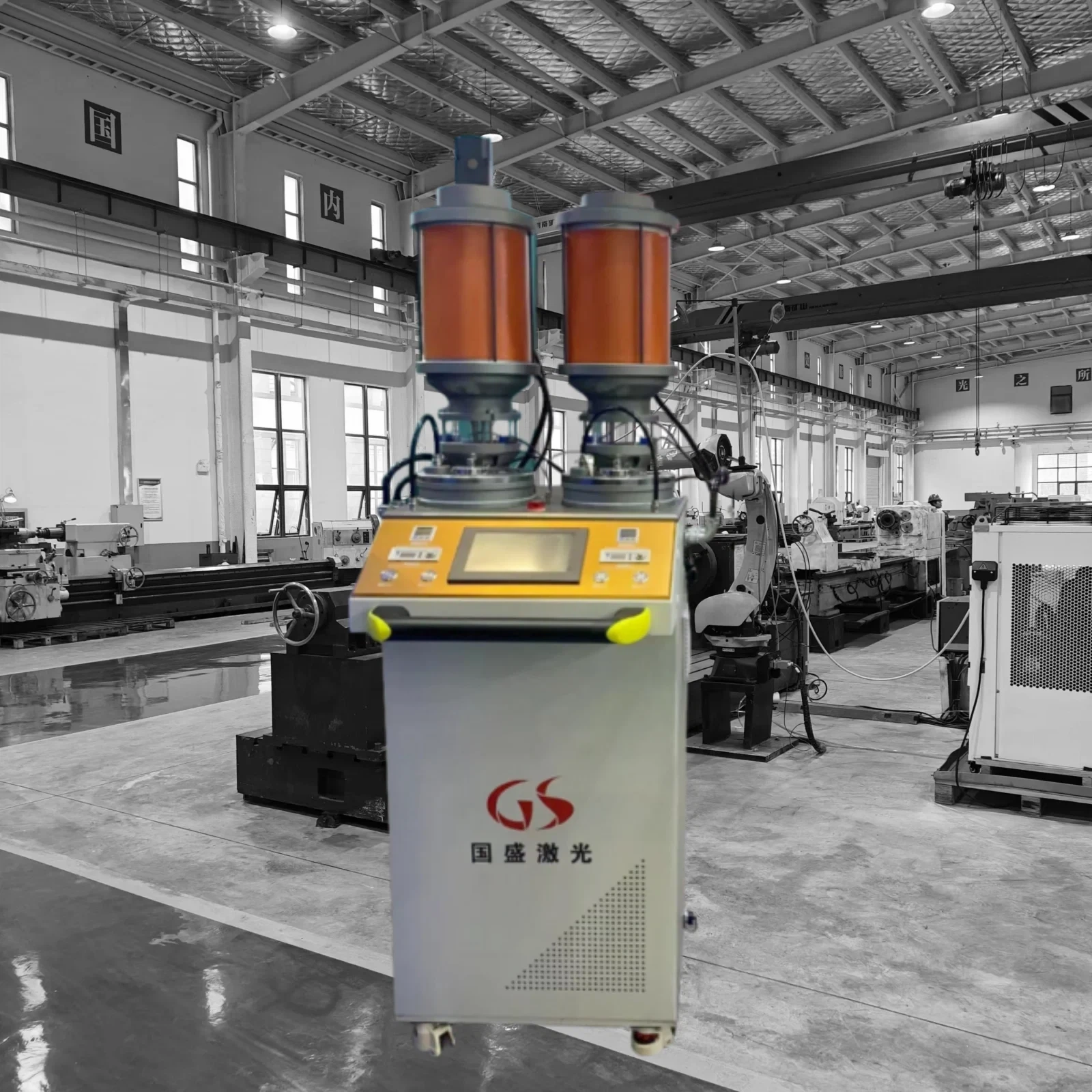
Powder Feeder

Laser Hardening Head
Leading the Revolution in Industrial Support Maintenance
Laser cladding repair technology for hydraulic support columns has shattered the limitations of traditional methods with its high precision, efficiency, and cost-effectiveness. By combining standardized processes with diverse situational adaptability, it achieves a dual leap in economic and safety value. As laser technology continues to iterate, its application in the maintenance of industrial supports will deepen, driving the industry toward a more efficient, precise, and "green" future.