

Introduction to Modern Laser Welding Solutions
Laser welding technology is revolutionizing modern manufacturing by offering unparalleled precision, efficiency, and quality. This process utilizes a high-energy-density laser beam to melt and fuse materials, creating a strong, clean weld with minimal heat input. Its advantages, including a small heat-affected zone, high speed, and minimal distortion, make it superior for joining complex and sensitive components. As a cornerstone of advanced manufacturing, laser welding is increasingly critical across demanding sectors like aerospace, automotive, and electronics, enabling the production of high-performance, reliable products. This article explores the core techniques of traditional and composite laser welding and their transformative applications in key industries.

Understanding Laser Welding Fundamentals
The conventional laser welding process is a sophisticated additive manufacturing technique that uses a focused, high-energy laser beam as a heat source. It creates a solid-liquid phase change in the materials, achieving a robust in-situ connection. High-temperature evaporation generates a plasma plume that cleans the weld interface. The technology's flexibility is enhanced by various welding head types. High-speed vibrating scanner welding heads offer intelligent control and adjustable spot size, improving tolerance for part gaps. T-shaped heads are ideal for low-power, precise applications like eyewear frames, while mini swing welding heads provide high flexibility for robotic arms. For wider gaps, a wire feeding mechanism can be integrated to add filler material, ensuring optimal weld shape and structural integrity.
Industrial Applications of Conventional Laser Welding
Traditional laser welding is a versatile tool deployed across multiple high-tech sectors. In the automotive industry, it is essential for sheet metal welding of body panels, roofs, and side frames, ensuring lightweight and durable vehicle structures. The electronics industry leverages it for micro-welding in integrated circuit packaging and printed circuit board assembly due to its low thermal stress and fast processing. The medical device manufacturing field relies on laser welding for producing intricate surgical tools, cardiovascular stents, and endoscopic instruments. The non-contact nature, high precision, and minimal thermal impact of the process ensure medical equipment meets stringent performance and biocompatibility standards, outperforming traditional joining methods.


Advancements in Laser Hybrid Welding Technology
Laser hybrid welding, or laser-enhanced welding, combines the laser beam with another heat source to create a superior process. This synergy maximizes the benefits of each method while mitigating their individual limitations. Prominent types include laser arc composite welding and dual laser beam welding. In laser arc composite welding, a laser is combined with a MIG/MAG arc. This leverages the deep penetration of the laser and the superior gap-bridging ability of the arc, resulting in higher welding speeds and improved quality for thicker materials. Dual laser beam welding uses two lasers with different parameters-like a continuous wave and a pulsed laser-to create a stable keyhole, control plasma, and significantly increase penetration depth and process stability.
Key Applications for Laser Hybrid Welding
Laser composite welding excels in joining challenging materials and thick sections, finding critical applications in heavy industry. Within the automotive sector, it is used for manufacturing car doors and connecting aluminum alloy power battery trays for electric vehicles. In the petrochemical industry, it enhances the quality and production efficiency of fuel tank and pipeline welding, producing stable, defect-free welds that meet rigorous engineering specifications. The aerospace industry benefits from its capability to weld medium-to-thick high-strength steel plates and titanium alloys, reducing production time and worker fatigue while ensuring the structural integrity required for flight-critical components. This makes it a vital manufacturing solution for high-value, high-performance parts.

Laser equipment components

Fiber Laser Machine

Laser Cladding Head
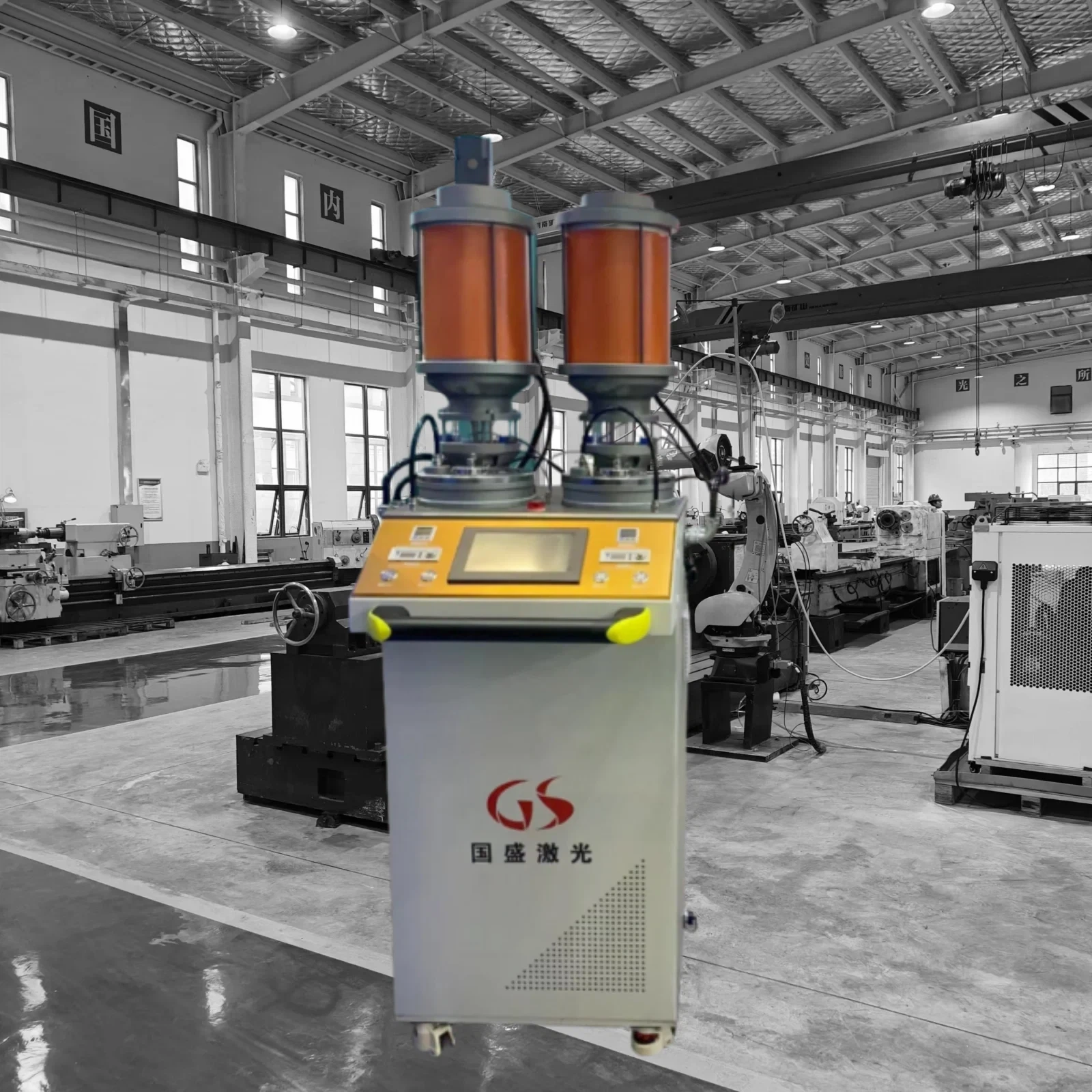
Powder Feeder

Laser Hardening Head
The Future of Precision Joining
Laser welding, in both its conventional and advanced hybrid forms, represents the forefront of precision joining technology. From creating delicate medical instruments to constructing robust automotive frames and aerospace components, its ability to deliver high-strength, low-distortion welds is unmatched. The evolution from standard fiber laser welding to sophisticated hybrid laser processes demonstrates the technology's continuous adaptation to industrial demands. As materials become more advanced and designs more complex, the role of laser welding as an efficient, automated, and highly adaptable manufacturing solution will only grow more central, driving innovation and quality across the global industrial landscape.
FAQ
Q: What is laser hybrid welding?
A: Laser hybrid welding combines a laser beam with another heat source, like an electric arc. This process merges the deep penetration of laser welding with the excellent gap-bridging ability of arc welding, resulting in faster speeds, higher quality welds for thicker materials, and better performance on aluminum alloys and high-strength steels.
Q: How is laser composite welding used in the automotive industry?
A: In the automotive industry, laser composite welding is crucial for manufacturing durable and lightweight structures. It is extensively used for joining car door components and for welding aluminum alloy battery trays in electric vehicles, ensuring strong, leak-proof seams that are essential for safety and vehicle longevity.
Q: What are the advantages of a fiber laser for welding?
A: Fiber lasers are highly efficient for deep penetration welding due to their excellent beam quality and high power density. They offer superior energy absorption, especially on reflective metals, leading to faster welding speeds, a narrow heat-affected zone, and minimal distortion, making them ideal for automated, high-precision manufacturing solutions.