

The Rise of Wheel Laser Quenching – A Novel Heat Treatment Process
Quenching is a traditional metal heat treatment process designed to significantly enhance the hardness and wear resistance of materials by heating them to a certain temperature and then rapidly cooling them. However, conventional methods like oil or water quenching often suffer from limitations such as non-uniform cooling and inconsistent quenching effects. To overcome these challenges, Wheel Laser Quenching (WLQ) technology has emerged. As a new, high-efficiency heat treatment process, it utilizes a high-energy laser beam to perform localized surface hardening on wheels, drastically improving their surface hardness and wear resistance, thereby effectively extending the component's service life. This technique not only retains the core benefits of traditional quenching but also achieves revolutionary advancements in quality, efficiency, and environmental friendliness due to its unique heating and cooling mechanism. The basic principle of WLQ is to use a high-energy laser beam to rapidly heat the wheel surface to the quenching temperature, followed by rapid self-cooling (relying on the bulk material or an auxiliary system). This forms a high-hardness martensitic structure on the surface, marking it as a critical direction for surface strengthening of key modern mechanical components.

Core Principle of Laser Quenching and Its High-Quality Characteristics
The core of the wheel laser quenching process lies in its unique heating and cooling mechanism. The process utilizes a high-energy laser beam to irradiate the wheel surface. The laser beam's extremely high energy density allows the material's surface temperature to quickly reach the required austenitizing temperature in a very short time, enabling rapid heating. Once the laser beam moves away, the heated zone is instantly cooled by rapid heat dissipation into the bulk, colder substrate material, achieving rapid self-cooling (or with auxiliary cooling). This combination of rapid heating and cooling is crucial for obtaining a uniform and high-quality quenching effect. Because the process is precisely controlled, the hardened layer formed by laser quenching is dense and uniform, with hardness significantly exceeding that achieved by traditional methods. This effectively avoids issues like non-uniform cooling and part distortion common in conventional oil/water cooling. This high-quality quenching effect is the foundation upon which WLQ technology significantly improves the component's wear resistance and fatigue performance, making it a preferred technique for surface hardening of high-reliability parts in modern industry.
Four Major Advantages of Wheel Laser Quenching
Compared to traditional quenching methods, wheel laser quenching technology exhibits four significant advantages, making it highly competitive in modern manufacturing. Firstly, it delivers exceptionally high quenching quality. This is due to the fast, localized heating and cooling enabled by the high-energy-density laser beam, which produces a uniform and fine-grained hardened layer, ensuring the reliability of the part's surface performance. Secondly, it offers high production efficiency. The laser quenching process can be completed in a very short time, significantly reducing the overall heat treatment cycle and boosting production output. Thirdly, the process has a wide range of applicability. It is suitable not only for wheels but also for various metallic materials, including steel, cast iron, and non-ferrous metals, making it particularly effective for the surface strengthening of precise and critical components like gears and shafts. Finally, the technology is environmentally friendly. The process does not use any chemical coolants or media, avoiding the pollution of waste oil or wastewater associated with traditional quenching, aligning with the modern industrial trend toward green manufacturing. These combined benefits establish WLQ as a highly potential new heat treatment process.


The Efficient and Precise Wheel Laser Quenching Process Flow
The successful execution of wheel laser quenching depends on an efficient and precise operational process, which mainly consists of four key steps, ensuring the stability and consistency of the quenching effect. The first step is Positioning and Alignment: The wheel is accurately placed on the dedicated laser quenching equipment, and its position is finely adjusted to ensure the area to be treated is precisely aligned with the laser beam focus. This is a prerequisite for uniform quenching. The second step is Laser Heating: The high-energy laser is activated, and the beam begins scanning the wheel surface, causing the material to rapidly absorb energy. The surface temperature instantly reaches the preset quenching temperature (austenitizing temperature), a phase that requires precise control over laser power and scanning speed. The third step is Rapid Cooling: Immediately after heating or as the laser beam moves away, the substrate material enables self-cooling, or an auxiliary cooling system is activated, causing the wheel surface to cool rapidly. This completes the quenching treatment and forms the hardened layer. The fourth step is Process Completion: Finally, the laser and cooling system are switched off, and the quenched wheel is removed, ready for subsequent assembly or inspection. This streamlined process achieves high automation and precision control over the quenching operation.
Application Scope and Value Enhancement of Wheel Laser Quenching
Due to its excellent performance characteristics, wheel laser quenching technology is rapidly expanding its application scope across a wide range of mechanical equipment. It is used not only for surface treatment of wheels in various transport and power equipment, such such as automobiles, construction machinery, and agricultural machinery, to withstand severe operating environments and heavy wear, but also for the surface strengthening of precise and critical parts like gears, shafts, and guide rails that demand high wear resistance and long life. Compared with traditional quenching methods, WLQ imparts significantly higher surface hardness and wear resistance to the parts, thereby substantially extending the component lifespan and improving the overall performance and reliability of the machinery. Crucially, by combining high efficiency, wide applicability, and environmental friendliness, this process reduces the frequency of repairs and replacements, streamlines production, and consequently significantly lowers production costs while boosting efficiency. This provides robust technical support for industrial remanufacturing and component upgrading.

Laser equipment components

Fiber Laser Machine

Laser Cladding Head
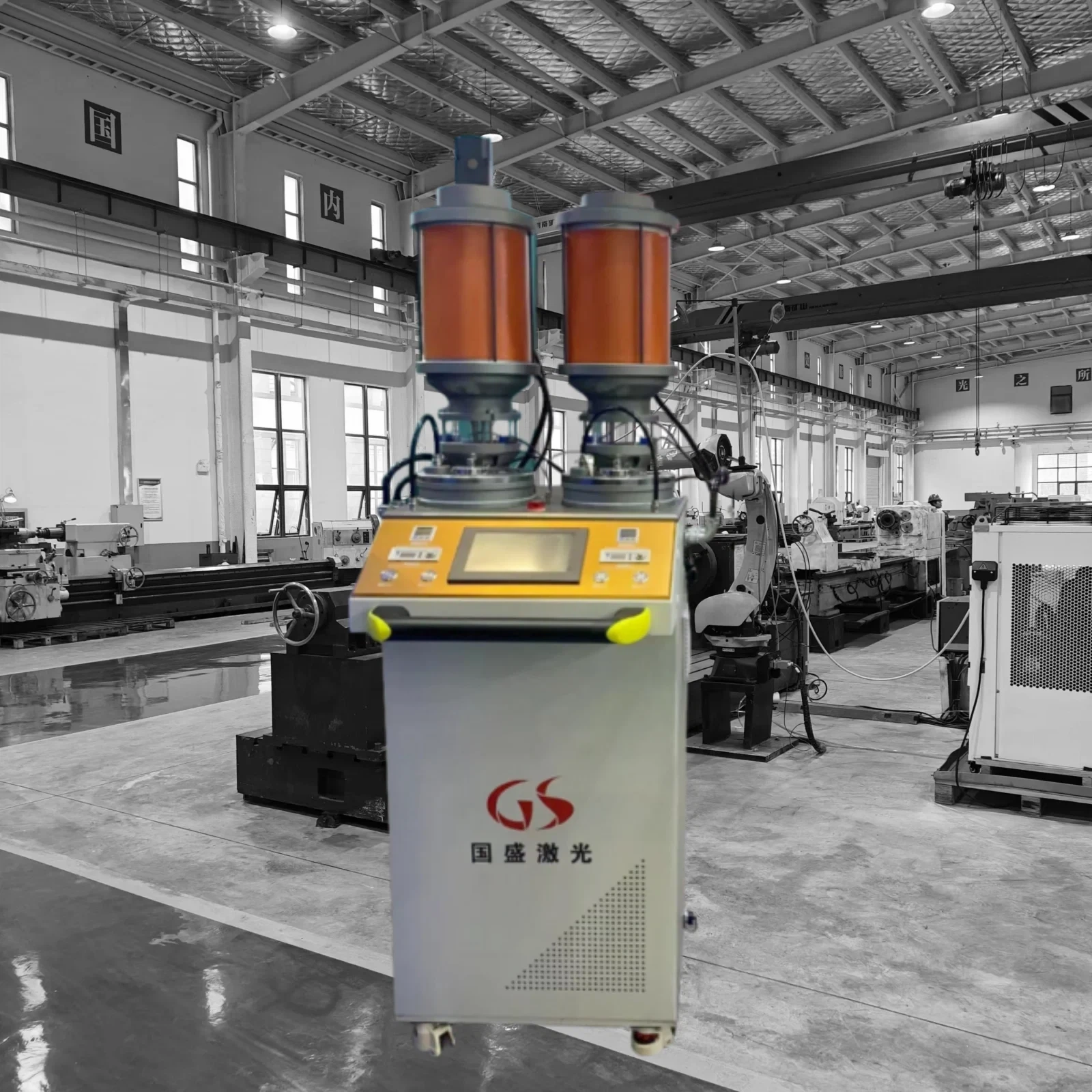
Powder Feeder

Laser Hardening Head
Towards Future High-Precision, Green Heat Treatment
Wheel Laser Quenching (WLQ) is a highly promising new heat treatment technology. By utilizing a high-energy laser beam as the heat source, it achieves rapid heating and rapid self-cooling of the metal material surface, effectively overcoming the limitations of non-uniform cooling and unstable quality associated with traditional quenching methods. The technology demonstrates notable advantages in quenching quality, production efficiency, material applicability, and environmental protection. Through its precisely controlled process flow, WLQ can endow wheels and various precise critical components with higher hardness and superior wear resistance, thus greatly enhancing their service life and performance. As industry demands for high precision, high efficiency, and sustainability continue to grow, wheel laser quenching technology is undoubtedly set to become the mainstream trend in the future field of mechanical component surface strengthening and remanufacturing, providing a solid technical guarantee for the long-term reliable operation of mechanical equipment.