

Introduction to Laser Additive Manufacturing
Laser additive manufacturing (LAM) represents a transformative approach to industrial production, enabling the layer-by-layer construction of complex parts directly from digital models. Unlike traditional subtractive methods, LAM uses high-power lasers-such as fiber lasers or CO₂ lasers-to melt metal powders or wires, achieving precise material deposition with minimal waste. This technology supports innovations across sectors like aerospace and healthcare by facilitating the production of lightweight, high-strength components, such as turbine blades or custom implants, with exceptional design freedom. Its ability to create intricate geometries, reduce material usage, and shorten production cycles makes it a cornerstone of advanced manufacturing. As industries prioritize efficiency and customization, laser additive manufacturing continues to gain traction for applications requiring durability, precision, and scalability.

Powder Feeding Systems for Precision Cladding
Powder feeding systems are a dominant method in laser cladding, leveraging a continuous stream of metal or ceramic powder delivered coaxially or via side injection to the laser focus point. The laser melts the powder instantly, forming a metallurgically bonded layer on substrates like titanium alloys or stainless steels. This system excels in applications demanding high dimensional accuracy, such as aerospace turbine blade repair or medical implant porous structures, where layer thickness can be controlled to within microns. Key parameters-including laser power (e.g., 1–5 kW), scan speed, and powder feed rate-are optimized to minimize defects like porosity. With compatibility for diverse materials, from nickel-based superalloys to biocompatible coatings, powder feeding enables complex geometries and gradient material combinations, reducing waste by over 90% compared to conventional methods
Wire Feeding Systems for Efficient Material Deposition
Wire feeding systems offer an alternative to powder-based approaches, using a continuous metal wire feedstock melted by a laser beam to build or repair components. Ideal for large-scale industrial applications, such as restoring crankshafts in automotive engines or marine propellers, this method provides higher deposition rates (e.g., up to 3 kg/h) and reduced material costs. The process ensures strong mechanical properties through controlled heat input, minimizing thermal distortion in substrates like steel or aluminum. While slightly less precise than powder systems for fine details, it reduces inert gas consumption and eliminates powder-handling hazards. Industries like oil and gas adopt wire feeding for on-site repair of pipelines, leveraging its portability and ability to work with robust materials like cobalt-chromium alloys under challenging conditions.


Direct Energy Deposition in High-Value Applications
Direct energy deposition (DED) systems specialize in rapid, large-scale additive manufacturing, using multi-axis robots to direct laser energy and feedstock-either powder or wire-onto components. Suited for industrial tasks like aerospace part repair or functional prototypes, DED achieves high build speeds for parts exceeding several meters, such as aircraft wing brackets. Its versatility allows for material mixing, creating custom alloys mid-process, and hybrid manufacturing that combines additive and subtractive steps. In medical fields, DED produces patient-specific implants with biocompatible titanium, while energy sectors use it to coat turbine components against corrosion. Critical parameters, such as laser intensity and trajectory planning, are digitally controlled to ensure layer adhesion and microstructure integrity, supporting load-bearing applications.
Material Innovations and Process Optimization
The performance of laser cladding hinges on material selection and parameter tuning. Commonly used metals include titanium alloys (e.g., Ti-6Al-4V) for aerospace weight reduction and stainless steels for corrosive environments, while ceramics like tungsten carbide enhance wear resistance. Advances in material science enable grades with tailored thermal properties, such as high-reflectivity copper processed via green lasers. Simultaneously, AI-driven monitoring systems optimize parameters in real-time, reducing defects like cracking. Standardization efforts, guided by ASTM F42, ensure consistency in powder morphology and machine calibration, pushing industries toward zero-waste, sustainable production.

Laser equipment components

Fiber Laser Machine

Laser Cladding Head
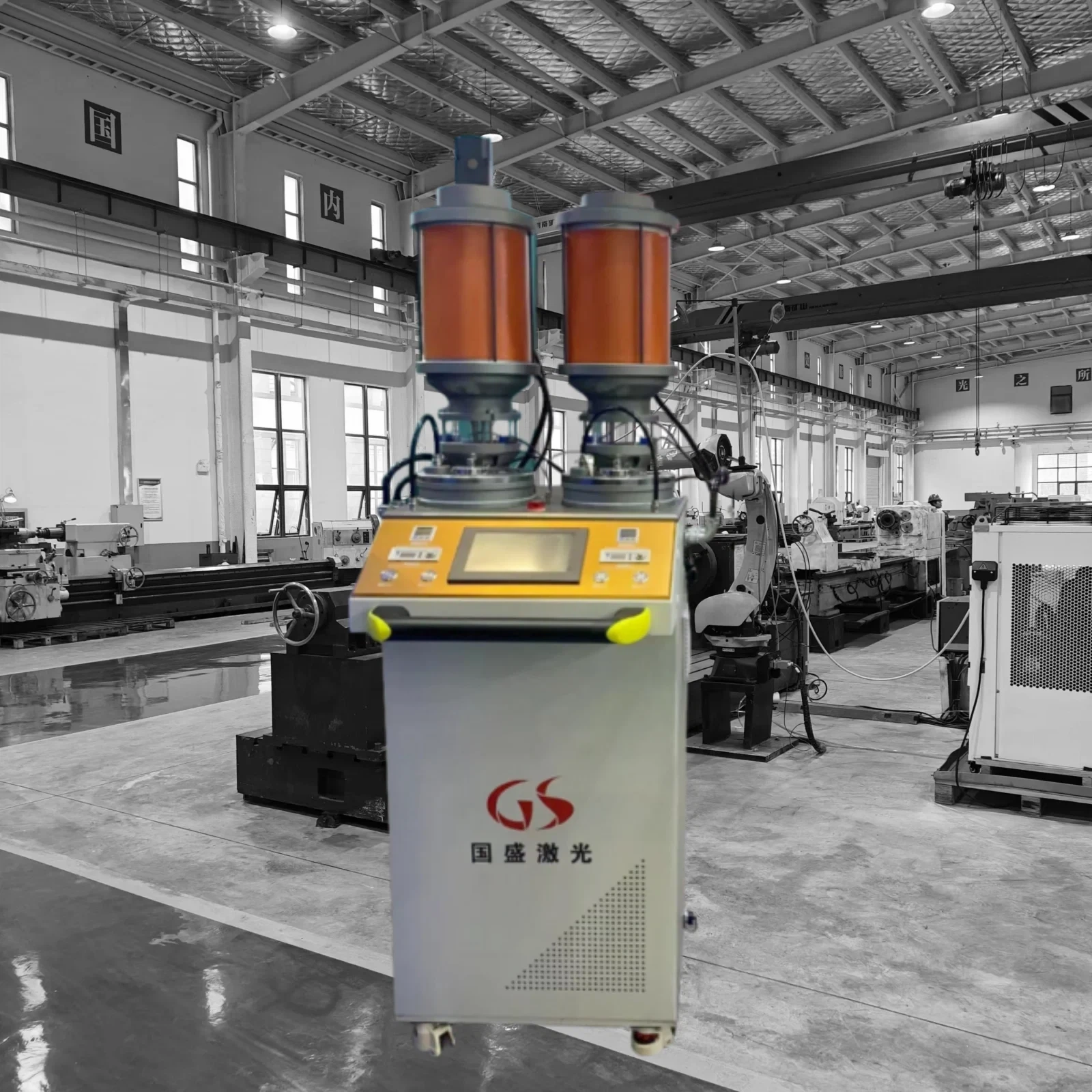
Powder Feeder

Laser Hardening Head
The Future of Laser Additive Manufacturing
Laser additive manufacturing is poised to reshape industries by merging digital design with physical production. As systems evolve toward higher precision, multi-laser configurations, and eco-friendly materials, they will unlock new potentials in custom part manufacturing and circular economy practices. Companies investing in LAM can expect reduced lead times, enhanced part longevity, and alignment with global sustainability goals. Embracing this technology today means leading tomorrow's manufacturing revolution.
FAQ
Q: What industries benefit most from laser cladding systems?
A: Aerospace, automotive, medical, and energy sectors use laser cladding for repairs, custom parts, and coatings, leveraging its precision and material versatility for critical components.
Q: How does laser additive manufacturing reduce costs?
A: It minimizes material waste, shortens production cycles, and enables on-site repairs, cutting downtime and raw material expenses by over 50% in many cases.
Q: What materials are compatible with powder feeding systems?
A: Metals like titanium, stainless steel, and ceramics can be processed, with alloys tailored for high-temperature or corrosive environments.