

What are the applications of a 6000W fiber laser?
In the domain of present day fabricating, the mission for accuracy, proficiency, and flexibility is ceaseless. One innovation that stands at the very front of this pursuit is the 6000W fiber laser. In this article, I will dig into the bunch utilizations of this state of the art innovation, investigating its assorted purposes across different businesses and revealing insight into its groundbreaking effect on assembling processes.
Understanding the 6000W Fiber Laser
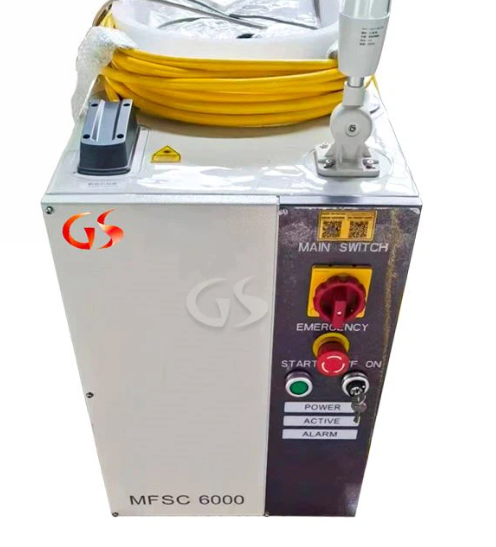
Prior to digging into its applications, getting a handle on the basics of the 6000W fiber laser technology is fundamental. Not at all like customary lasers, which depend on cumbersome optical parts, fiber lasers utilize optical fibers as the increase medium. This plan offers a few benefits, including higher proficiency, smallness, and strength. At 6000W power yield, these lasers convey considerable execution, fit for accuracy cutting, welding, and etching across a great many materials.
Industrial Cutting and Welding
Fast Cutting: The 6000W power yield empowers quick cutting of different materials, including metals like steel, aluminum, and titanium. This fast cutting ability upgrades efficiency in enterprises, for example, car, aviation, and hardware producing.
Accuracy Cutting: Fiber lasers offer remarkable shaft quality, bringing about exact cuts with insignificant kerf width and unimportant intensity impacted zones. This accuracy is significant for applications where tight resistances and perplexing calculations are required, like in the manufacture of auto parts and electronic gadgets.
Thick Material Handling: With its powerful result, a 6000W fiber laser can easily slice through thick materials, making it reasonable for applications including uncompromising creation, shipbuilding, and primary steel handling.
Flexible Cutting Arrangements: Fiber lasers can cut many materials, from flimsy sheets to thick plates, without the requirement for instrument changes or changes. This flexibility permits makers to proficiently deal with different materials and produce complex parts.
High-Strength Welding: In welding applications, the extreme energy of a 6000W fiber laser empowers profound entrance welding, bringing areas of strength for about dependable joints. This capacity is especially profitable in ventures, for example, car and aviation, where weld quality and honesty are basic.
Decreased Working Expenses: Fiber lasers consume less energy contrasted with customary cutting and welding techniques, prompting lower working costs over the long haul. Also, their support prerequisites are insignificant, adding to in general cost reserve funds for modern producers.
Mechanization Combination: Fiber laser cutting and welding frameworks can be effortlessly coordinated into robotized creation lines, upgrading proficiency and versatility. This mix takes into consideration constant activity and decreases work costs related with manual taking care of and handling.
Metal Additive Manufacturing
High-Speed Melting: In metal additive manufacturing processes such as selective laser melting (SLM) or laser powder bed fusion (LPBF), the 6000W power output of a fiber laser enables rapid melting and fusion of metal powders layer by layer. This high-speed melting capability accelerates the printing process, allowing for faster production of complex metal parts.
Improved Resolution and Detail: Fiber lasers offer excellent beam quality, resulting in precise energy delivery to the metal powder bed. This enhances the resolution and detail of printed parts, enabling the fabrication of intricate geometries and fine features with high accuracy.
Enhanced Build Volume: The high power output of a 6000W fiber laser allows for larger build volumes in metal additive manufacturing systems. This scalability enables the production of larger parts or multiple smaller parts in a single build, increasing manufacturing efficiency and throughput.
Diverse Material Compatibility: Fiber lasers can process a wide range of metal powders, including stainless steel, titanium, aluminum, and nickel alloys, among others. This material compatibility offers flexibility in material selection for various applications, from aerospace components to medical implants.
Reduced Warping and Distortion: The precise control of energy deposition provided by fiber lasers helps minimize thermal gradients and residual stresses in printed parts. This reduces the risk of warping and distortion, resulting in improved dimensional accuracy and part quality.
Enhanced Mechanical Properties: Metal parts produced using a 6000W fiber laser exhibit excellent mechanical properties, including high strength, ductility, and fatigue resistance. This makes them suitable for demanding applications in aerospace, automotive, and healthcare industries.
Innovative Design Freedom: Metal additive manufacturing with fiber lasers enables the fabrication of complex, organic shapes and lattice structures that are difficult or impossible to achieve with traditional manufacturing methods. This design freedom allows engineers to optimize part performance and functionality while reducing material waste.
Medical Device Fabrication
Precision Cutting and Welding: Fiber lasers excel in precision cutting and welding of various materials used in medical devices, including stainless steel, titanium, and nitinol. The high power output of a 6000W fiber laser enables manufacturers to achieve tight tolerances and intricate geometries required for medical device components such as stents, implants, and surgical instruments.
Minimal Heat Affected Zone (HAZ): Fiber lasers produce a concentrated beam of light that results in minimal heat transfer to the surrounding material during cutting and welding processes. This reduces the size of the heat-affected zone, preserving the integrity of delicate materials and minimizing the risk of thermal damage to adjacent tissues in medical applications.
Biocompatible Material Processing: Many medical devices require biocompatible materials to ensure compatibility with the human body. Fiber lasers can process a wide range of biocompatible materials with precision and accuracy, making them suitable for fabricating implants, prosthetics, and other medical devices that come into direct contact with bodily tissues.
Micro-Machining Capabilities: Fiber lasers are capable of producing micron-scale features and structures with high precision, making them ideal for micro-machining applications in medical device fabrication. This capability enables the production of miniature components and devices used in minimally invasive surgeries, diagnostic tools, and biomedical research.
Electronics Manufacturing
The electronics industry demands utmost precision and efficiency in manufacturing processes. 6000W fiber lasers meet these requirements by enabling high-speed, high-precision micro-machining of electronic components. From cutting PCBs to marking semiconductor chips, these lasers ensure the quality and reliability of electronic devices. Their ability to work with a wide range of materials, including ceramics and polymers, makes them indispensable tools in electronics manufacturing, driving innovation and enhancing product performance.
Conclusion
In conclusion, the applications of 6000W fiber laser technology are vast and diverse, spanning across industries such as manufacturing, healthcare, electronics, and more. From industrial cutting and welding to additive manufacturing and medical device fabrication, these lasers empower manufacturers to push the boundaries of innovation and achieve unparalleled precision and efficiency in their processes. As technology continues to advance, the role of 6000W fiber lasers will only grow, driving progress and shaping the future of manufacturing.If you're interested in our products, please contact us at bob@gshenglaser.com.
References:
Fiber Laser Market Overview and Growth Forecast by 2028
Applications of Fiber Lasers in Industrial Manufacturing
Additive Manufacturing with Metal Powders
Medical Device Fabrication Techniques
Advancements in Electronics Manufacturing Processes