

Xi'an Jiaotong University and Guosheng Laser Build a New Ecosystem for Technological Development
At 9:30 a.m. on June 30, faculty and students from Xi'an Jiaotong University's School of Materials arrived at Xi'an Guosheng Laser's campus, launching an industry-university-research tour. Sunlight lit the campus as General Manager Duan Chun and Technical Director Lü Wenhui greeted the group at the gate. Holding notebooks, the visitors sparkled with curiosity about industrial practices. "The collision of university wisdom and enterprise practice drives innovation in the laser industry," Duan said, watching the vibrant group. After brief greetings, the team entered the campus, starting this cross-disciplinary exchange.

Conference Room Discourse: Technical Visions and Industry Prospects
At 9:50 a.m., the conference room exchange began. General Manager Duan Chun spoke on "Industry Future," sharing Guosheng Laser's "technology-driven" philosophy and praising Xi'an Jiaotong's materials research. "Seeing Jiaotong faculty and students feels like seeing laser technology's future," he said. Technical Director Lü Wenhui introduced via PPT: "Founded in 2015, we focus on laser cladding and 3D printing, providing over 100 sets of equipment to petroleum firms." He highlighted a high-speed cladding system developed with Northwestern Polytechnical University, boosting coating efficiency by 40% for aerospace engine repairs, prompting active questions from the audience.
Workshop Exploration: Laser Equipment in Industrial Practice
At 11 a.m., led by Director He Yi and Lü Wenhui, the group toured the production line. Dozens of laser devices operated orderly in the workshop, with automated lines processing roller repairs for a steel plant. Pointing to the red-light cladding equipment, He Yi said: "With an AI energy system, it controls cladding thickness within ±0.05mm." In the 3D printing area, metal powder solidified layer by layer under lasers, forming an aero-engine impeller. Learning the technology shortens production cycles by 60%, students requested parameters from technicians, creating a lively learning atmosphere.

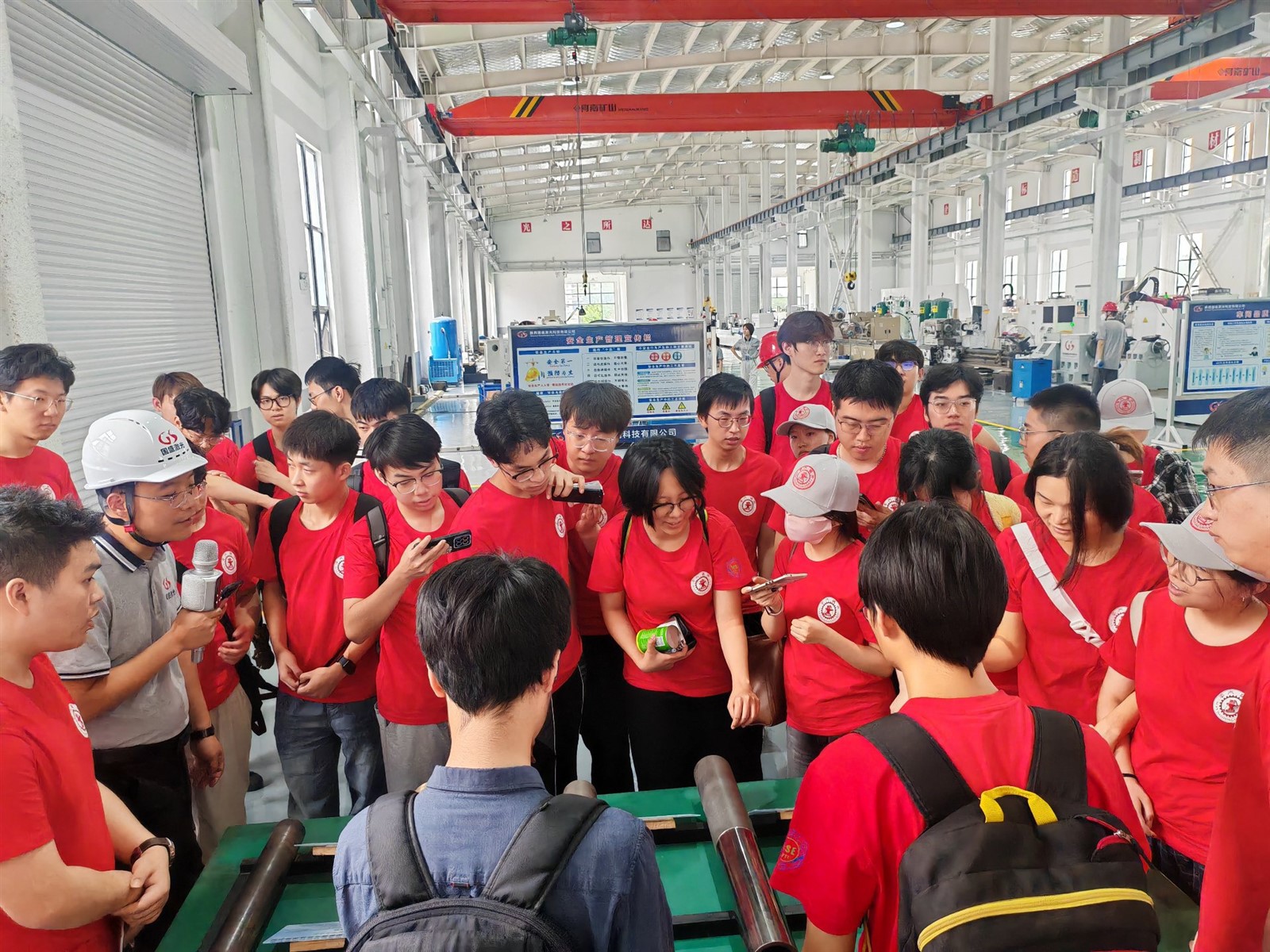
Sample Analysis: The Core Strength of Laser Repair Technology
In the laser cladding sample area, Lü Wenhui held a 120mm hydraulic piston rod: "This coal-mine part took 24 hours for traditional surfacing, but laser cladding finishes it in 4, with 3.5x better wear resistance." He shared cross-sector cases: In rail, mobile repair vehicles cut Zhengxi High-Speed Railway repair time by 80%; in wind power, laser quenching extended gearbox bearing life from 2 to 5 years. "These stem from interdisciplinary innovation in materials, optics, and automation," he said, sparking discussions with postgrads on cladding bonding strength.
Application Scenarios: From Innovation to Industrial Implementation
Lü Wenhui detailed real-world uses: "In aerospace, our solution fixed engine blade wear-traditional methods were costly, but laser cladding repairs precisely without affecting performance." Cases showed wind power gears doubling life after laser treatment, and rail repairs completed in hours. Technicians provided microscopic images as faculty and students debated technology transformation and cost control with the enterprise.

Core Components of laser Cladding System


Building Consensus: A New Ecosystem for University-Enterprise Collaboration
At 12 p.m., the event ended with a group photo. The exchange led to plans: co-establishing a "Laser Additive Manufacturing Lab" in H2 2025, researching wear-resistant coatings, and launching an "Enterprise Mentor" program. "Only by integrating university theory with enterprise practice can we bridge R&D and industry," Duan concluded. The sides will focus on technical breakthroughs and talent cultivation, driving China's high-end manufacturing innovation.