

Key Considerations for Laser Cladding System Configuration
Selecting the optimal configuration for a laser cladding system is a critical decision that impacts repair quality, production efficiency, and long-term return on investment. A well-configured industrial laser cladding machine enables precise, high-performance repairs on components like shafts, gears, rolls, and turbine blades. This guide provides a structured approach to evaluating the core components and parameters of a laser additive manufacturing system tailored for repair and restoration. From the laser source and beam delivery to the motion control and powder feed system, each element must be chosen to align with specific application goals, including cladding layer thickness, material compatibility, production throughput, and final part properties. Understanding this configuration process is essential for manufacturers, maintenance teams, and job shops aiming to implement reliable laser cladding solutions.

Understanding Core System Components for Laser Additive Repair
A standard industrial laser cladding machine comprises several key subsystems that work in unison. The laser source, typically a high-power fiber laser or diode laser, generates the energy beam. A robust beam delivery system, including fiber optics and protective lenses, transmits the laser to the processing head. The cladding head is the execution unit, integrating optics for beam focusing, a coaxial or multi-jet powder nozzle for material delivery, and often protective gas channels. The workpiece is mounted on a motion system, which can be a multi-axis CNC lathe for shaft repair, a robotic arm for complex geometries, or a gantry system for large parts. Finally, a centralized CNC control system orchestrates all parameters-laser power, powder feed rate, travel speed-ensuring process repeatability and high-quality clad layer deposition for demanding repair tasks.
Optimizing Key Processing Parameters for Quality Cladding
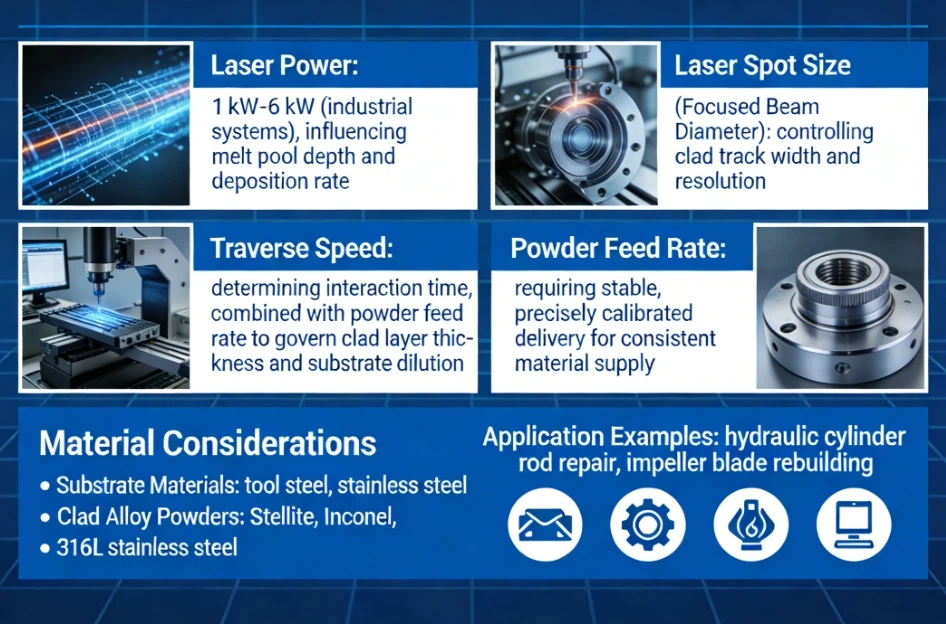
The performance of a laser cladding system is defined by the precise interplay of several critical parameters. Laser power, commonly ranging from 1 kW to 6 kW or higher for industrial systems, directly influences melt pool depth and deposition rate. The focused beam diameter, or laser spot size, controls the width and resolution of the clad track. Traverse speed determines the interaction time and, combined with powder feed rate, governs the clad layer thickness and dilution with the substrate. Optimal parameter selection depends on the substrate material (e.g., tool steel, stainless steel) and the clad alloy powder (e.g., Stellite, Inconel, 316L stainless steel). A stable, precisely calibrated powder feeder is paramount for consistent material delivery, which is crucial for achieving a defect-free, metallurgically sound coating in applications like hydraulic cylinder rod repair or impeller blade rebuilding.

The Role of System Integration and Ancillary Equipment
Beyond the primary cladding unit, successful integration requires supporting systems. An efficient fume extraction unit is mandatory to remove process byproducts and maintain a safe workshop environment. A powder recovery or recycling system can improve material utilization rates and reduce operational costs, especially when using expensive nickel-based or cobalt-based superalloy powders. For many repair applications, integrating a turnkey "clad-and-machine" cell is highly advantageous. This combines the laser cladding station with a CNC machining center, allowing for pre-cladding surface preparation and post-cladding finish machining to net dimensions in a single setup. This integration is particularly valuable for high-precision repair of industrial pump shafts, marine propeller shafts, and compressor rotors, streamlining the entire workflow.
A Strategic Framework for Selecting the Right Laser Cladding Machine
A strategic selection process involves clear definition of requirements. Begin by specifying target components, annual volume, required clad material properties (hardness, corrosion resistance), and desired layer thickness. Evaluate manufacturers based on machine specifications, including laser power stability, motion system accuracy, and the sophistication of the control software with features like offline programming and process monitoring. Request material sample tests on relevant substrates to validate cladding quality, bond strength, and porosity levels. Finally, conduct a total cost of ownership analysis, considering not only the initial capital expenditure but also long-term factors like maintenance costs, spare part availability, technical support, and expected powder consumption rates for your specific industrial laser cladding applications.

Laser equipment components

Fiber Laser Machine

Laser Cladding Head
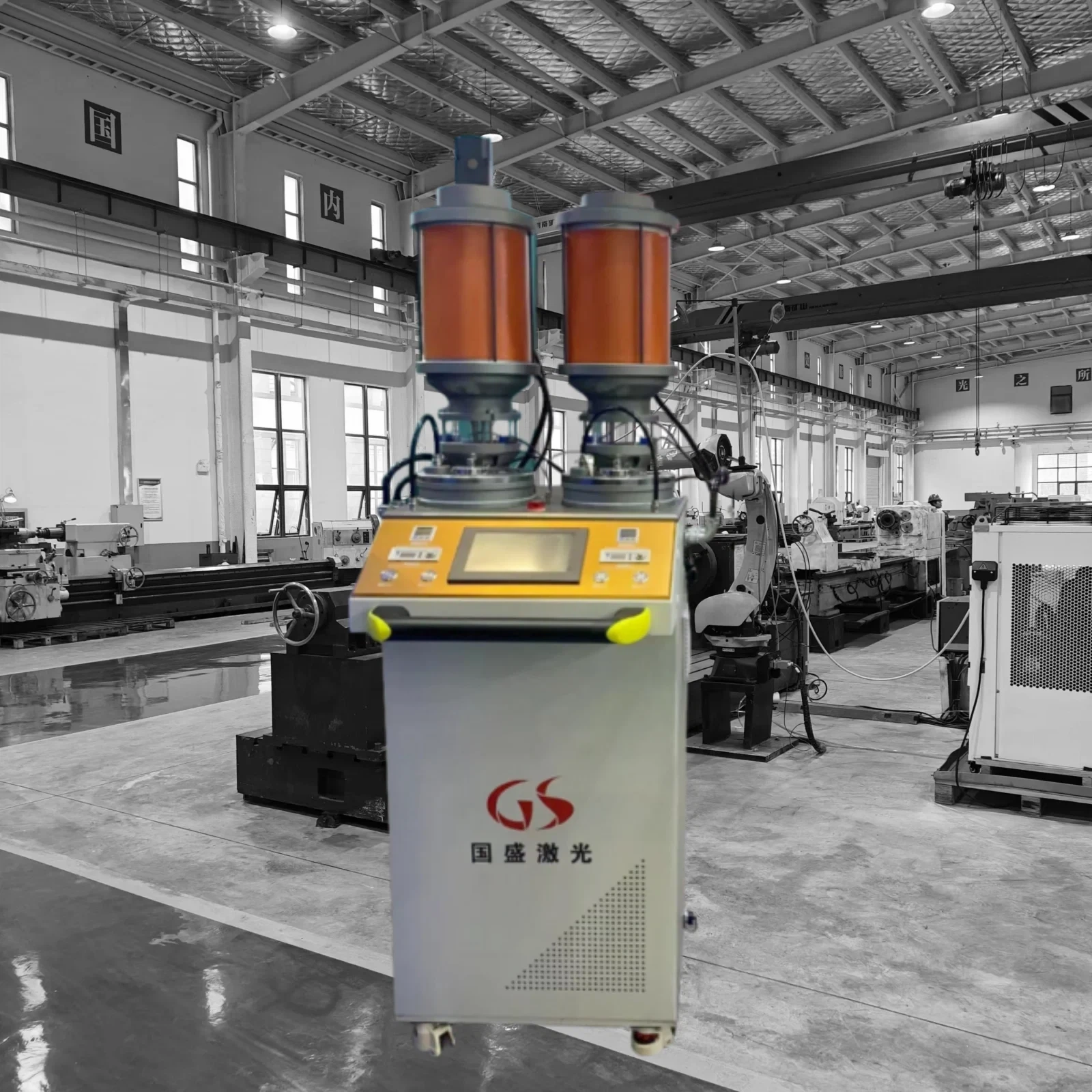
Powder Feeder

Laser Hardening Head
Investing in a Purpose-Built Cladding Solution
Configuring a laser cladding system is not a one-size-fits-all endeavor but a tailored process to match technical capabilities with operational goals. A carefully selected system configured with the appropriate laser power, precise motion control, and reliable powder delivery becomes a powerful asset for advanced manufacturing and maintenance repair operations. It extends the lifecycle of high-value components, reduces reliance on spare part inventories, and enables performance upgrades through superior coating materials. By following a structured evaluation framework focusing on core components, process parameters, and total integration, businesses can invest confidently in a laser additive manufacturing solution that delivers durability, efficiency, and a strong competitive edge in industrial repair markets.
FAQ
Q: How do I choose the right laser power for cladding applications?
A: Selecting laser power depends on your target deposition rate and material. For fine-feature repair or thin coatings, 1-2 kW may suffice. For heavy-duty rebuild of large shafts or fast throughput, 4-6 kW fiber lasers are common. Always test with your specific alloy powder and substrate.
Q: What factors most affect the final quality of a laser-clad coating?
A: Key factors are laser beam quality for consistent focus, precise and stable powder feed rate, optimal parameter settings (power, speed), and high-purity shielding gas to prevent oxidation during the cladding process, ensuring a dense, bonded layer.
Q: What machine configuration is best for repairing rotating shafts?
A: A lathe-based laser cladding system is ideal. It rotates the shaft while the cladding head moves axially, allowing for uniform, high-quality 360-degree coverage on crankshafts, rotor shafts, or other cylindrical components efficiently.