

Modern Laser Additive Manufacturing
Laser Additive Manufacturing has revolutionized the production of complex, high-value metal components across demanding sectors like aerospace, medical implants, and automotive engineering. Moving beyond traditional prototyping, this technology now enables the direct digital fabrication of end-use parts with unparalleled geometric freedom and material performance. The year 2026 sees this evolution accelerating, driven by breakthroughs in high-power laser sources, intelligent process control, and advanced material compatibility. This article explores the key technological trends that are defining the current capabilities of industrial Laser Powder Bed Fusion and Directed Energy Deposition systems, highlighting how these innovations translate into tangible benefits for manufacturing critical, lightweight, and durable metal workpieces.

Breakthroughs in High-Power Laser Sources and Beam Control
The core of progress in metal 3D printing lies in advanced laser systems. Contemporary Laser Powder Bed Fusion machines increasingly utilize high-power, multi-kilowatt fiber lasers, with some systems now exceeding 1 kW per beam in multi-laser configurations. This surge in available power, championed by manufacturers like IPG Photonics and TRUMPF, drastically increases build rates for materials like titanium Ti6Al4V, nickel-based superalloys (e.g., Inconel 718), and stainless steel 316L. Beyond raw power, sophisticated beam shaping and dynamic focus control are critical. Technologies such as adjustable beam diameter and top-hat beam profiles allow for precise energy input management. This capability is essential for optimizing the melt pool dynamics during the printing of fine lattice structures or thin-walled aerospace components, ensuring optimal density and minimizing thermal stress and distortion in the final manufactured part.
Intelligent Process Monitoring and Closed-Loop Control Systems
Ensuring consistent, defect-free production in every layer is paramount. The latest generation of industrial 3D printers integrates in-situ monitoring systems that provide real-time process analytics. Coaxial high-speed imaging and photodiodes continuously track the melt pool luminosity and plasma plume behavior during the laser melting process. More advanced systems employ near-infrared cameras and layer-wise optical tomography to detect anomalies like lack-of-fusion porosity or keyhole instability as they occur. This real-time data stream feeds into AI-driven software platforms that can classify defects and, in advanced closed-loop control systems, automatically adjust laser power or scan speed parameters within milliseconds. This level of intelligent process control is crucial for achieving certified production quality in safety-critical applications such as aircraft engine brackets or custom orthopedic implants, reducing the need for costly post-build inspection and scrap.


Expanding Material Libraries and Multi-Material Fabrication
The application scope for laser-based additive manufacturing is expanding rapidly due to developments in processable materials. While aluminum alloys and titanium remain staples for lightweight applications, printers now successfully handle challenging materials like copper alloys, refractory metals, and high-strength tool steels. A significant frontier is the processing of specialized metal matrix composites and the development of new, printable superalloy grades designed specifically for the additive process. Furthermore, research in multi-material or functionally graded additive manufacturing is progressing. Using systems like Directed Energy Deposition, it is now possible to fabricate a single component with graded properties-for instance, a turbine blade with a wear-resistant tip material gradually transitioning to a high-temperature alloy base-opening new avenues for component performance optimization previously impossible with conventional CNC machining or casting.
Sustainability and Operational Efficiency in Additive Production
As industries prioritize sustainable manufacturing, laser additive technology demonstrates strong environmental benefits. Its near-net-shape capability significantly reduces material waste compared to subtractive methods, especially for expensive aerospace-grade alloys. Energy consumption is a key focus; modern laser systems, particularly diode-pumped solid-state lasers, offer improved wall-plug efficiency. Additionally, powder management systems have advanced. Closed-loop powder handling stations with integrated sieving and recycling modules maximize the reuse of unfused metal powder, minimizing raw material consumption. For support structure removal, chemical-free methods like electrochemical polishing are gaining traction. These combined efforts lower the total lifecycle energy cost and environmental footprint of producing complex metal parts, aligning with global green manufacturing initiatives and making the business case for AM even stronger.

Laser equipment components

Fiber Laser Machine

Laser Cladding Head
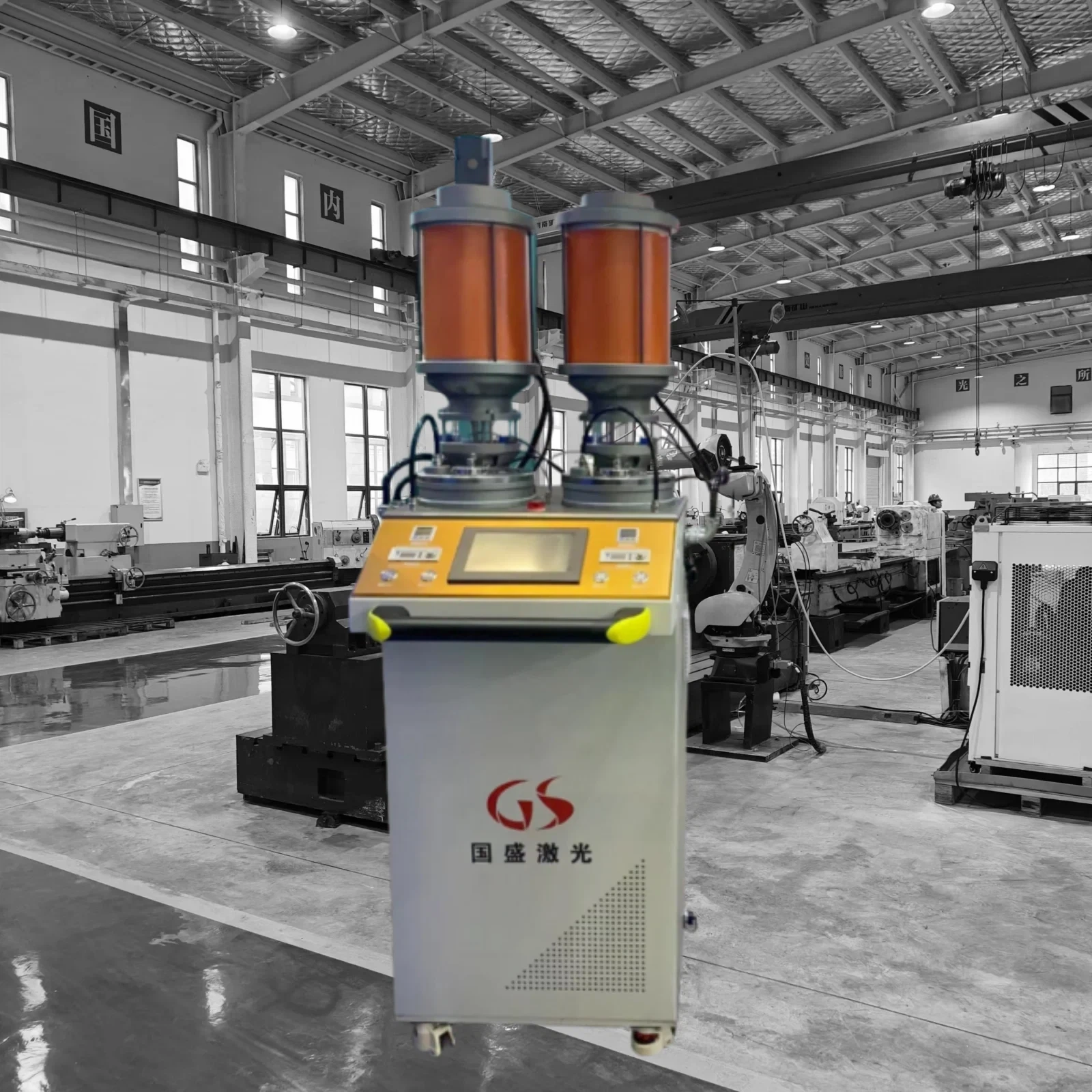
Powder Feeder

Laser Hardening Head
The Future Integrated Digital Additive Factory
Looking forward, laser additive manufacturing is becoming an integral node in the smart, digital factory. The convergence of Industrial Internet of Things connectivity, digital twins, and advanced data analytics is creating a seamless workflow. A component's digital thread-from CAD design and simulation, through optimized build preparation software, to real-time machine monitoring and final quality verification-ensures full traceability. Hybrid manufacturing cells, which combine laser DED deposition with CNC machining in a single workstation, exemplify this integration, allowing for the repair or addition of features to existing components. As these digital and hardware integrations mature, laser additive manufacturing will transition from a specialized tool to a core, adaptive production technology capable of on-demand fabrication of high-performance, customized metal parts across global supply chains.
FAQ
Q: What are the key advantages of using Laser Powder Bed Fusion for aerospace components?
A: Laser Powder Bed Fusion offers unmatched design freedom to create lightweight, complex geometries like internal cooling channels in turbine blades, which are impossible to machine. It uses high-power lasers to fuse fine metal powder layers, producing high-strength parts from advanced materials like titanium alloys, significantly reducing weight and material waste compared to traditional manufacturing for aircraft and spacecraft parts.
Q: How does in-situ process monitoring improve quality in metal 3D printing?
A: In-situ monitoring systems, such as high-speed coaxial cameras and photodiodes, provide real-time analysis of the laser melt pool during the build. They detect potential defects like porosity immediately, allowing for process adjustments or build interruption. This ensures consistent mechanical properties, reduces post-production inspection costs, and is vital for certifying safety-critical components in industries like medical implant and aerospace manufacturing.
Q: Which metals can be processed with modern laser additive manufacturing systems?
A: Modern systems can process a wide range of weldable metals, including standard grades like stainless steel 316L and aluminum AlSi10Mg, as well as high-performance materials such as titanium Ti6Al4V, nickel-based superalloys (Inconel 718), cobalt-chrome alloys, and tool steels. Ongoing research is expanding this to include pure copper, refractory metals, and custom metal matrix composites for specialized applications.