

What is High-Precision Laser Cladding Technology
Laser Additive Manufacturing, particularly the process known as Laser Cladding or Laser Metal Deposition (LMD), has become a cornerstone for advanced material processing. This sophisticated technology utilizes a high-energy laser beam to fuse metallic powder or wire onto a substrate, enabling the creation, enhancement, or restoration of critical components with exceptional precision. It serves as a versatile solution for applying wear and corrosion-resistant coatings, repairing expensive high-value parts, and even manufacturing fully functional components. For industries demanding unparalleled quality, durability, and efficiency, laser cladding offers a transformative approach that minimizes waste and extends the service life of essential equipment, driving forward modern manufacturing capabilities.

How Laser Cladding Works and Its Key Industrial Benefits
The laser cladding process is governed by advanced computer software that directs a focused laser head to melt feed material-typically a metallic powder delivered via a coaxial nozzle-onto a targeted substrate area. This results in a metallurgically bonded, dense coating or structure. Key advantages driving its adoption include superior precision with minimal heat input, drastically reducing the Heat-Affected Zone (HAZ) and preserving the base material's integrity. It offers excellent material efficiency by depositing material only where needed, reducing consumption. Furthermore, it enables the enhancement of material properties, allowing engineers to apply specialized alloys for surface hardness, wear resistance, or corrosion protection, tailored to specific operating conditions and performance requirements.
Aerospace and Automotive Applications of Laser Cladding
In the Aerospace industry, laser cladding is critical for maintaining safety and performance. It is extensively used for repairing and refurbishing turbine blades, engine components like vanes and shrouds, and other structural airframe parts. The technology allows for the application of thermal barrier coatings and superalloy deposits that withstand extreme temperatures. Within Automotive manufacturing, laser cladding improves engine performance and longevity. Common applications include depositing wear-resistant coatings on cylinder liners, valve seats, and piston rings. It also facilitates the cost-effective repair of forging dies, gearbox components, and worn shafts, significantly reducing downtime and lifecycle costs for automotive production lines.


Enhancing Durability in Energy and Tooling Sectors
The Oil & Gas sector relies on laser cladding to combat extreme wear and corrosion in harsh downhole environments. Critical components such as drilling tools, pump sleeves, valve trims, and pipeline parts are clad with nickel-based or cobalt-based alloys to extend service intervals and prevent catastrophic failures. Similarly, in Tooling and Die Manufacturing, the technology revolutionizes productivity. Manufacturers use laser metal deposition to apply hard-facing materials like tungsten carbide or tool steel onto cutting edges, injection molds, and stamping dies. This process dramatically increases tool life against abrasive wear, reduces galling, and allows for rapid repair of damaged or worn-out high-cost tooling, ensuring consistent production quality.
Future Trends in Laser Cladding and Additive Manufacturing Integration
The future of laser cladding is marked by intelligent integration and advanced capabilities. A major trend is multi-material deposition, enabling functionally graded coatings that transition smoothly from a tough substrate to a hard, wear-resistant surface. In-situ process monitoring systems, using high-speed cameras and melt pool monitoring sensors, are becoming standard for real-time quality control, ensuring consistent layer adhesion and geometric accuracy. Furthermore, laser cladding is increasingly integrated into hybrid additive manufacturing platforms, combining it with subtractive machining (CNC) or other Directed Energy Deposition (DED) processes. This hybrid approach allows for the complete digital manufacturing and repair of complex, high-performance industrial parts.

Laser equipment components

Fiber Laser Machine

Laser Cladding Head
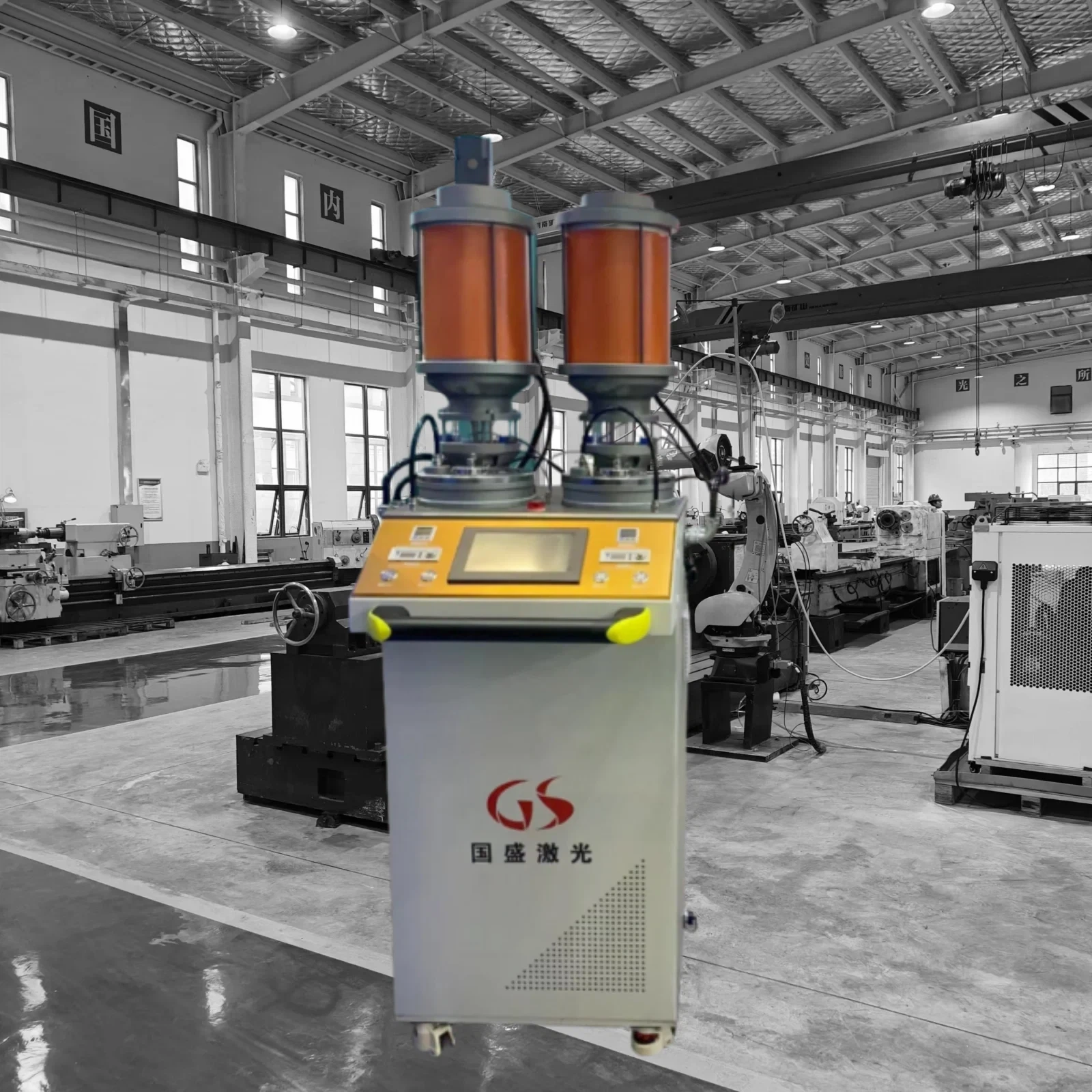
Powder Feeder

Laser Hardening Head
The Strategic Value of Laser Cladding
Laser cladding stands as a pivotal technology in the advanced manufacturing landscape. Its ability to precisely enhance, repair, and even build high-value components with tailored material properties delivers unmatched economic and operational benefits. From extending the lifespan of aerospace turbine blades to protecting oil drilling equipment and industrial tooling, it addresses core challenges of durability and performance. As innovations in process control, material science, and hybrid machine integration continue to evolve, laser cladding will solidify its role as an indispensable, multifunctional tool for achieving superior quality, sustainability, and cost-efficiency in material processing across the global industrial spectrum.
FAQ
Q: What is the key advantage of laser cladding over traditional welding?
A: The primary advantage is minimal heat-affected zone (HAZ). The focused laser beam precisely melts the additive material with low heat input, preserving the base metal's properties and preventing distortion, which is crucial for repairing precision components.
Q: Can laser cladding be used for manufacturing entire parts?
A: Yes. As a Directed Energy Deposition (DED) process, laser cladding technology can build near-net-shape parts layer by layer, especially for large-scale components or parts requiring graded materials, making it a versatile tool in additive manufacturing.
Q: Which industries benefit most from laser cladding repairs?
A: Aerospace (for turbine blade repair), Oil & Gas (for drilling component refurbishment), and Heavy Machinery (for repairing worn shafts and gears) benefit greatly, as it restores high-cost parts to original specifications, saving significant replacement costs.